


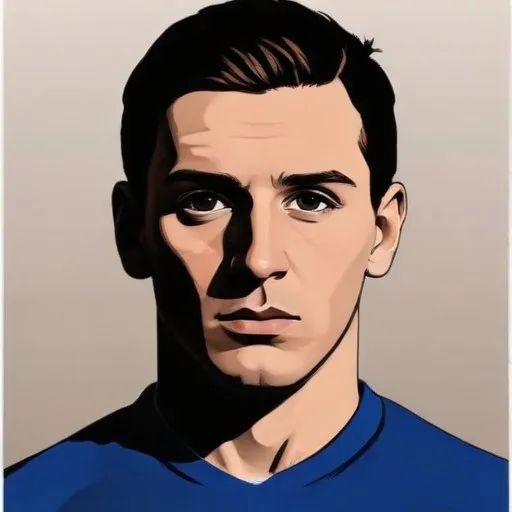
A defender who played for Arsenal and England in the 1930s, earning 20 caps and winning the First Division title in 1931. He was known for his tough tackling and leadership on the pitch.
Wilf Copping, a stalwart midfielder of the 1930s, is best remembered for his phenomenal performances on the pitch, earning him a coveted spot in the England national team and a fruitful career with Leeds United and Arsenal. With 20 caps for England and a plethora of honors with Arsenal, Copping's impact on the sport is undeniable.
Copping's journey in professional football began in 1929 with Leeds United, where he made his debut at the start of the 1930-31 season. His impressive displays earned him a regular spot in the halfback line, and he went on to play over 160 League games for the club.
In 1934, Copping made the switch to Arsenal, signing for £8,000 as a replacement for Bob John. He immediately became an integral part of the team, playing a crucial role in Arsenal's 1934-35 First Division title win. Copping's impressive form continued, and he made over 35 appearances in each of his first four seasons with the club.
Copping's England career spanned six years, during which he earned 20 caps. He made his debut against Italy on 13 May 1933, alongside his Leeds United teammate Billy Furness. One of his most notable performances came in the infamous "Battle of Highbury" in 1934, where he was named man of the match.
Wilf Copping's contributions to the sport extend beyond his impressive statistics. He was an influential figure in the development of English football, known for his tenacity and skill on the pitch. His dedication to the game paved the way for future generations of footballers.
In 1939, with World War II looming, Copping put in a transfer request to return to the North with his family. He eventually resigned from Arsenal and went on to work in the mines during the war.
Wilf Copping's remarkable career serves as a testament to his unwavering passion for the sport. His legacy continues to inspire, and his name remains synonymous with the golden era of English football.
Born in 1922
A legendary English footballer and winger, known for his pace, skill, and scoring ability, earning him the nickname "The Preston Plumber."
Born in 1925
A prolific goal-scorer and charismatic leader, known for his powerful playing style and successful managerial career, earning him legendary status in English football.
Born in 1915
Legendary English footballer and manager, known for his incredible skill, speed, and sportsmanship, earning him the nickname "The Wizard of the Dribble."
88 Years Old
A legendary English footballer and manager who won the Ballon d'Or in 1966 and led Manchester United to numerous titles, including the European Cup. He's a national hero and icon in English football.
85 Years Old
A legendary English footballer and captain who led his team to win the 1966 World Cup, known for his exceptional defensive skills and leadership on the pitch.
Born in 1919
A prolific goal-scorer and manager, known for his impressive playing career with Everton and the English national team, as well as his successful managerial stints in the top flight.
Born in 1912
Scored 178 goals in 396 appearances for Arsenal and the English national team, setting multiple records and earning legendary status in the sport.
