


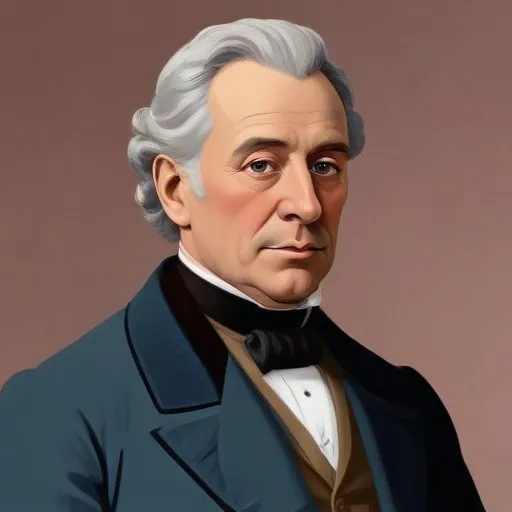
A pioneer in the field of mineralogy, he discovered the phenomenon of polarization of light and developed the first polarizing microscope, revolutionizing the study of minerals. His work laid the foundation for modern mineralogy and geology.
Wilhelm Karl Ritter von Haidinger, an Austrian mineralogist, is renowned for his groundbreaking contributions to the field of mineralogy, authoring an astonishing 350 scientific publications and several influential books. His work in the field has earned him recognition as one of the most prolific and significant mineralogists of the 19th century.
Von Haidinger was born on February 5, 1795, to Karl Haidinger, a mineralogist himself, who unfortunately passed away when Wilhelm was only two years old. The extensive collection of rocks and minerals belonging to his father and uncle, Jakob Friedrich van der Nll, played a significant role in shaping young Wilhelm's fascination with mineralogy. It was during these early years that he crossed paths with the esteemed professor Friedrich Mohs, who would later become his mentor and guide.
In 1812, von Haidinger joined professor Mohs as his assistant at the Universalmuseum Joanneum in Graz, marking the beginning of his scientific journey. He remained devoted to Mohs for the next five years in Graz and later for six years in Freiberg. During this period, von Haidinger immersed himself in scientific work, eventually publishing his first paper, "On the crystallisation of copper-pyrites," in the Memoirs of the Wernerian Natural History Society Edinburgh in 1821. This marked the start of an illustrious career, with his subsequent publications addressing topics such as mineralogy, geology, and mining.
Von Haidinger's tireless efforts have left an indelible mark on the field of mineralogy. His contributions have paved the way for future generations of scientists, and his work continues to be revered and studied to this day. His legacy is a testament to the power of dedication and passion, inspiring countless individuals to pursue careers in the sciences.
Von Haidinger's work was characterized by a deep-seated passion for mineralogy and a commitment to scientific inquiry. His dedication to the field has inspired countless individuals to pursue careers in the sciences, leaving a lasting impact on the world of mineralogy.
In conclusion, Wilhelm Karl Ritter von Haidinger's remarkable life and achievements have cemented his position as a titan in the field of mineralogy. His contributions continue to shape our understanding of the natural world, and his legacy serves as a testament to the power of human ingenuity and perseverance.
