


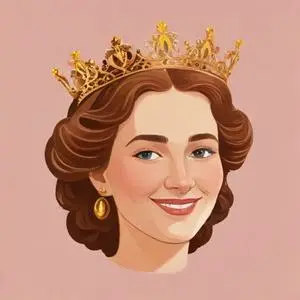
The longest-reigning Dutch monarch, ruling for nearly 58 years, known for her strong leadership during World War II and post-war reconstruction. She played a key role in maintaining Dutch neutrality and unity.
Wilhelmina, the longest-reigning monarch in Dutch history, left an indelible mark on the Netherlands and the world. From her ascension to the throne at the tender age of 10 to her abdication in 1948, Wilhelmina's remarkable journey was marked by unwavering determination, unshakeable courage, and an unrelenting commitment to her people.
Born on August 31, 1880, in Noordeinde Palace, The Hague, Wilhelmina Helena Pauline Maria of the Netherlands of Orange-Nassau was the only child of King William III and Emma of Waldeck and Pyrmont. Her father's untimely death in 1890 propelled her to the throne, with her mother serving as regent until Wilhelmina came of age.
As World War I engulfed Europe, Wilhelmina navigated the treacherous landscape with aplomb, maintaining Dutch neutrality and earning the respect of European leaders. Her diplomatic prowess and business acumen also made her the world's first female billionaire, with her investments and entrepreneurial ventures thriving despite the wartime economy.
Facing the Nazi occupation of the Netherlands in 1940, Wilhelmina fled to Britain, where she established a government-in-exile and rallied her people through inspirational radio broadcasts. Her unwavering defiance and courage in the face of adversity solidified her status as a symbol of Dutch resistance, earning her a place in the hearts of her people.
After returning to the liberated Netherlands in 1945, Wilhelmina continued to serve her people, eventually abdicating the throne in favor of her daughter Juliana in 1948. She spent her remaining years at Het Loo Palace, passing away on November 28, 1962, at the age of 82.
Wilhelmina's remarkable life and reign have left an enduring impact on Dutch society and beyond. She remains a revered figure, celebrated for her unwavering dedication to her people and her role as a beacon of hope during times of turmoil.
"I am not afraid, and I will not be intimidated." - Wilhelmina, in response to Nazi aggression
As the longest-reigning monarch in Dutch history, Wilhelmina's legacy extends far beyond her remarkable life. She remains an iconic figure, symbolizing the resilience and courage of the Dutch people during times of war and turmoil.
| 1880 | Born in Noordeinde Palace, The Hague |
| 1890 | Ascended the throne at the age of 10 |
| 1914-1918 | Maintained Dutch neutrality during World War I |
| 1940 | Fled to Britain and established a government-in-exile |
| 1945 | Returned to the liberated Netherlands |
| 1948 | Abdicated the throne in favor of her daughter Juliana |
| 1962 | Passed away at Het Loo Palace |
Wilhelmina's remarkable life serves as a testament to her unwavering dedication, her unshakeable courage, and her unrelenting commitment to her people. As a symbol of Dutch resistance and strength, she will forever be remembered as an icon of hope and resilience.
