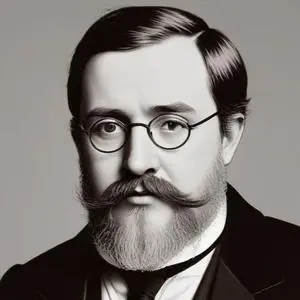
Wilkie Collins

Wilkie Collins

Wilkie Collins was born on January 8th, 1824

Full Name: William Wilkie Collins
Place of Birth: Marylebone, London, England
Profession: Novelist, Playwright, and Short Story Writer
Nationality: British
Notable Works: The Moonstone and The Woman in White
Style: Sensation fiction
Education: Lincolns Inn
Influence: Charles Dickens and Edgar Allan Poe

A pioneer of detective fiction, penning suspenseful tales that captivated Victorian audiences, with works still widely read and adapted today.

Written by: Isabel Sanchez Isabel Sanchez

Wilkie Collins: The Master of Mystery and Suspense

Wilkie Collins is renowned for crafting intricate, suspenseful tales that have captivated readers for generations. His iconic novels, such as The Woman in White (1859) and The Moonstone (1868), are considered pioneers of the detective fiction genre, influencing the development of modern mystery writing.

A Life of Adventure and Literary Pursuits

Born on January 8, 1824, in London, England, Wilkie Collins was the son of William Collins, a Royal Academician landscape painter, and Harriet Geddes. His early life was marked by international travel, living in Italy and France for two years, where he learned Italian and French. This exposure to different cultures would later influence his writing.

An Early Start in Writing and Friendship with Charles Dickens

Collins' writing career began with the publication of his first novel, , in 1850. This led to a chance encounter with Charles Dickens, who became a mentor and close friend. Dickens' influence helped shape Collins' writing style, and many of his works were published in Dickens' journals, and .

Rise to International Acclaim and Personal Life

By the 1860s, Collins had achieved financial stability and an international following. His writing explored themes of social class, morality, and the human psyche. However, his personal life was marked by controversy, including relationships with two women, Caroline Graves and Martha Rudd, with whom he had three children.

Critique of Marriage and Personal Beliefs

Collins was a vocal critic of the institution of marriage, which he viewed as restrictive and oppressive. This stance was reflected in his writing, where he often explored the social conventions and expectations placed on women.

Later Life and Declining Health

In the 1870s and 1880s, Collins' health began to decline due to his addiction to opium, which he took to alleviate his gout. Unfortunately, this led to a decline in the quality of his writing as well.

Legacy and Impact on Modern Literature

Despite his personal struggles, Wilkie Collins' contributions to literature are undeniable. He is credited with establishing many of the ground rules of the modern detective novel and police procedural genre. His work has influenced generations of writers, including Agatha Christie, Arthur Conan Doyle, and Ruth Rendell.

Today, Wilkie Collins is remembered as a master of mystery and suspense, whose works continue to captivate readers and inspire writers worldwide.

Quotes and Memorable Sayings

"Make 'em laugh; make 'em weep; make 'em wait."

Wilkie Collins' legacy is a testament to his innovative writing style, which continues to influence literature to this day.

Timeline
1824
Birth of Wilkie Collins
Wilkie Collins was born on January 8, 1824, in Marylebone, London.
1848
Publication of Antonina
Collins published his first novel, Antonina, which received little attention but marked the beginning of his literary career.
1859
Publication of The Woman in White
Collins published The Woman in White, a sensation novel that became a huge success and established him as a prominent author.
1868
Publication of The Moonstone
Collins published The Moonstone, another sensation novel that is considered one of his masterpieces.
1889
Death of Wilkie Collins
Wilkie Collins died on September 23, 1889, in Wimpole Street, London, leaving behind a legacy as a prominent novelist and playwright.
Wilkie Collins

Wilkie Collins Quiz

What genre of fiction is Wilkie Collins most associated with?

Score: 0/5
FAQ
What was Wilkie Collinss significance in the development of detective fiction?
Wilkie Collins was an English novelist, playwright, and short story writer who is often credited with inventing the modern detective novel. His novel The Moonstone is considered a seminal work in the genre and has had a lasting impact on detective fiction.
How did Wilkie Collinss life influence his writing?
Collinss life was marked by struggles with addiction and illness, which had a significant impact on his writing. His experiences as a patient in a mental institution, for example, influenced his writing on the subject of mental illness and the asylum system.
What were some of Wilkie Collinss notable works?
Collins was a prolific writer, and his notable works include The Woman in White, The Moonstone, and Armadale. His writing often explored themes of crime, detection, and social justice.
Who were Wilkie Collinss contemporaries in the literary world?
Collins was a contemporary of notable figures in the literary world, including Charles Dickens, Charles Reade, and Mary Elizabeth Braddon.
What was Wilkie Collinss legacy in English literature?
Collinss legacy is one of significant contributions to the development of detective fiction and the English novel more broadly. His work continues to be widely read and studied today, and his influence can be seen in the work of later writers such as Agatha Christie and Arthur Conan Doyle.