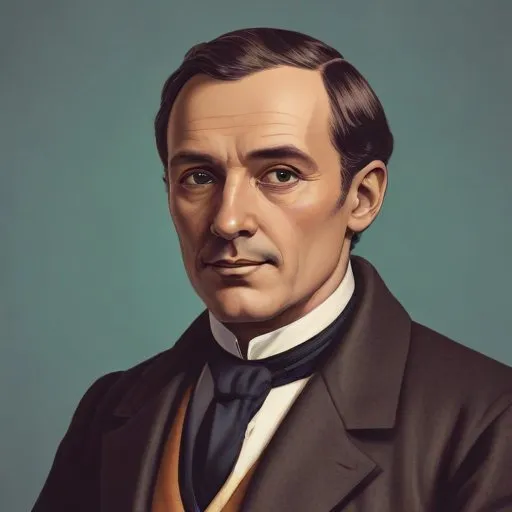
Willebrord Snell: The Dutch Mathematician Who Changed the Face of Optics
A Pioneer in Refraction
Willebrord Snell, a Dutch mathematician, is renowned for his groundbreaking work in the field of optics, particularly for his discovery of the law of refraction, which bears his name – Snell's Law. This fundamental principle, which describes the bending of light as it passes from one medium to another, has been a cornerstone of optical science for centuries.
Early Life and Education
Born on June 13, 1580, in Leiden, Netherlands, Snell was the son of Rudolph Snellius, a mathematician and astronomer. He studied mathematics and law at the University of Leiden, where he earned his degree in 1600. Snell's fascination with mathematics and astronomy led him to continue his studies in Paris, where he became acquainted with prominent mathematicians and astronomers of the time.
Snell's Law and Its Impact
In 1621, Snell discovered the law of refraction, which he published in his work
Eratosthenes Batavus. This law, which describes the relationship between the angles of incidence and refraction, revolutionized the field of optics and paved the way for significant advancements in telescope design, microscopy, and our understanding of the behavior of light. Snell's Law has far-reaching implications in various fields, including physics, engineering, and medicine.
Applications of Snell's Law
- Telescope design: Snell's Law allowed for the development of more accurate and powerful telescopes, enabling astronomers to study the universe with greater precision.
- Microscopy: The law of refraction is crucial in the design of microscopes, which have vastly expanded our understanding of the microscopic world.
- Optical communication: Snell's Law is essential in the design of fiber optic cables, which enable high-speed data transmission over long distances.
Other Contributions and Achievements
Snell made significant contributions to various fields, including:
Mathematics
.Snell worked on trigonometry and developed a method for calculating the distances of celestial bodies.
Astronomy
. He measured the angle of the Milky Way and made observations on the comet of 1618.
Cartography
. Snell created an accurate map of the Netherlands, which was used for over a century.
Personal Life and Legacy
Snell married twice and had three children. He died on October 30, 1626, in Leiden, Netherlands. Despite his untimely death, Snell's work has had a lasting impact on the scientific community, and his law of refraction remains a fundamental principle in optics.
Legacy and Honors
Snell's contributions have been recognized through the centuries, and he is considered one of the most important Dutch mathematicians of the 17th century. In recognition of his work, the Royal Netherlands Academy of Arts and Sciences has named a prize in his honor, the Snellius Award, which is awarded annually to outstanding mathematicians.
In conclusion, Willebrord Snell's groundbreaking work in optics has had a profound impact on our understanding of light and its behavior, paving the way for significant advancements in various fields. His legacy continues to inspire scientists and mathematicians to this day.
FAQ
What was Willebrord Snells contribution to the field of astronomy?
Willebrord Snell was a Dutch astronomer and mathematician who made significant contributions to the field of astronomy. He is known for his observations of the lunar eclipse of 1598 and his measurements of the angles of refraction.
What was Willebrord Snells method for measuring the circumference of the earth?
Willebrord Snell developed a method for measuring the circumference of the earth using triangulation. He measured the angles and sides of triangles formed by sightings of the same star from different locations.
What were Willebrord Snells mathematical contributions?
Willebrord Snell was a mathematician who made important contributions to the field of trigonometry. He wrote several books on mathematics and was known for his ability to apply mathematical concepts to real-world problems.
What was Willebrord Snells relationship like with other scientists?
Willebrord Snell corresponded with other prominent scientists of his time, including Tycho Brahe. He was known for his erudition and his ability to engage in lively debates about scientific topics.
What is Willebrord Snells legacy today?
Willebrord Snells legacy today is as a pioneering astronomer and mathematician who contributed significantly to our understanding of the world. He is remembered as a dedicated scholar and a talented scientist.