


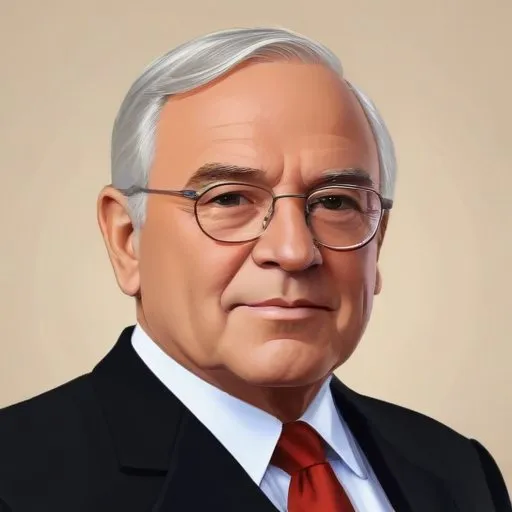
Third United States Secretary of Education, known for his conservative views and advocacy for traditional values in education. He's also a bestselling author and political commentator.
William Bennett, a stalwart of American conservatism, is best known for his influential stint as the Secretary of Education under President Ronald Reagan from 1985 to 1988. This pivotal role catapulted him to the forefront of national politics, earning him recognition as a champion of education reform and a vociferous critic of liberal ideologies.
Born on July 31, 1943, in Brooklyn, New York, Bennett was raised in a Catholic family that instilled in him the values of hard work and public service. His early life was marked by academic excellence, earning him a degree from Williams College in 1965 and a Ph.D. in political philosophy from the University of Texas at Austin in 1970. He later received a J.D. from Harvard Law School in 1971.
Bennett's academic credentials and philosophical inclinations led him to various educational institutions, including Boston University, where he served as an associate dean and assistant professor of philosophy. In 1979, he became the director of the National Humanities Center, an independent institute in North Carolina.
In 1981, President Reagan appointed Bennett to chair the National Endowment for the Humanities (NEH), where he served until 1985. During his tenure, he published the seminal report, To Reclaim a Legacy: A Report on the Humanities in Higher Education, which assessed the teaching and learning of humanities at the baccalaureate level. This report cemented his reputation as a champion of education reform.
In 1985, Reagan appointed Bennett as the Secretary of Education, a position he held until 1988. As Secretary, Bennett advocated for education reform, championing the causes of school choice, charter schools, and voucher programs. He also played a crucial role in shaping the national education agenda, focusing on issues such as teacher quality, accountability, and parental involvement.
Bennett's philosophical inclinations were shaped by his Catholic upbringing and academic background in political philosophy. He is known for his conservative views on education, which emphasize the importance of Values, Virtues, and Western civilization. His writings and public statements often critique the perceived liberal bias in education, advocating for a more balanced and inclusive approach to curriculum development.
Bennett's influence on modern society extends beyond his tenure as Secretary of Education. He has been a vocal critic of the perceived ills of modern society, including drug abuse, anti-Americanism, and moral relativism. His advocacy for education reform and his commitment to conservative values have made him a respected figure in American politics.
Bennett's life has been marked by significant personal milestones, including his marriage to Elayne Glover Bennett in 1967 and the birth of their two sons, John and Joseph. He has also been an avid writer, publishing several books on education and politics, including The Book of Virtues: A Treasury of Great Moral Stories (1993) and The Death of Outrage: Bill Clinton and the Assault on American Ideals (1998).
William Bennett's legacy as a champion of education reform and a conservative icon continues to shape American politics and education policy. His commitment to values-based education and his critique of liberal ideologies have made him a respected figure in American public life. As a testament to his enduring influence, Bennett remains a prominent voice in the national conversation on education and politics.
Born in 1911
The charismatic leader who championed conservative policies, helped end the Cold War, and is often credited with restoring American pride and optimism. He's also remembered for his folksy, actor-honed communication style.
Born in 1924
The 41st President of the United States, a decorated war hero and skilled diplomat, led the country through the end of the Cold War and Gulf War. He's known for his foreign policy expertise and "kinder, gentler nation" vision.
79 Years Old
The 44th Vice President of the United States, a lawyer, and politician who served under President George H.W. Bush from 1989 to 1993, known for his conservative views and infamous misspelling of "potato" as "potatoe".
83 Years Old
A historian-turned-politician who served as the 58th Speaker of the House, known for his role in shaping the Republican Party's agenda and his influence on American politics.
87 Years Old
A conservative commentator and three-time presidential candidate, known for his paleoconservative views and controversial statements on issues like immigration and trade.
75 Years Old
Conservative radio personality and bestselling author known for provocative commentary and shaping right-wing political discourse.
36 Years Old
A former professional footballer who played as a defender, best known for his career with Brighton & Hove Albion and earning two caps for the England under-21 team.
Born in 1924
A pioneering conservative activist who advocated for traditional values and limited government, known for her influential campaigns against the Equal Rights Amendment and feminist movements.
