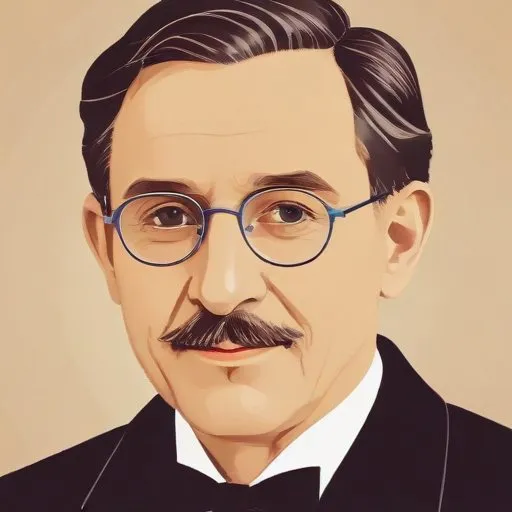
William E. Moerner: The Pioneering Physical Chemist Behind Single-Molecule Imaging
A Pioneer in Single-Molecule Imaging
William E. Moerner is a renowned American physical chemist and chemical physicist, best known for achieving the first optical detection and spectroscopy of a single molecule in condensed phases. This groundbreaking achievement has paved the way for widespread single-molecule experiments in chemistry, physics, and biology.
Early Life and Education
Born on June 24, 1953, in Pleasanton, California, Moerner grew up to be an Eagle Scout with the Boy Scouts of America. He excelled academically, earning three degrees from Washington University in St. Louis: a B.S. in physics, a B.S. in electrical engineering, and an A.B. in mathematics summa cum laude in 1975. Moerner then pursued graduate studies at Cornell University, supported by a National Science Foundation Graduate Research Fellowship, earning his M.S. and Ph.D. degrees in physics in 1978 and 1982, respectively.
Career Highlights and Achievements
Moerner's illustrious career spans over three decades, with notable stints at the IBM Almaden Research Center in San Jose, California, where he worked as a research staff member, manager, and project leader from 1981 to 1995. During this period, he made significant contributions to the field of physical chemistry, including the development of single-molecule imaging techniques.
- In 1995, Moerner was appointed as a professor of chemistry and physics at the University of California, San Diego.
- In 2004, he was named the Harry S. Mosher Professor of Chemistry at Stanford University.
- In 2014, Moerner was awarded the Nobel Prize in Chemistry, along with Eric Betzig and Stefan W. Hell, for his pioneering work in single-molecule imaging.
Philosophical Contributions and Beliefs
Moerner's work has not only shed light on the behavior of individual molecules but has also sparked new avenues of inquiry in the field of physical chemistry. His research has demonstrated the importance of understanding the interactions between molecules and their environment, highlighting the need for interdisciplinary approaches to scientific inquiry.
Personal Milestones and Key Life Events
Throughout his academic and professional journey, Moerner has received numerous awards and honors, including the Deans Award for Unusually Exceptional Academic Achievement, the Ethan A. H. Shepley Award for Outstanding Achievement, and the National Science Foundation's CAREER Award.
Influence on Modern Society
Moerner's pioneering work in single-molecule imaging has far-reaching implications for various fields, including biomedicine, materials science, and nanotechnology. His discoveries have the potential to revolutionize our understanding of molecular interactions, leading to breakthroughs in disease diagnostics, drug development, and sustainable energy solutions.
Quotes and Memorable Sayings
"I believe that the next major breakthroughs in science will come from the intersection of different disciplines, and the integration of new tools and techniques."
Historical Context and Legacy
Moerner's contributions to the field of physical chemistry have cemented his place among the pantheon of scientific luminaries. His work has inspired a new generation of researchers, fostering a culture of interdisciplinary collaboration and innovation.
Awards and Honors
- Nobel Prize in Chemistry (2014)
- National Science Foundation's CAREER Award
- Deans Award for Unusually Exceptional Academic Achievement
- Ethan A. H. Shepley Award for Outstanding Achievement
Conclusion
William E. Moerner's remarkable journey is a testament to the power of human curiosity and the importance of interdisciplinary approaches to scientific inquiry. As we continue to navigate the complexities of the molecular world, Moerner's pioneering work in single-molecule imaging serves as a beacon of inspiration, illuminating the path to new discoveries and breakthroughs.
FAQ
What is William E. Moerners Nobel Prize-winning research?
William E. Moerner was awarded the Nobel Prize in Chemistry in 2014 for his work on the development of super-resolved fluorescence microscopy. His research has enabled the visualization of individual molecules in cells with nanometer-scale resolution.
What is William E. Moerners area of expertise in chemistry?
William E. Moerner is a renowned expert in the field of physical chemistry, with a focus on single-molecule biophysics, nanophotonics, and super-resolution microscopy.
What is William E. Moerners academic background?
William E. Moerner holds a Bachelors degree in Physics from Washington University in St. Louis and a Ph.D. in Physics from the University of California, Berkeley. He has also held faculty positions at Stanford University and the University of California, San Diego.
What awards has William E. Moerner received for his research?
William E. Moerner has received numerous awards for his research, including the Irving Langmuir Award, the Wolf Prize in Chemistry, and the Albert Lasker Award for Basic Medical Research.
What is William E. Moerners current research focus?
William E. Moerners current research focuses on the development of new super-resolution microscopy techniques and their application to biological systems, including the study of protein dynamics and molecular interactions in cells.