


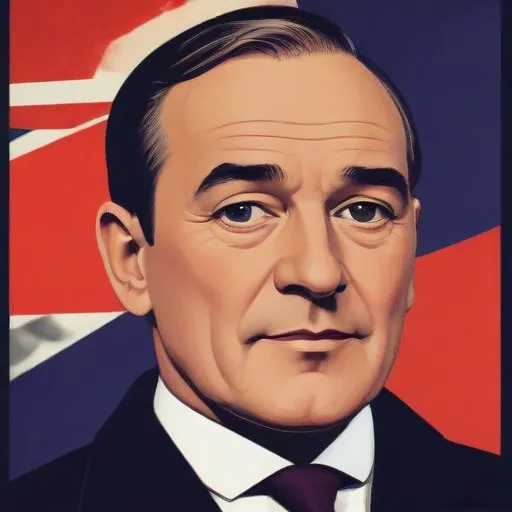
First Premier of Victoria, instrumental in shaping the state's early development and governance. He played a crucial role in establishing Victoria's parliamentary system and infrastructure.
William Haines, a medical practitioner turned politician, etched his name in Australian history as the first Premier of Victoria, a position he held on two separate occasions. This trailblazer's remarkable journey from a London-born physician to a champion of democracy in the Victorian legislature is a testament to his unwavering commitment to the people.
Born on January 10, 1810, in London, England, Haines was the son of a physician, John Haines. He received his education at Charterhouse School and Caius College, Cambridge, where he graduated in medicine. For several years, he practiced surgery before migrating to the Port Phillip District (now Victoria) in 1841.
In Victoria, Haines settled in the Geelong area, where he farmed and continued to practice as a surgeon. His entrée into politics began in 1851 when he was appointed a member of the Victorian Legislative Council. Two years later, he was elected to represent the district of Grant, marking the start of his illustrious political career.
When Victoria gained full responsible government in 1855, Haines was appointed the first Premier and Chief Secretary, a position he held from November 1855 to March 1857. During this tenure, he focused on democratizing the Constitution, which had been drafted to favor the interests of the squatter class. He introduced a bill to enlarge the Assembly and redraw electoral boundaries, demonstrating his commitment to representing the voices of the people.
In April 1857, Haines resumed his position as Premier, serving until March 1858. Following a three-year sojourn in Europe, he returned to politics, representing the seat of Portland from 1860 to 1864. He later served as treasurer from 1861 to 1863 and eventually returned to the Legislative Council, representing Eastern Province, until his death in February 1866.
Haines' legacy is that of a champion of democracy, driven by his desire to give voice to the common man. Historian Raymond Wright aptly described him as a "bluff, plain, honest farmer type," who, despite his self-deprecating humor about his public speaking skills, remained steadfast in his pursuit of a more equitable society.
In 1835, Haines married Mary Dugard, with whom he had nine children. He passed away on February 3, 1866, leaving behind a legacy that continues to inspire generations of Victorians.
Haines' contributions to the democratization of Victoria's Constitution have had a lasting impact on the state's political landscape. His unwavering commitment to representing the people has inspired future generations of politicians, cementing his place as a pioneer in Australian politics.
Although his legacy may not have extended to the realm of popular culture, Haines' commitment to democracy has paved the way for future leaders who have shaped the country's political landscape. His story serves as a testament to the power of perseverance and dedication to creating a more just society.
While there are no specific awards or honors attributed to Haines, his legacy as the first Premier of Victoria continues to be celebrated by the people of the state.
William Haines' remarkable journey from a London-born physician to a champion of democracy in Victoria serves as a beacon of inspiration for those striving to create positive change. His unwavering commitment to representing the people has left an indelible mark on Australian politics, ensuring his legacy will continue to inspire future generations.
