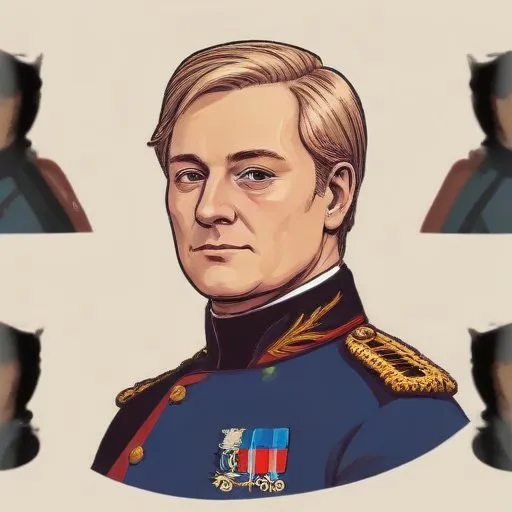
William IV, Grand Duke of Luxembourg: The Protestant Monarch Who Shaped the Country's Future
The Monarch Who Paved the Way for a Catholic Legacy
William IV, Grand Duke of Luxembourg, is remembered for his significant role in shaping the country's future, despite being a Protestant in a predominantly Catholic nation. From 1905 until his death in 1912, William ruled Luxembourg, leaving behind a lasting legacy that continues to influence the country to this day.
Early Life and Succession
Born on April 22, 1852, William was the son of Adolphe, Grand Duke of Luxembourg. He succeeded his father as the Grand Duke of Luxembourg in 1905, becoming the sixth monarch of the House of Nassau-Weilburg dynasty. Although vested with considerable power by the Constitution, William largely stayed out of politics, much like his father before him.
Marriage and Children
William married Infanta Marie Anne of Portugal on June 21, 1893, in Fischhorn Castle, Zell am See. The couple had six daughters, including Marie-Adélaïde, Charlotte, Hilda, Antonia, Elisabeth, and Sophie. This union was significant, as it marked the beginning of a Catholic legacy in the Grand Duchy of Luxembourg, with William's heirs embracing Catholicism.
Succession Crisis and the Counts of Merenberg
Following the death of his uncle, Prince Nikolaus-Wilhelm, in 1905, William faced a succession crisis. The only other legitimate male in the House of Nassau-Weilburg was his cousin, Georg Nikolaus, Count of Merenberg, who was the product of a morganatic marriage. In 1907, William declared the Counts of Merenberg non-dynastic, naming his eldest daughter, Marie-Adélaïde, as the heiress presumptive to the grand ducal throne.
Legacy and Death
William IV died on February 25, 1912, marking the end of his seven-year reign. He was succeeded by his daughter, Marie-Adélaïde, who became Luxembourg's first reigning Grand Duchess. Upon her abdication in 1919, she was succeeded by her younger sister, Charlotte, whose descendants continue to reign in Luxembourg to this day. William IV remains the last monarch of Luxembourg to die on the throne.
Personal Milestones and Key Life Events
- Born on April 22, 1852
- Succeeded his father as Grand Duke of Luxembourg in 1905
- Married Infanta Marie Anne of Portugal in 1893
- Declared the Counts of Merenberg non-dynastic in 1907
- Died on February 25, 1912
Influence on Modern Society and Historical Context
William IV's reign marked a significant turning point in Luxembourg's history. His decision to name his daughter as the heiress presumptive paved the way for a Catholic legacy in the country, which continues to shape Luxembourg's identity today. Additionally, William's reign saw the country's continued development and growth, solidifying its position as a sovereign state in Europe.
Trivia and Fun Facts
- William IV was the sixth monarch of the House of Nassau-Weilburg dynasty.
- He was the last monarch of Luxembourg to die on the throne.
- William's marriage to Infanta Marie Anne of Portugal marked the beginning of a Catholic legacy in Luxembourg.
By examining the life and reign of William IV, Grand Duke of Luxembourg, we gain a deeper understanding of the complex historical context that shaped the country's future. As a Protestant monarch in a Catholic nation, William's decisions had far-reaching consequences, influencing the course of Luxembourg's history for generations to come.
FAQ
What were William IVs key reforms as Grand Duke of Luxembourg?
William IV implemented significant reforms during his reign, including the introduction of constitutional monarchy, expansion of education, and promotion of industrial development. He modernized Luxembourgs government and economy, setting the stage for the countrys growth.
How did William IVs reign impact Luxembourgs relationship with Europe?
William IV maintained Luxembourgs independence during a turbulent period in European history. He navigated complex alliances and treaties, ensuring the countrys sovereignty and paving the way for its future European integration.
What was William IVs approach to governance?
William IV ruled Luxembourg with a focus on stability, moderation, and gradual reform. He sought to balance the interests of different social classes and maintain social harmony, earning him the respect of his people.
How did William IVs personal life influence his reign?
William IVs marriage to Maria Ana of Portugal and his commitment to family life had a positive impact on his reign. His domestic stability allowed him to focus on state affairs and make informed decisions.
What legacy did William IV leave behind?
William IVs legacy includes modernizing reforms, European diplomatic savvy, and a commitment to Luxembourgs sovereignty. He set the stage for the countrys future growth and development, earning his place in Luxembourgish history.