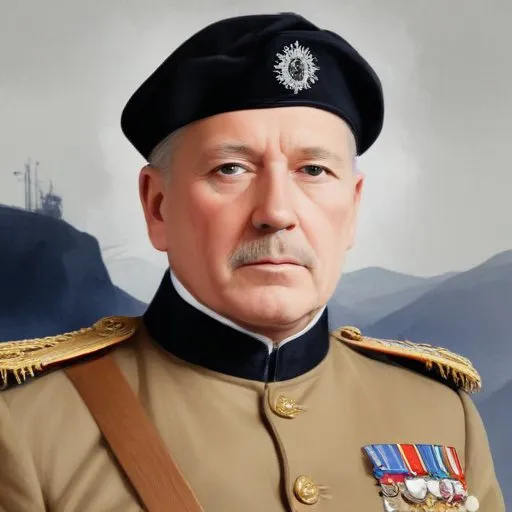
Sir William McMurdo: A Distinguished British Army Officer
A Career Marked by Bravery and Excellence
Sir William McMurdo is renowned for his illustrious career as a British army officer, rising through the ranks to become a general. He saw active service in India, played a crucial role in the Crimean War, and later managed various groups of volunteers working with the army, earning him the prestigious honor of being knighted.
Early Life and Military Career
Born on May 30, 1819, McMurdo was the son of Lieutenant Colonel Archibald McMurdo of Loch Arthur, Kirkcudbrightshire. He commissioned in the 8th Foot in 1837 and quickly rose through the ranks, becoming a lieutenant in the 22nd Foot in 1841. During his time in India, he served under the esteemed Sir
Charles Napier and participated in the battles of Miani and Hyderabad in 1843.
Campaigns and Honors
McMurdo's bravery in the battle of Hyderabad earned him a mention in dispatches, and he was promoted to captain in the 28th Foot later that year. In 1844, he married Susan Sarah Napier, daughter of Sir Charles Napier. When Napier returned to India in 1849, McMurdo accompanied him as his aide-de-camp.
Crimean War and the Land Transport Corps
During the Crimean War, McMurdo played a pivotal role in running the Grand Crimean Central Railway as the director-general of the Land Transport Corps. He took over from the contractors Peto, Brassey, and Betts and received the Légion d'honneur (fourth class) from the French and the Mejidiye (fourth class) from the Turks for his exceptional service.
Later Life and Legacy
After the Crimean War, McMurdo became the colonel-commander of the Military Train in 1857. He later became involved with the volunteers working with the army, eventually becoming the inspector-general of volunteers. He established the Engineer and Volunteers Staff Corps in 1865 and became the colonel of the Inns of Court Volunteers and of the Engineer and Volunteers Staff Corps.
Command and Honors
McMurdo commanded a brigade in the Dublin district from 1866 to 1870 and later in the Rawalpindi district in Bengal from 1870 to 1873. He was promoted to lieutenant general in 1877 and general in 1882. McMurdo was knighted in 1885 for his exceptional service to the British Army.
Personal Life
McMurdo married Susan Sarah Napier in 1844, and they had a long and fulfilling marriage. He passed away on March 2, 1894, leaving behind a legacy of bravery, excellence, and dedication to the British Army.
Key Dates and Milestones
- May 30, 1819: Born in Kirkcudbrightshire, Scotland
- 1837: Commissioned in the 8th Foot
- 1841: Became lieutenant in the 22nd Foot
- 1843: Participated in the battles of Miani and Hyderabad
- 1844: Married Susan Sarah Napier
- 1853: Promoted to lieutenant colonel
- 1857: Became colonel-commander of the Military Train
- 1865: Established the Engineer and Volunteers Staff Corps
- 1882: Promoted to general
- 1885: Knighted for exceptional service to the British Army
- March 2, 1894: Passed away
Legacy and Impact
Sir William McMurdo's distinguished military career and his numerous contributions to the British Army have left a lasting impact on the institution. His bravery, leadership, and exceptional service have inspired generations of army officers, solidifying his place in history as a true legend of the British Army.
FAQ
What was William McMurdos role in the British Army?
William McMurdo was an English general who served in the British Army during the 19th century. He played a crucial role in several key battles, including the Crimean War and the Indian Rebellion of 1857.
What were William McMurdos achievements as a general?
As a dedicated and skilled general, William McMurdo achieved several significant milestones, including the suppression of the Indian Rebellion of 1857 and the capture of several key fortresses during the Crimean War.
How did William McMurdo rise through the ranks?
William McMurdo rose through the ranks of the British Army through a combination of skill, bravery, and political connections. He was a strong advocate for the importance of military discipline and was known for his ability to lead by example.
What were William McMurdos views on military discipline?
As a strong advocate for military discipline, William McMurdo believed in the importance of maintaining order and discipline within the military. He was a vocal critic of indiscipline and advocated for the importance of following established procedures and protocols.
What is William McMurdos legacy in British military history?
William McMurdos legacy in British military history is that of a skilled and dedicated general who played a crucial role in several key battles during the 19th century. He is remembered as a strong advocate for military discipline and a champion of British military power.