


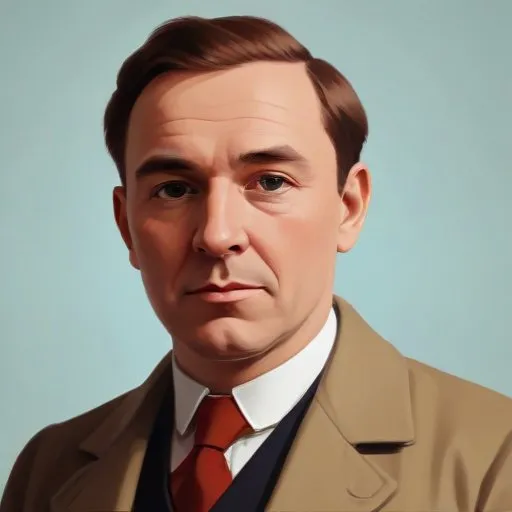
A renowned expert in ancient Greek and Roman history, uncovering archaeological treasures and shedding light on the early Christian era.
Sir William Mitchell Ramsay, a British archaeologist and New Testament scholar, revolutionized the field of biblical studies with his groundbreaking research and discoveries. He is renowned for being the foremost authority on the history of Asia Minor and a leading scholar in the study of the New Testament.
Ramsay was born on March 15, 1851, in Glasgow, Scotland, to a family of lawyers. After the death of his father at a young age, his family moved to the countryside, where he received his early education. With the help of his older brother and maternal uncle, Ramsay was able to attend the Gymnasium in Old Aberdeen and later studied at the University of Aberdeen, achieving high distinction.
Ramsay was educated in the Tübingen school of thought, founded by F.C. Baur, which doubted the reliability of the New Testament. However, his extensive archaeological and historical studies led him to question the school's assumptions and ultimately convinced him of the historical accuracy of the New Testament.
Ramsay held prestigious positions, including Professor of Classical Art and Architecture at Oxford and Regius Professor of Humanity at Aberdeen. He wrote several influential works, including The Church in the Roman Empire, The Cities of St. Paul, and The Letters to the Seven Churches, which showcased his expertise in archaeology, history, and biblical studies.
Ramsay's scholarly achievements earned him numerous honors, including a knighthood in 1906, three honorary fellowships from Oxford colleges, and nine honorary doctorates from British, Continental, and North American universities.
Ramsay's work had a significant impact on modern society, as he combined his archaeological expertise with Christian apologetics. Although his argumentative nature and caustic tendencies later harmed his reputation among scholars, his contributions to the field of biblical studies remain unparalleled.
Ramsay's legacy continues to influence biblical studies, archaeology, and Christian apologetics. His work serves as a testament to the power of rigorous scholarship and the pursuit of historical accuracy.
Ramsay's contributions to the field of biblical studies are often compared to those of his contemporaries, such as F.C. Baur and Adolf von Harnack. While they shared similar interests, Ramsay's unique approach and expertise set him apart from his peers.
Ramsay's words continue to inspire and challenge scholars today: "The New Testament is a book of history, and its historical value is of the highest order."
Ramsay's remarkable journey, marked by intellectual curiosity and a passion for discovery, serves as a testament to the power of scholarship and the importance of seeking historical accuracy.
Born in 1822
A pioneering archaeologist who uncovered the ancient city of Troy, verifying the historicity of Homer's epic poems. He's famous for his excavations that rewrote the history of the Mediterranean region.
Born in 1874
Discovered the tomb of Pharaoh Tutankhamun in Egypt, uncovering thousands of artifacts and treasures that revealed secrets of ancient Egyptian life.
Born in 1868
Pioneering archaeologist and spy who mapped and excavated ancient Mesopotamian sites, shaping Middle Eastern politics and cultural understanding.
