


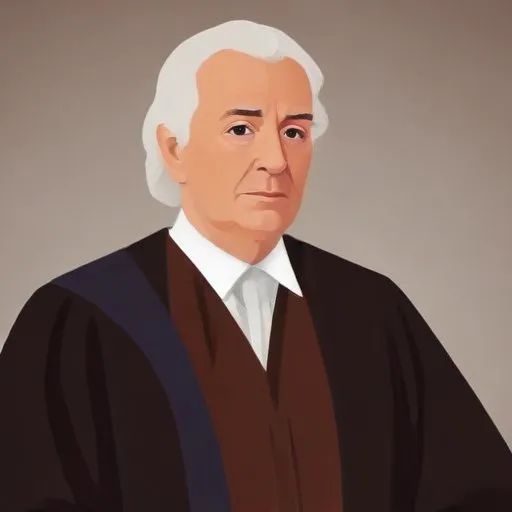
A Scottish lawyer, judge, and politician who served as Chancellor of the Exchequer and played a significant role in shaping British law and politics. He's most known for his influential judgments on slavery and trade.
William Murray, 1st Earl of Mansfield, is best known for his reforms to English law, which moved the country towards abolishing slavery and established Britain as a world leader in industry, finance, and trade. As a renowned British judge, politician, lawyer, and peer, he left an indelible mark on the country's legal system.
Mansfield's journey to becoming the most powerful British jurist of the 18th century began with his election to the House of Commons as a Member of Parliament for Boroughbridge in 1742. He soon became the Solicitor General and, eventually, the Attorney General. When Sir Dudley Ryder died in 1754, Mansfield took his place as Chief Justice.
As Chief Justice, Mansfield's decisions reflected the Age of Enlightenment. He advanced commercial law in ways that modernized both English law and England's courts. He rationalized the system for submitting motions and reformed the way judgments were delivered to reduce expense for the parties.
Mansfield's judgments in Carter v Boehm and Pillans v Van Mierop earned him the title of "founder of English commercial law." Additionally, his judgment in Somerset v Stewart held that slavery had no basis in common law and had never been established by positive law in England, and therefore was not binding in law.
Mansfield's reforms had a profound impact on modern society. His decisions paved the way for the abolition of slavery and helped establish Britain as a world leader in industry, finance, and trade. His modernization of English law and courts laid the foundation for the country's future economic growth and development.
Born on March 2, 1705, in Scone Palace, Perthshire, Scotland, Mansfield came from a family of Scottish nobility. He was educated in Perth before moving to London at the age of 13 to study at Westminster School. He was accepted into Christ Church, Oxford in May 1723 and graduated four years later.
Mansfield's decisions reflected his commitment to the principles of the Age of Enlightenment. He believed in the importance of reason, individual rights, and the rule of law. His judgments demonstrated his dedication to fairness, justice, and equality.
Mansfield's legacy is a testament to his dedication to reforming English law. He played a crucial role in shaping the country's legal system and paved the way for future generations of lawyers and judges. His influence on modern society continues to be felt to this day.
Mansfield was appointed as the 1st Earl of Mansfield in 1756, a testament to his outstanding contributions to English law and politics.
61 Years Old
A lawyer and politician who served in the U.S. House of Representatives from 1987 to 1997, known for his moderate Republican views and advocacy for environmental issues.
Born in 1711
A Scottish Enlightenment thinker who developed influential ideas on morality, ethics, and human nature, and is considered one of the most important figures in the history of Western philosophy.
Born in 1846
A Nigerian priest and historian who wrote the first comprehensive history of the Yoruba people, providing valuable insights into their culture and traditions.
Born in 1740
Wrote the definitive biography of Samuel Johnson, capturing the essence of 18th-century literary London and earning a reputation as a master biographer.
Born in 1729
An 18th-century thinker who shaped modern conservatism, advocating for gradual social change and warning against the dangers of radical revolution. He's also known for his philosophical writings on aesthetics and the sublime.
Born in 1749
A prominent 18th-century politician who championed individual liberties and opposed British imperialism, known for his charismatic oratory skills and influential foreign policy decisions.
