


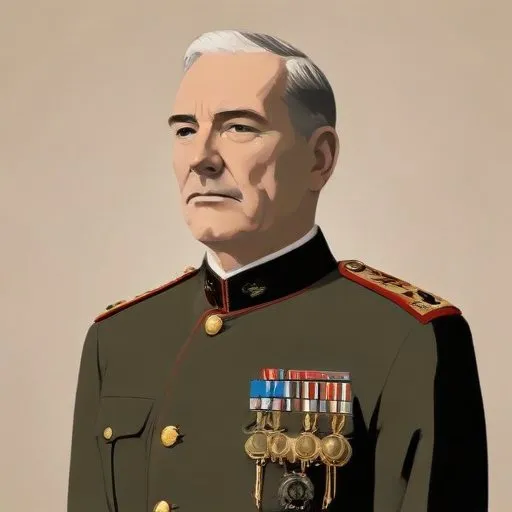
American colonel who played a key role in the French and Indian War and later became a prominent figure in the American Revolution, leading troops in several battles.
William Stacy, a prominent figure in American history, is best known for his involvement in the Continental Army during the American Revolutionary War and his pioneering efforts in the Ohio Country. As a lieutenant colonel, Stacy played a significant role in various events during the war, including rallying the militia in Massachusetts and participating in the Siege of Boston.
Born on February 15, 1734, in Gloucester, Massachusetts, Stacy grew up on the coast and learned the trade of shoemaking from his father. He may have also worked in the seafaring business before marrying Sarah Day in 1754 and moving to New Salem in western Massachusetts in 1757.
During the American Revolutionary War, Stacy was captured by Loyalists and American Indians at the Cherry Valley massacre. He narrowly escaped death by burning at the stake, and General George Washington made efforts to secure his release from captivity. Upon his release, Washington gifted Stacy a gold snuff box, a token of appreciation for his service.
After the war, Stacy became a pioneer, helping to establish Marietta, Ohio, as the first permanent American settlement in the Northwest Territory. He was an active member of the Marietta pioneer community, serving as foreman of the first Grand Jury in the Northwest Territory, which established the rule of law in the territory.
In 1784, at the age of 56, Stacy ice skated thirty miles up a frozen river to warn his sons of a possible Indian attack, which later occurred as the Big Bottom massacre, marking the beginning of the Northwest Indian War.
William Stacy's contributions to American history are multifaceted. His military service and pioneering efforts played a significant role in shaping the nation's early years. His legacy extends beyond his own achievements, as he helped establish the rule of law in the Northwest Territory and paved the way for future generations of settlers.
While there is limited information on Stacy's philosophical beliefs, his actions suggest a strong commitment to the American cause and a willingness to take risks to secure the nation's future.
Stacy's marriage to Sarah Day and his efforts to warn his sons of potential danger demonstrate his commitment to family and community. His relationship with General George Washington, as evident in the gift of the gold snuff box, highlights the respect and admiration he earned from his contemporaries.
William Stacy's pioneering efforts in the Ohio Country helped shape the course of American history, influencing the development of the Northwest Territory and beyond. His contributions continue to resonate in modern society, serving as a testament to the courage and determination of early American settlers.
William Stacy's life and legacy serve as a testament to the pioneering spirit and determination of early American settlers. His contributions to American history continue to inspire and educate generations to come.
Born in 1732
The first President of the United States, a military hero who led the country to independence, and set the standard for the office of the presidency. He's known for his honesty, integrity, and leadership skills.
Born in 1735
This American patriot and artisan is famous for his midnight ride during the American Revolution, warning colonists that the British were coming, and for his iconic engravings, including the Boston Massacre depiction.
Born in 1737
First Governor of Massachusetts, instrumental in American independence and famously signed the Declaration of Independence with a large, bold signature .
Born in 1722
A leading figure in the American Revolution, he played a key role in shaping the country's independence and democracy. He's also famous for his Boston Beer Company, which still brews his namesake beer today.
79 Years Old
A Pulitzer Prize-winning composer, known for blending minimalism with complex rhythms, creating a unique sound that resonates with audiences worldwide.
Born in 1743
The principal author of the Declaration of Independence and a strong advocate for individual liberties and limited government, shaping America's foundational principles. He oversaw the Louisiana Purchase, doubling the country's territory.
Born in 1706
A founding father of the United States, he was a leading figure in the Enlightenment, known for his groundbreaking inventions, scientific discoveries, and influential writings. He played a key role in shaping American history and politics.
Born in 1736
A pioneering figure in American history, he played a key role in the American Revolution and is famous for declaring "Give me liberty or give me death!" in a speech that helped galvanize the colonial resistance against British rule.
