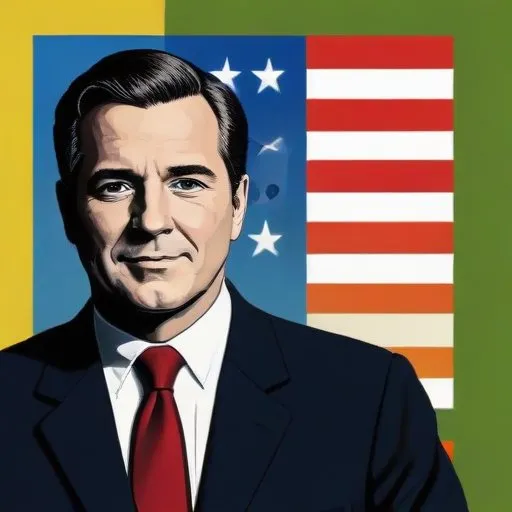
William T. Cahill: A Life of Public Service and Moderate Republicanism
A Governor and a Legacy
William T. Cahill is best known for his tenure as the 46th governor of New Jersey, serving from 1970 to 1974. During his time in office, he made significant contributions to the state's development, earning him a reputation as a moderate Republican leader.
Early Life and Education
Born on June 25, 1912, in Philadelphia to Irish immigrants William P. Cahill and Rose Cahill, Cahill's family moved to South Jersey in 1919. He attended Camden Catholic High School, graduating in 1929, and later received his degree from St. Joseph's College (now Saint Joseph's University) in Philadelphia in 1933. Cahill pursued a law degree from the Rutgers School of Law in Camden, graduating in 1937.
A Career in Politics
Cahill's political career began in 1939, when he was admitted to the bar. He served as a special agent of the Federal Bureau of Investigation in 1937 and 1938. Later, he worked as the city prosecutor of Camden, New Jersey, from 1944 to 1945, and as the first assistant prosecutor of Camden County from 1948 to 1951.
New Jersey General Assembly and U.S. House of Representatives
Cahill was a member of the New Jersey General Assembly from 1951 to 1953. He was elected to the U.S. House of Representatives, serving in the Eighty-sixth and five succeeding Congresses. During his tenure, he voted in favor of the Civil Rights Act of 1964 and the Voting Rights Act of 1965.
Governor of New Jersey
In 1969, Cahill ran for Governor of New Jersey, defeating Democrat
Robert B. Meyner. He became the first Republican governor of New Jersey in 16 years, serving from January 20, 1970, to January 15, 1974.
Moderate Republicanism
Throughout his political career, Cahill was widely regarded as a moderate Republican. His voting record and policies reflected his commitment to finding common ground between liberal and conservative ideologies.
Personal Life and Legacy
Cahill passed away on July 1, 1996, leaving behind a legacy of public service and moderate Republicanism. His commitment to the people of New Jersey and his dedication to finding common ground continue to inspire politicians and citizens alike.
Key Milestones and Achievements
- 46th governor of New Jersey (1970-1974)
- Member of the New Jersey General Assembly (1951-1953)
- U.S. House of Representatives (eight terms)
- Voted in favor of the Civil Rights Act of 1964 and the Voting Rights Act of 1965
- First Republican governor of New Jersey in 16 years (1970)
Remembering William T. Cahill
William T. Cahill's life and legacy serve as a testament to the power of moderate politics and public service. His commitment to the people of New Jersey and his dedication to finding common ground continue to inspire generations of politicians and citizens alike.
FAQ
What was William T. Cahills role in New Jersey politics?
William T. Cahill served as the 46th Governor of New Jersey from 1962 to 1970. During his tenure, he oversaw significant reforms in areas such as education, transportation, and civil rights.
What were William T. Cahills accomplishments as Governor of New Jersey?
William T. Cahills accomplishments as Governor include the creation of the New Jersey Department of Environmental Protection, the establishment of the New Jersey Turnpike Authority, and the implementation of reforms to the states education system.
What was William T. Cahills background before entering politics?
Before entering politics, William T. Cahill worked as a lawyer in New Jersey. He served in the United States Army during World War II and was awarded the Purple Heart for his service.
What were William T. Cahills views on civil rights?
William T. Cahill was a strong supporter of civil rights, and his administration worked to promote equality and social justice in New Jersey. He publicly endorsed the Civil Rights Act of 1964 and supported the Voting Rights Act of 1965.
How did William T. Cahills governorship impact the state of New Jersey?
William T. Cahills governorship had a lasting impact on the state of New Jersey, particularly in the areas of environmental protection, education, and civil rights. His reforms and initiatives continue to shape the states policies and priorities today.