


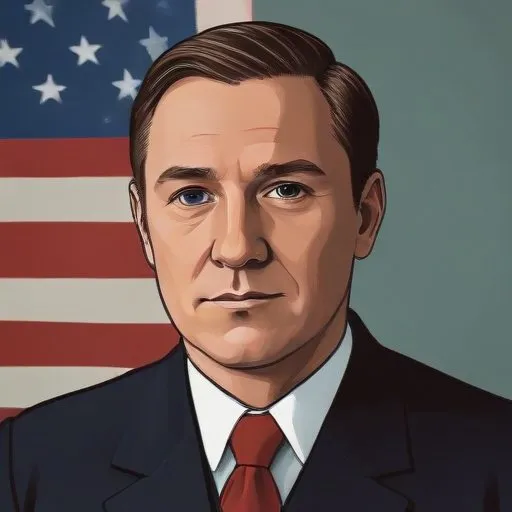
American lawyer and politician who served as a U.S. Representative from Iowa and played a key role in the development of the Iowa Territory. He's most known for his efforts to establish Iowa as a state.
William W. Chapman was a trailblazing American politician and lawyer who left an indelible mark on the history of Oregon and Iowa. As a United States Attorney, a member of the United States House of Representatives, and a prominent figure in the Oregon Territorial Legislature, Chapman's contributions to the development of these regions continue to reverberate to this day.
Born on August 11, 1808, in Clarksburg, Virginia (now West Virginia), Chapman's early life was marked by hardship and determination. After his father's death at the age of 14, he took on various jobs to support himself, including working as a court clerk. Despite these challenges, Chapman persevered and eventually earned his law license in 1832.
Chapman's legal career took off in Middletown, Virginia, where he practiced law and later moved to Macomb, Illinois, and then to Burlington, Iowa, which was then part of the Michigan Territory. In 1835, he became one of the first settlers in Burlington and soon assumed the role of prosecuting attorney. His impressive legal skills and strong work ethic caught the attention of President Andrew Jackson, who appointed Chapman as the United States Attorney for the Michigan Territory in 1836.
Chapman's political career continued to blossom as he served as the first United States Attorney for the District of Wisconsin in 1836. He was subsequently elected as a colonel of the militia and later represented the Iowa Territory in the United States House of Representatives.
In 1851, Chapman immigrated to the Oregon Country, where he became an integral part of the region's development. He helped found The Oregonian newspaper, promoted economic interests in Portland, and played a key role in the construction of Canyon Road near Portland. Chapman's bravery and leadership skills were also demonstrated during the Rogue River War in Oregon.
In his later years, Chapman continued to serve in the Oregon Legislative Assembly, where he championed the expansion of railroads from Portland. His contributions to the city were recognized when Chapman Square, a park in downtown Portland, was named in his honor.
Chapman married Margaret F. Ingraham in 1832, with whom he had seven children. Throughout his life, he remained committed to public service and community development, earning a reputation as a dedicated and visionary leader.
Today, William W. Chapman's legacy serves as a testament to the power of perseverance, determination, and community engagement. His impact on the political, legal, and social landscape of Oregon and Iowa continues to inspire future generations of leaders and citizens.
Born in 1809
Led the United States through its Civil War and ultimately abolished slavery, leaving a lasting legacy in American history.
Born in 1822
Led the Union Army to victory in the Civil War and later became President, known for issuing the Emancipation Proclamation and strengthening federal authority.
Born in 1822
The 19th President of the United States, a general, lawyer, and politician who ended the Reconstruction era and withdrew federal troops from the South, allowing Racial Segregation to begin. He's also known for being a strong supporter of education and civil service reform.
Born in 1831
The 20th President of the United States was a multifaceted leader who served as a general in the Civil War and later became a lawyer and politician, known for his strong advocacy for education and civil rights. He's also infamous for being assassinated just six months into his presidency.
Born in 1829
The 21st President of the United States, a strong advocate for civil service reform, is most known for signing the Pendleton Civil Service Act, which transformed the federal government's hiring practices. He's also remembered for his unexpected rise to presidency after the assassination of James A. Garfield.
Born in 1837
The first Democrat elected after the Civil War, he served two non-consecutive terms, earning him a unique spot in history, and is often remembered for his strong leadership and commitment to limited government.
Born in 1726
A Virginia politician, planter, and merchant who served in the Continental Congress and played a key role in the American Revolution. He was a signer of the Declaration of Independence.
Born in 1843
The 25th President of the United States, a strong leader who championed high tariffs and annexed Hawaii, is most known for being assassinated at the 1901 World's Fair. He played a significant role in shaping the country's economy and foreign policy.
