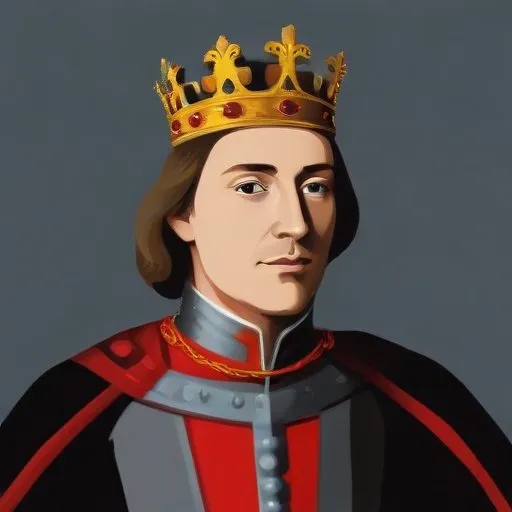
William of Winchester, Lord of Lüneburg: The Forgotten Anglo-German Noble
A Life of Power and Intrigue
William of Winchester, Lord of Lüneburg, is renowned for his pivotal role in shaping the complexities of medieval Anglo-German politics. As a member of the House of Welf, William wielded significant influence in both England and Germany, navigating the intricate web of alliances and rivalries that defined the 12th century.
Ancestry and Early Life
Born circa 1119, William was the son of Henry the Proud, Duke of Bavaria, and Gertrude of Süpplingenburg. His maternal grandmother, Richenza of Northeim, brought a rich inheritance of lands and titles, solidifying William's position as a key player in the Anglo-German aristocracy.
Family Ties and Alliances
Through his family connections, William maintained a network of powerful relationships. His mother's brother, Lothair of Süpplingenburg, was the Holy Roman Emperor, while his uncle, Welf VI, held the title of Duke of Spoleto. These ties allowed William to exert considerable influence over the Holy Roman Empire and the Kingdom of England.
Rise to Power
In 1142, William's father, Henry the Proud, died, leaving his son with a disputed claim to the Duchy of Saxony. William's ascent to power was marked by a series of strategic alliances and military campaigns. He eventually secured the title of Lord of Lüneburg in 1143, ruling over a vast territory that stretched from the Elbe River to the North Sea.
Conflict and Diplomacy
Throughout his reign, William navigated complex conflicts and alliances. He supported the Emperor Frederick I in his campaigns against the Lombards and participated in the Wendish Crusade of 1147-1148. However, his relationships with the Emperors Conrad III and Frederick I were marked by periods of tumult and reconciliation.
Legacy and Impact
William's contributions to medieval politics and society are multifaceted. He fostered economic growth in his territories, promoting trade and commerce along the Elbe River. His strategic alliances and military campaigns helped shape the balance of power in the Holy Roman Empire and the Kingdom of England.
Personal Life and Offspring
William married Helena of Denmark, daughter of King Canute V, in 1162. The couple had two sons, Henry the Lion and William of Lüneburg. Henry would go on to become one of the most powerful nobles in the Holy Roman Empire, while William's daughters married into prominent noble families, further solidifying his legacy.
Historical Context and Legacy
William of Winchester, Lord of Lüneburg, played a significant role in shaping the Anglo-German aristocracy of the 12th century. His strategic alliances, military campaigns, and economic initiatives had lasting impacts on the region. As a member of the House of Welf, William's legacy is deeply intertwined with the complex web of medieval politics and society.
Trivia and Fun Facts
- William's maternal grandmother, Richenza of Northeim, was a descendant of the Saxon nobleman, Billung of Nordmark.
- William's son, Henry the Lion, would go on to commission the famous Braunschweig Lion statue, a symbol of the House of Welf.
- The Lüneburg Heath, a region in northern Germany, was under William's jurisdiction and remains a popular tourist destination to this day.
Conclusion
William of Winchester, Lord of Lüneburg, was a master diplomat and strategist who navigated the intricate world of medieval politics with ease. His legacy, marked by economic growth, strategic alliances, and military campaigns, continues to fascinate historians and scholars today. As a testament to his enduring impact, William remains an enigmatic figure, worthy of further exploration and discovery.
FAQ
Who was William of Winchester, Lord of Lüneburg?
William of Winchester, Lord of Lüneburg, was a member of the House of Welf, a noble family in medieval Europe. He was the son of Henry the Lion, Duke of Saxony and Bavaria, and Matilda of England.
What were William of Winchesters family ties and alliances?
William of Winchester had significant family ties and alliances, being the grandson of King Henry II of England and a cousin of King Richard the Lionheart. He was also related to the Holy Roman Emperor, Frederick Barbarossa.
What was William of Winchesters role in the Welf dynasty?
William of Winchester played an important role in the Welf dynasty, as he was the founder of the Lüneburg branch of the family. He held significant power and influence in the region, and his descendants would go on to play important roles in German history.
What is William of Winchesters historical significance?
William of Winchesters historical significance lies in his role as a founder of the Lüneburg branch of the Welf dynasty. He played a key part in shaping the course of German history, particularly in the region of Lower Saxony.
What are the main sources of information about William of Winchester?
The main sources of information about William of Winchester come from medieval chronicles and historical records, including the works of historians like Helmold of Bosau and Arnold of Lübeck.