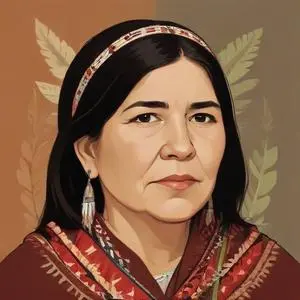
Wilma Mankiller: A Trailblazing Leader and Champion of Native American Rights
A Pioneer in Native American Politics
Wilma Mankiller is revered as the first woman to serve as Principal Chief of the Cherokee Nation, a position she held from 1985 to 1995. During her tenure, she worked tirelessly to improve the lives of Native Americans, advocating for tribal sovereignty, healthcare, and education.
Early Life and Activism
Born on November 18, 1945, in Tahlequah, Oklahoma, Mankiller grew up on her family's allotment in Adair County. At the age of 11, she moved to San Francisco as part of a federal government program to urbanize Indigenous Americans. This experience would later shape her commitment to preserving Native American culture and identity. In the 1960s, Mankiller became involved in the Occupation of Alcatraz and participated in the land and compensation struggles with the Pit River Tribe, solidifying her reputation as a passionate advocate for Native American rights.
Community Development and Leadership
After returning to Oklahoma in 1976, Mankiller was hired by the Cherokee Nation as an economic stimulus coordinator. Her exceptional grant-writing skills and dedication to community development led to her appointment as Director of the Community Development Department. Under her leadership, innovative projects empowered rural citizens to identify their own challenges and participate in solving them. Her work in Bell, Oklahoma, was featured in the acclaimed film
The Cherokee Word for Water, which highlighted her grassroots approach to community development.
Rise to Leadership and Legacy
Mankiller's exceptional management skills caught the attention of Principal Chief Ross Swimmer, who invited her to run as his deputy in the 1983 tribal elections. When they won, she became the first elected woman to serve as Deputy Chief. In 1985, she succeeded Swimmer as Principal Chief, a position she held for three consecutive terms. During her tenure, she focused on tribal sovereignty, healthcare, and education, improving the lives of thousands of Native Americans.
Awards and Honors
Mankiller's remarkable achievements have been recognized with numerous awards and honors, including:
- The Presidential Medal of Freedom (1998)
- The National Women's Hall of Fame (1994)
- The Oklahoma Women's Hall of Fame (1987)
- The National Native American Hall of Fame (2007)
Inspirational Quotes
Mankiller's words continue to inspire generations of Native Americans and beyond:
"The secret of our success is that we never, never give up."
Personal Milestones
Mankiller's life was marked by significant personal milestones, including her marriage to Hector Olaya, with whom she had two daughters, and her own struggles with health issues.
Impact on Modern Society
Wilma Mankiller's trailblazing career has left an indelible mark on modern society. Her commitment to tribal sovereignty, healthcare, and education has improved the lives of countless Native Americans. As a role model, she has inspired generations of women and Native Americans to pursue careers in politics and community development.
Legacy and Historical Context
Mankiller's remarkable life and achievements have cemented her place in American history. Her legacy serves as a testament to the power of grassroots activism, community development, and effective leadership. As a champion of Native American rights, she has left an enduring impact on American society, paving the way for future generations of leaders and advocates.
FAQ
What was Wilma Mankillers role in the Cherokee Nation?
Wilma Mankiller was the first female principal chief of the Cherokee Nation, serving from 1985 to 1995 and initiating several programs to promote tribal self-governance and economic development.
What were some of Wilma Mankillers notable achievements?
Wilma Mankiller launched various initiatives during her tenure, including the creation of a Cherokee language and culture program, healthcare services, and infrastructure development projects.
What inspired Wilma Mankiller to become involved in tribal politics?
Wilma Mankiller grew up in a family of activists and was inspired by her upbringing to advocate for Native American rights and tribal sovereignty.
How did Wilma Mankillers leadership style impact the Cherokee Nation?
Wilma Mankillers collaborative and inclusive leadership style helped to build trust between the tribe and federal government, leading to increased funding and support for tribal initiatives.
What awards did Wilma Mankiller receive for her work?
Wilma Mankiller received several awards for her contributions to Native American advocacy, including the Presidential Medal of Freedom, the highest civilian honor in the United States.