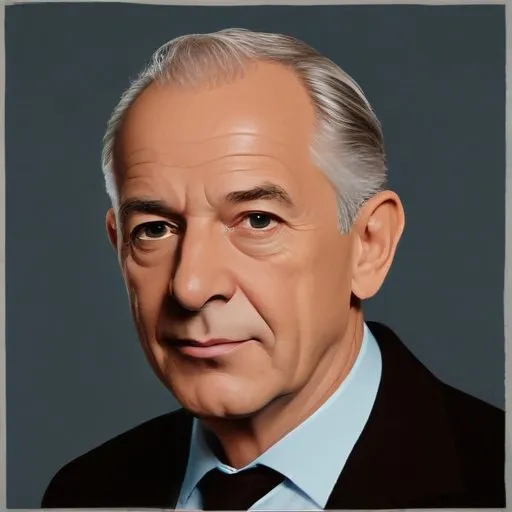
Wolfgang Suschitzky: The Visionary Cinematographer and Photographer
A Legacy of Visual Storytelling
Wolfgang Suschitzky, a renowned Austrian-born British documentary photographer and cinematographer, left an indelible mark on the world of visual storytelling. Perhaps best known for his collaborations with
Paul Rotha in the 1940s and his work on Mike Hodges' 1971 film Get Carter, Suschitzky's expertise in extracting atmosphere from naturalistic settings has earned him a reputation as a master of his craft.
Early Life and Influences
Born on August 29, 1912, in Vienna, Austria-Hungary, Suschitzky was raised in a family of social democrats with a strong emphasis on learning and culture. His father, a publisher and owner of Vienna's first social democratic bookshop, instilled in him a love for literature and politics. This early exposure to intellectual and artistic pursuits would shape Suschitzky's future endeavors. His sister, Edith Tudor-Hart, was also a photographer, further solidifying the family's connection to the world of visual arts.
A Career Spanning Decades
Suschitzky's journey in photography began in the 1930s, with his work appearing in various international photography collections. His expertise in location photography led to collaborations with notable directors, including Paul Rotha, with whom he worked on several documentaries in the 1940s. This partnership not only honed Suschitzky's skills but also cemented his reputation as a documentarist with an exceptional ability to capture atmosphere from naturalistic settings.
Get Carter and Beyond
Suschitzky's work on Get Carter, a gritty and influential British crime drama, showcased his versatility as a cinematographer. The film's stark, realistic aesthetic, achieved through Suschitzky's innovative use of lighting and composition, helped to establish the movie as a classic of the genre. This success paved the way for further collaborations with prominent directors, solidifying Suschitzky's position as a leading cinematographer of his time.
Personal Milestones and Key Life Events
- In 1948, Suschitzky became a British citizen, a decision that reflected his deep connection to his adopted country and its cultural heritage.
- He married twice, first to Ilona Donath and later to Pamela Russell, with whom he had three children: Peter Suschitzky, Misha Donat, and Julia Donat.
- Suschitzky's father passed away in 1959, an event that profoundly affected him and led to a deeper appreciation for his family's history and cultural roots.
Influence on Modern Society
Suschitzky's contributions to the world of documentary photography and cinematography have had a lasting impact on modern society. His innovative approaches to visual storytelling have inspired generations of photographers and filmmakers, shaping the way we perceive and interact with the world around us.
Exhibitions and Recognition
Suschitzky's photographs have been exhibited at the National Gallery, the Austrian Cultural Forum in London, and the Photographers' Gallery, among other prestigious institutions. His work continues to be celebrated and recognized, with many of his photographs held in high esteem by international photography collections.
Legacy and Historical Context
Wolfgang Suschitzky's remarkable career, spanning over seven decades, serves as a testament to his dedication to his craft and his unwavering passion for visual storytelling. As a "living link to the pre-war glory days of the British documentary movement," Suschitzky's legacy continues to inspire and educate new generations of photographers and filmmakers, ensuring his place as one of the most respected and influential cinematographers of the 20th century.
FAQ
What was Wolfgang Suschitzkys most notable work?
Wolfgang Suschitzkys most notable work was as a cinematographer on the 1949 film The Third Man, directed by Carol Reed, which is considered a classic of British cinema.
What was Wolfgang Suschitzkys film career like?
Wolfgang Suschitzky had a long and distinguished film career, working as a cinematographer and photographer on over 100 films, including Get Carter, The Damned, and UFO, and collaborating with directors such as Carol Reed and Freddie Francis.
Did Wolfgang Suschitzky work in television?
Yes, Wolfgang Suschitzky also worked in television, serving as a cinematographer on popular shows such as UFO and Space: 1999, and working on numerous documentaries and commercials.
What awards did Wolfgang Suschitzky receive?
Wolfgang Suschitzky received several awards, including a BAFTA Award for Best Cinematography for his work on The Third Man.
What was Wolfgang Suschitzkys legacy?
Wolfgang Suschitzkys legacy is as a highly influential cinematographer who helped shape the look of British cinema in the post-war period, and whose work continues to inspire filmmakers today.