


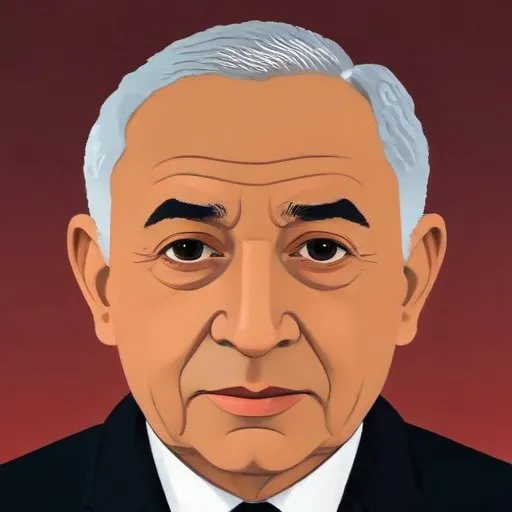
A prominent Israeli poet and playwright, known for his accessible and evocative style, which explores themes of love, war, and Jewish identity. His work is often described as a unique blend of simplicity and depth.
Yehuda Amichai, born Ludwig Pfeuffer in 1924, was an Israeli poet, novelist, and playwright who revolutionized modern Hebrew literature with his unique blend of colloquial language, complex imagery, and profound insight into the human experience. Regarded as one of the most important and influential poets of the 20th century, Amichai's work has been translated into over 30 languages and has won numerous prestigious awards, including the Israel Prize, the Bialik Prize, and the Brenner Prize.
Amichai was born in Würzburg, Germany, to an Orthodox Jewish family. He spent his early years speaking both Hebrew and German, which would later influence his writing style. In 1935, at the age of 11, Amichai immigrated to Petah Tikva, Mandate Palestine, with his family, later moving to Jerusalem in 1936. He attended Maaleh, a religious high school in Jerusalem, and was a member of the Palmach, the strike force of the Haganah, the defense force of the Jewish community in Mandate Palestine.
Amichai's literary career was deeply influenced by his experiences in war. He volunteered and fought in World War II as a soldier in the British Army and in the Negev on the southern front in the 1947-1949 Palestine war. After his discharge in 1946, Amichai studied at David Yellin College of Education in Jerusalem and became a teacher in Haifa. His first book of poetry, Now and in Other Days, was published in 1955, encouraged by one of his professors at Hebrew University.
Amichai's poetry collections, including Two Hopes Away (1958), At the Sea (1962), and Open Closed Open (1998), are renowned for their accessibility, depth, and innovative use of language. He also wrote novels, such as Not of This Time, Not of This Place (1963) and Mi Yitneni Malon (1971), which explore themes of identity, love, and the human condition. Amichai's numerous awards and honors include the Shlonsky Prize (1957), the Brenner Prize (1969), and the Israel Prize (1982), among others.
Yehuda Amichai's remarkable body of work has left an indelible mark on modern Hebrew literature, cementing his place as one of the most important poets of the 20th century. His innovative use of language, complex imagery, and profound insight into the human experience continue to inspire readers and writers worldwide.
As a poet, novelist, and playwright, Amichai's work has played a significant role in shaping the cultural identity of Israel, providing a unique window into the complexities of Israeli society and the human experience. His legacy will continue to be felt for generations to come, as his work remains a testament to the power of literature to capture the essence of the human condition.
87 Years Old
A prominent Israeli writer and peace activist, known for his literary works that explore the Israeli-Palestinian conflict and the human condition.
Born in 1888
A Ukrainian-Israeli writer who crafted poignant, lyrical stories exploring Jewish identity and the human condition, earning him the Nobel Prize in Literature in 1966.
