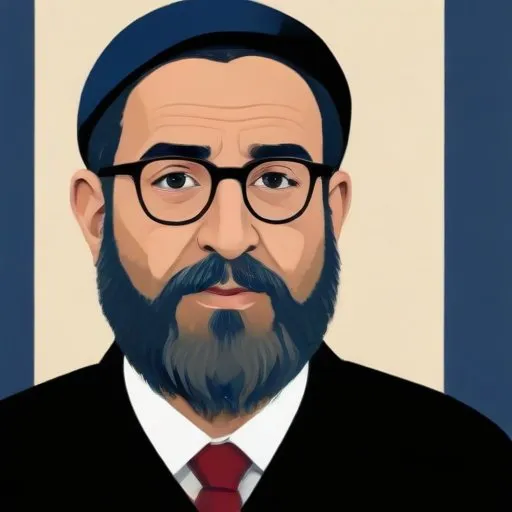
Yehuda Leib Maimon: The Visionary Rabbi and Leader of Religious Zionism
A Life Dedicated to Faith and Nation
Yehuda Leib Maimon, also known as Yehuda Leib HaCohen Maimon, was a renowned Israeli rabbi, politician, and leader of the Religious Zionist movement. He is best known for being Israel's first Minister of Religions, a position that allowed him to shape the country's religious landscape and promote unity among its citizens.
Early Life and Education
Born on January 1, 1875, in Mrculesti, Bessarabia Governorate (now part of Moldova), Maimon studied in various yeshivot and received rabbinic ordination from Rabbi
Yechiel Michel Epstein, the author of the Aruch HaShulchan. This solid education in Jewish law and tradition laid the foundation for his future leadership role in the Religious Zionist movement.
A Leader Emerges
In 1902, Maimon co-founded the Mizrachi movement, which sought to combine traditional Judaism with modern Zionism. His involvement in the movement led to several arrests in Russia for Zionist activity, a testament to his unwavering commitment to the cause. Despite these challenges, Maimon continued to play a crucial role in the movement, attending every Zionist Congress from 1909 until Israeli independence in 1948.
A New Chapter in Palestine
In 1913, Maimon immigrated to Palestine, then part of the Ottoman Empire. Although he was expelled during World War I, he returned in 1919 and became one of the founders of the Chief Rabbinate of Israel. This marked the beginning of his involvement in Israeli politics, which would continue to shape the country's development in the years to come.
Politics and Ministry
Maimon's political career was marked by several key milestones. In 1939, he participated in the St. James Palace Conference, representing the Jews in Mandatory Palestine. In 1946, he was arrested by the British during Operation Agatha, but this did not deter him from continuing to fight for Israel's independence. He was elected to the Committee of Five that edited the final format of the Declaration of Independence and was one of its signers.
After Israel gained independence, Maimon served as a member of the Knesset, Minister of Religions, and Minister of Victims of War. His sister, Ada, also served as a member of the Knesset for Mapai, making them a dynamic sibling duo in Israeli politics.
Legacy and Impact
Yehuda Leib Maimon's legacy extends far beyond his political achievements. He was a visionary who successfully merged traditional Judaism with modern Zionism, paving the way for future generations of Religious Zionists. His tireless efforts to promote unity and understanding among Israel's citizens have left an indelible mark on the country's religious landscape.
Through his remarkable life, Maimon demonstrated that faith and nation can coexist in harmony, inspiring countless individuals to follow in his footsteps. As Israel's first Minister of Religions, he set a high standard for future leaders, and his contributions to the country's development continue to be felt to this day.
Yehuda Leib Maimon passed away on July 10, 1962, at Assuta hospital in Tel Aviv, leaving behind a rich legacy that continues to inspire and motivate Israelis and Jews around the world.
FAQ
What was Yehuda Leib Maimons role in Jewish politics?
Yehuda Leib Maimon played a key role in Jewish politics, serving as a member of the first Knesset and advocating for Jewish rights and interests.
What was Yehuda Leib Maimons connection to the Mizrachi movement?
Yehuda Leib Maimon was a leading figure in the Mizrachi movement, a religious Zionist organization that aimed to promote Jewish settlement in Palestine.
What were Yehuda Leib Maimons views on Jewish education?
Yehuda Leib Maimon believed in the importance of Jewish education and was instrumental in establishing several educational institutions in Israel.
How did Yehuda Leib Maimon contribute to the establishment of Israel?
Yehuda Leib Maimon played a significant role in the establishment of the State of Israel, serving on the Jewish Agency and helping to facilitate the transition to independence.
What was Yehuda Leib Maimons legacy?
Yehuda Leib Maimons legacy is that of a dedicated Jewish leader who worked tirelessly to promote Jewish rights, education, and statehood.