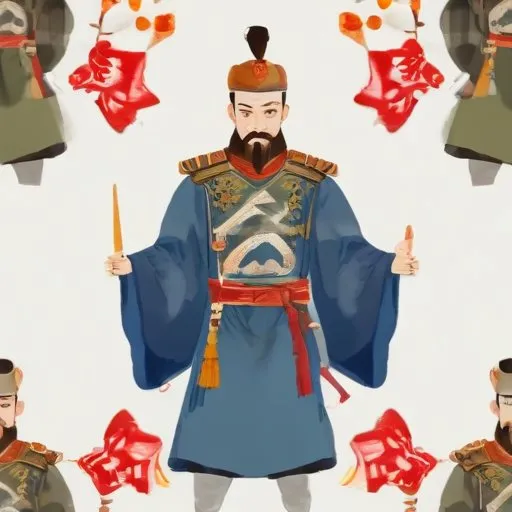
Yue Fei: The National Hero of Song China
A warrior, a patriot, and a legend
Yue Fei, a renowned Chinese military general, is celebrated as a national hero of Song China for his unwavering dedication to defending his country against the Jurchen-ruled Jin dynasty in the 12th century. His bravery, strategic prowess, and unrelenting spirit have cemented his place in Chinese history as a paragon of loyalty and patriotism.
Early Life and Ancestry
Born on March 24, 1103, in Xiaoti, Yonghe Village, Tangyin, Xiangzhou, Henan, Yue Fei's ancestral home was in present-day Tangyin County, Anyang, Henan. His courtesy name was Pengju, and he was granted the posthumous name Wumu by Emperor Xiaozong in 1169, and later, the noble title King of E by the Emperor Ningzong in 1211.
Military Career and Achievements
Yue Fei's military career was marked by a series of victories against the Jin dynasty, earning him recognition as a brilliant strategist and fearless warrior. He led the Song forces to several triumphs, including the Battle of Huangtiandang and the Battle of Yancheng. His military prowess was unmatched, and his campaigns are still studied by military historians today.
Tragic Downfall and Martyrdom
Despite his accomplishments, Yue Fei's life was cut short by a treacherous plot. He was framed and executed on January 28, 1142, by the Southern Song government, which had negotiated a peace treaty with the Jin dynasty. This event sparked widespread outrage and cemented Yue Fei's status as a martyr and national hero.
Legacy and Cultural Impact
Yue Fei's legend has endured for centuries, inspiring generations of Chinese people. He is revered as a symbol of loyalty, patriotism, and courage. His image has been immortalized in literature, art, and popular culture, including the famous Wu Shuang Pu (Table of Peerless Heroes) by Jin Guliang.
Biographies and Historical Records
Yue Fei's biography, written by his grandson Yue Ke, provides valuable insights into his life and achievements. The biography, titled Eguo Jintuo Zubian, was later incorporated into the History of Song, a comprehensive record of historical events and biographies of noted Song dynasty individuals.
Personal Milestones and Key Life Events
- March 24, 1103: Born in Xiaoti, Yonghe Village, Tangyin, Xiangzhou, Henan
- 1142: Executed on January 28, by the Southern Song government
- 1169: Granted the posthumous name Wumu by Emperor Xiaozong
- 1211: Granted the noble title King of E by the Emperor Ningzong
Philosophical Contributions and Beliefs
Yue Fei's life and legacy embody the Confucian values of loyalty, duty, and righteousness. He believed in the importance of defending one's country and upholding justice, even in the face of overwhelming adversity.
Influence on Modern Society
Yue Fei's legend continues to inspire contemporary Chinese society, serving as a symbol of national pride and patriotism. His story has been adapted into various forms of media, including films, television series, and literature, ensuring his legacy endures for generations to come.
FAQ
What is Yue Feis role in Chinese history?
Yue Fei is a renowned Chinese military general and national hero who lived during the Southern Song dynasty. He is famous for his bravery and patriotism, leading successful campaigns against the Jin dynasty.
What is Yue Feis most notable achievement in war?
Yue Feis most notable achievement in war is his victory in the Battle of Caishi, where he defeated the Jin dynastys forces despite being outnumbered. He also led successful campaigns in other battles, earning him great respect from his contemporaries.
How did Yue Fei contribute to Chinese literature?
Yue Fei was not only a skilled military general but also a talented poet and writer. He wrote several famous poems, including Man Jiang Hong, which is still widely studied and admired today.
What is Yue Feis legacy in modern China?
Yue Feis legacy in modern China is that of a national hero and symbol of patriotism. He is celebrated for his bravery, loyalty, and dedication to his country, inspiring generations of Chinese people.
What is the myth surrounding Yue Feis death?
According to legend, Yue Fei was wrongly accused of treason and executed by the Song government. This myth has become an integral part of Chinese folklore, with many seeing him as a martyr and symbol of injustice.