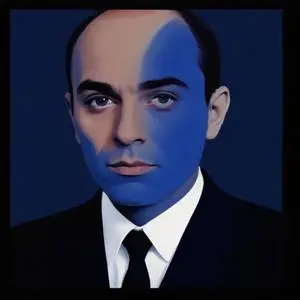
Yves Klein: The Pioneer of Performance Art and International Klein Blue
Artistic Visionary and Innovator
Yves Klein, a French artist, is renowned for his groundbreaking contributions to post-war European art, pioneering performance art, and developing the iconic International Klein Blue. As a leading figure in the Nouveau Réalisme movement, founded in 1960 by art critic Pierre Restany, Klein's innovative spirit and artistic creativity continue to inspire generations of artists.
Early Life and Artistic Influences
Born on April 28, 1928, in Nice, France, Klein was exposed to the art world from a young age. His parents, Fred Klein and Marie Raymond, were both painters, with his father practicing a loose post-impressionist style and his mother being a prominent figure in Art Informel. This eclectic artistic upbringing had a profound impact on Klein's artistic development, as he was encouraged to explore various styles and techniques.
Klein received no formal training in art, but his parents' influences and exposure to different styles shaped his artistic vision. His father's figurative style and his mother's affinity for abstract expressionism laid the foundation for Klein's future experiments with performance art and the creation of International Klein Blue.
Symbolic Gestures and Performance Art
One of Klein's most notable and symbolic gestures was his decision to sign the sky at the age of nineteen. This audacious act, which took place on a beach in the south of France, marked the beginning of his artistic quest to reach the infinite. This gesture not only foreshadowed his future artistic endeavors but also solidified his position as a pioneer in performance art.
In 1948, Klein became fascinated with the esoteric teachings of Max Heindel's 1909 text The Rosicrucian Cosmo-Conception and briefly pursued membership with an American Rosicrucian society. This interest in mysticism and spirituality further fueled his artistic explorations, leading to the creation of his distinctive blue pigment.
International Klein Blue: A Legacy of Innovation
Klein's most iconic contribution to the art world is undoubtedly International Klein Blue (IKB), a vibrant, ultra-marine pigment that has become synonymous with his artistic identity. This proprietary color, which Klein patented in 1960, was the result of extensive experimentation with synthetic pigments and binders. IKB has since become an integral part of art history, symbolizing the infinite, the spiritual, and the sublime.
Artistic Career Highlights and Major Works
- Zone de Sensibilité Picturale Immatérielle (1959-1962), a series of paintings that showcased Klein's innovative use of IKB.
- Anthropométries (1960), a series of performances in which Klein covered nude models in IKB and had them create impressions on paper.
- Fire Fountain (1961), a performance piece that featured a water fountain dyed with IKB, symbolizing the fusion of art and nature.
Influence on Modern Society and Pop Culture
Klein's pioneering spirit and artistic innovations have had a profound impact on modern society and popular culture. His use of IKB has inspired countless artists, designers, and musicians, including the likes of
David Bowie and
Andy Warhol. Klein's performance art has also influenced contemporary artists, such as Marina Abramović and Tino Sehgal, who continue to push the boundaries of art and performance.
Legacy and Historical Context
Yves Klein's untimely death on June 6, 1962, at the age of 34, did not diminish his artistic legacy. Instead, his innovative spirit and creative output continue to inspire new generations of artists, curators, and art enthusiasts. Today, Klein's work is held in high esteem, with his paintings and performances considered milestones in the development of modern and contemporary art.
Klein's artistic vision, which transcended the boundaries of traditional art forms, has solidified his position as a trailblazer in the world of art. His legacy continues to inspire, provoke, and challenge our understanding of what art can be, and his International Klein Blue remains an enduring symbol of artistic innovation and creativity.
FAQ
What is Yves Kleins significance in modern art?
Yves Klein was a French painter and artist who is considered a pioneer of performance art and a leading figure in the development of modern art. He is best known for his monochromatic paintings in a deep blue hue, which he patented as International Klein Blue.
What is the concept of New Realism, and how did Yves Klein contribute to it?
New Realism was an art movement in the 1960s that focused on everyday objects and their relationship with the viewer. Yves Klein was a key figure in this movement, using his paintings to explore the concept of the void and the relationship between the viewer and the artwork.
What is the story behind Yves Kleins famous Leap into the Void photograph?
The Leap into the Void photograph, taken in 1960, shows Yves Klein appearing to jump off a building. The image was actually staged using photomontage, and it was meant to represent the artists desire to transcend the boundaries of art and reality.
How did Yves Kleins artistic style evolve over time?
Yves Kleins artistic style evolved from his early interest in landscape painting to a focus on monochromatic works in the 1950s. He later experimented with performance art, sculpture, and even architecture, demonstrating a diverse range of creative expression.
What is Yves Kleins legacy in the art world today?
Yves Kleins innovative and provocative approach to art has had a lasting impact on the art world. His work continues to inspire contemporary artists, and his legacy can be seen in the many art movements that have followed in his footsteps, including conceptual art and performance art.