


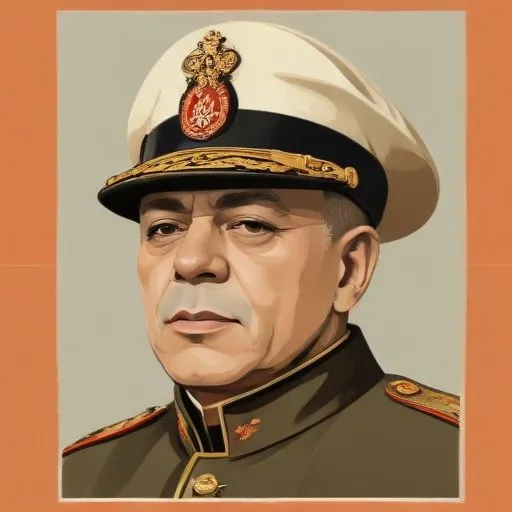
A Ukrainian-Russian general, journalist, and theorist who played a key role in establishing the Jewish Legion during World War I and later became a prominent figure in Zionist politics. He's also known for his writings on Jewish identity and nationalism.
Zeev Jabotinsky, a pioneering figure in the history of Zionism, is renowned for his instrumental role in shaping the modern Jewish state. As a charismatic leader, writer, poet, orator, soldier, and founder of several influential organizations, Jabotinsky's multifaceted personality left an indelible mark on the course of Jewish history.
Born on October 17, 1880, in Odessa, Ukraine, into an assimilated Jewish family, Jabotinsky's early life was marked by tragedy, with the loss of his father at the age of six and his older brother's death when he was just six months old. Despite these challenges, he went on to receive a middle-class Jewish education in Russian schools, where he developed a strong affinity for the Russian language and culture.
Jabotinsky's journey as a Zionist leader began during his teenage years, when he became enamored with the idea of a Jewish homeland. His early writings, including his 1903 article "The Bund and Zionism," demonstrated his fervent commitment to the Zionist cause. In 1905, he co-founded the Jewish Self-Defense Organization in Odessa, which played a pivotal role in protecting Jewish communities during the Russian Revolution.
During World War I, Jabotinsky collaborated with Joseph Trumpeldor to establish the Jewish Legion of the British Army, which fought alongside the British to liberate Palestine from Ottoman rule. This experience not only solidified his reputation as a skilled military strategist but also deepened his connection to the land of Palestine.
In the 1920s, Jabotinsky founded the Betar movement in Latvia, a paramilitary organization aimed at promoting Jewish self-defense and patriotism. This movement served as a precursor to the Irgun, a militant organization established in Mandatory Palestine in 1931, which Jabotinsky led until his death in 1940.
Jabotinsky's philosophical ideas were deeply rooted in the principles of Revisionist Zionism, which emphasized the importance of Jewish self-defense, a strong national identity, and the creation of a Jewish state on both sides of the Jordan River. His influential treatise, "The Iron Wall," published in 1923, outlined his vision for a Jewish state and the need for a "wall of iron" to protect it from external threats.
Jabotinsky was a prolific writer and poet, penning numerous articles, essays, and poems in Russian, Hebrew, and English. One of his most famous quotes, "Silent we will not remain," has become a rallying cry for Jewish resistance against oppression.
Jabotinsky's strong personality and unwavering commitment to his ideals often led to controversy and criticism. His vocal support for Jewish militarism and his alleged connections to fascist ideologies have sparked heated debates among historians and scholars.
Zeev Jabotinsky's legacy extends far beyond his own lifetime. His vision for a strong, self-sufficient Jewish state has inspired generations of Zionists, and his influence can be seen in the modern State of Israel. Today, Jabotinsky's ideas continue to shape the contours of Jewish identity, politics, and culture.
Jabotinsky's life serves as a testament to the power of conviction and perseverance. Despite facing numerous setbacks and challenges, he remained steadfast in his commitment to the Zionist cause, inspiring countless individuals to join the fight for Jewish self-determination.
Zeev Jabotinsky's remarkable life and achievements have left an indelible mark on Jewish history, cementing his place as one of the most influential figures of the 20th century.
Born in 1913
A Belarusian-born Israeli politician who served as Prime Minister of Israel and was awarded the Nobel Peace Prize for his efforts to establish a peace treaty with Egypt. He's known for his strong leadership and commitment to Israeli security.
Born in 1886
The founder of the State of Israel, who played a crucial role in the country's establishment and served as its first prime minister, shaping the nation's early years and policies. He's revered as a national hero and a symbol of Israeli independence.
Born in 1898
A pioneering female leader who served as Israel's first and only female Prime Minister, known for her strong leadership during times of war and peace. She played a crucial role in shaping Israel's early years and remains an iconic figure in Israeli politics.
Born in 1922
A renowned Israeli leader and peacemaker who played a crucial role in shaping the country's history and was awarded the Nobel Prize for his efforts towards peace in the Middle East.
84 Years Old
A decorated military leader who later navigated Israel's complex political landscape as Prime Minister, known for his efforts to resolve the Israeli-Palestinian conflict.
Born in 1923
A Nobel Peace Prize winner who served as Israel's President and Prime Minister, known for his efforts to bring peace to the Middle East through diplomatic negotiations.
