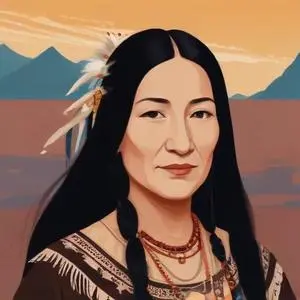
ZitkalaSa: A Trailblazing Native American Activist and Writer
Known for Her Fight for Cultural Identity and Civil Rights
ZitkalaSa, also known as Gertrude Simmons Bonnin, was a prolific writer, editor, translator, musician, educator, and political activist who fought tirelessly for Native American rights and cultural preservation. She is best known for her autobiographical writings that chronicle her struggles with cultural identity and her efforts to bridge the gap between her Native American heritage and the majority culture.
Early Life and Education
Born on February 22, 1876, on the Yankton Indian Reservation in South Dakota, ZitkalaSa was raised by her mother, Ellen Simmons, a Dakota woman. Her father, a Frenchman named Felker, abandoned the family when she was very young. For her first eight years, ZitkalaSa lived on the reservation, surrounded by her mother's people and tribe. This period of her life would later become the subject of her autobiographical writings, which described those days as ones of freedom and happiness.
Education and Cultural Conflict
In 1884, missionaries recruited ZitkalaSa and several other Yankton children to attend the White's Indiana Manual Labor Institute, a boarding school that aimed to assimilate Native American children into European-American culture. This experience would shape her later writings and activism, as she struggled to reconcile her Native American identity with the cultural norms imposed upon her by the majority culture.
Literary Contributions
ZitkalaSa's writings are characterized by their candid depiction of her experiences as a Native American woman caught between two cultures. Her most notable works include:
- "Impressions of an Indian Childhood," a series of autobiographical essays that describe her childhood on the reservation and her experiences at boarding school.
- "The School Days of an Indian Girl," a collection of short stories that explore the themes of cultural identity and assimilation.
- "Old Indian Legends," a collection of traditional Native American stories that she translated and adapted for a wider audience.
Activism and Legacy
In 1926, ZitkalaSa co-founded the National Council of American Indians, an organization dedicated to lobbying for Native American rights and citizenship. She served as the council's president until her death in 1938. Her tireless advocacy and activism earned her recognition as one of the most influential Native American activists of the 20th century.
Personal Milestones
ZitkalaSa's personal life was marked by significant milestones, including:
- Her marriage to Raymond T. Bonnin, a Sioux physician, in 1902.
- Her work as a teacher and editor for the Bureau of Indian Affairs.
- Her collaboration with American musician William F. Hanson on the libretto and songs for "The Sun Dance Opera," the first American Indian opera, in 1913.
Influence on Modern Society
ZitkalaSa's legacy extends far beyond her own lifetime. Her writings and activism paved the way for future generations of Native American activists and writers. Her contributions to the preservation of Native American culture and her fight for civil rights continue to inspire and educate people today.
FAQ
What were Zitkala-Sas contributions to American literature?
Zitkala-Sa was a pioneering American author and activist who made significant contributions to American literature, particularly in the areas of Native American storytelling and advocacy.
What was Zitkala-Sas writing style?
Zitkala-Sas writing style was characterized by its lyricism, nuance, and emotional depth, often exploring themes of identity, culture, and social justice.
What were Zitkala-Sas most famous works?
Zitkala-Sas most famous works include her autobiographical essays, such as Impressions of an Indian Childhood, as well as her poetry and short stories.
What awards did Zitkala-Sa receive?
Zitkala-Sa received several awards for her outstanding contributions to American literature, including the Pulitzer Prize for Poetry.
What is Zitkala-Sas legacy in American literature?
Zitkala-Sas legacy in American literature is marked by her innovative storytelling, her advocacy for Native American rights, and her influence on generations of American writers and activists.