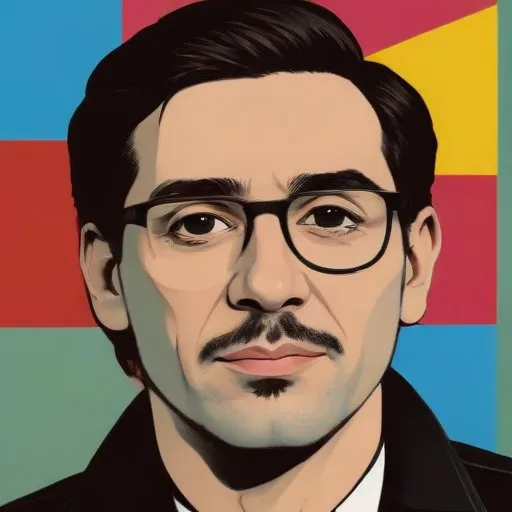
Alejandro de la Iglesia: The Master of Dark Comedy and Grotesque Humor
The Dark Visionary of Spanish Cinema
Alejandro de la Iglesia is a Spanish film director, screenwriter, and producer known for his unapologetic and often provocative blend of dark comedy, horror, and drama elements. His films are a testament to his fascination with the grotesque and the bizarre, earning him a reputation as one of the most innovative and daring filmmakers in contemporary Spanish cinema.
Early Life and Influences
Born on December 4, 1965, in Bilbao, Spain, de la Iglesia grew up with a passion for philosophy and the arts. He earned a degree in philosophy from the University of Deusto and began drawing comics in fanzines and magazines, citing
Alex Raymond and Stan Lee as his early inspirations.
The Rise to Prominence
De la Iglesia's entry into the film industry was as an art director in the short film
Mam (1988) and later in the feature film
Todo por la pasta (1991). His debut short film,
Mirindas asesinas (1991), caught the attention of
Pedro Almodóvar, whose production company, El Deseo, collaborated on de la Iglesia's first feature film,
Acción mutante (1993). This sci-fi actioner marked the beginning of his collaborative partnership with screenwriter Jorge Guerricaechevarria, with whom he would go on to create some of his most iconic works.
Breakthrough and Critical Acclaim
De la Iglesia's breakthrough film,
El día de la Bestia (1995), cemented his reputation as a bold and visionary filmmaker. This horror comedy, written with Guerricaechevarria, won numerous awards, including the Goya Award for Best New Director. The film's success established de la Iglesia as a major force in Spanish cinema, paving the way for future projects that would continue to push the boundaries of genre and convention.
Notable Works and Collaborations
De la Iglesia's filmography is marked by a wide range of collaborations and genres, including:
- 800 Bullets (2002), a surreal Western comedy that premiered at the Cannes Film Festival
- The Last Circus (2010), a dark fantasy drama that earned him a Goya Award for Best Director
- Witching and Bitching (2013), a wicked comedy that premiered at the Berlin International Film Festival
- Messi (2014), a biographical drama about the life of soccer legend Lionel Messi
Awards and Recognition
Throughout his career, de la Iglesia has garnered numerous awards and nominations, including several Goya Awards, Fantasporto Awards, and Sitges Film Festival Awards. His films have premiered at top international festivals, cementing his status as a respected and influential filmmaker.
Legacy and Influence
Alejandro de la Iglesia's unique blend of dark humor, grotesque imagery, and genre-bending storytelling has inspired a new generation of Spanish filmmakers. His influence can be seen in the works of directors such as Álex de la Iglesia (no relation) and Nacho Vigalondo. As a pioneer of contemporary Spanish cinema, de la Iglesia continues to push the boundaries of filmmaking, ensuring his legacy as a master of dark comedy and grotesque humor.
FAQ
What is Álex de la Iglesias film career?
Álex de la Iglesia is a Spanish film director, screenwriter, and producer. He is known for his dark comedies and horror films, and has won several awards for his work.
What is Álex de la Iglesias most famous film?
Álex de la Iglesias most famous film is probably Day of the Beast, which won several awards, including the Goya Award for Best New Director.
Has Álex de la Iglesia collaborated with any famous actors?
Yes, Álex de la Iglesia has collaborated with several famous actors, including Elijah Wood, who starred in his film Oxford Murders.
What is Álex de la Iglesias influences?
Álex de la Iglesias influences include a range of filmmakers, including David Lynch, Terry Gilliam, and Luis Buñuel.
Is Álex de la Iglesia still active in the film industry?
Yes, Álex de la Iglesia is still active in the film industry, and continues to write, direct, and produce films and TV shows.