


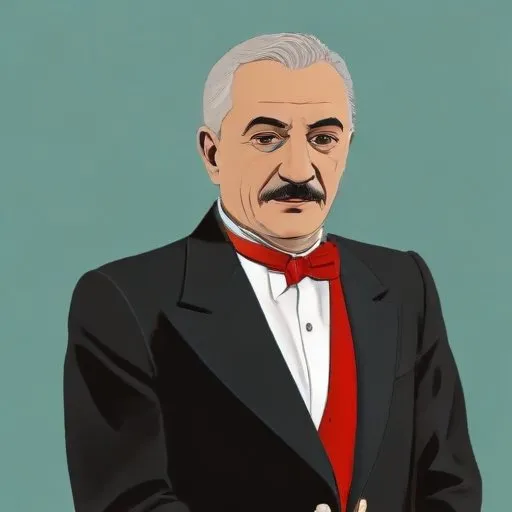
First President of Hungary, a prominent figure in the country's transition from communism to democracy, known for his literary and political contributions.
Árpád Göncz, a Hungarian writer, translator, lawyer, agronomist, and liberal politician, is renowned for his pivotal role in Hungary's transition from communism to democracy, serving as the country's first freely elected head of state from 1990 to 2000.
Göncz's remarkable journey was marked by his unwavering commitment to freedom, democracy, and human rights, earning him international recognition as a beacon of hope in Eastern Europe during the tumultuous post-Cold War era.
Born on February 10, 1922, in Budapest, Göncz grew up in a petty bourgeois family with noble origins. His father, Lajos Göncz, was a post office worker and a talented tennis player who participated in the 1924 Summer Olympics.
After his parents' divorce, Göncz's relationship with his father became strained. His mother, Ilona Haimann, was a Unitarian with Jewish and Szkely roots, who had been raised by a merchant family in Budapest after being orphaned as a child.
Göncz's involvement in the 1956 Hungarian Revolution against Soviet occupation led to his imprisonment for six years. This formative experience fueled his determination to fight for democracy and human rights.
After his release from prison, Göncz worked as a translator of English-language literary works, fostering a deep appreciation for Western culture and literature.
In 1988, Göncz co-founded the Alliance of Free Democrats (SZDSZ), a liberal party that played a crucial role in Hungary's transition to democracy.
In 1990, he became the Speaker of the National Assembly, effectively serving as the head of state until his election as President of Hungary in 1990, a position he held until 2000.
Göncz was an ardent advocate for human rights, democracy, and the rule of law. He worked tirelessly to promote these values throughout his presidency, earning him international recognition and respect.
In 2000, he became a member of the international advisory council of the Victims of Communism Memorial Foundation, further solidifying his commitment to combating totalitarianism and promoting freedom.
Göncz's remarkable legacy extends far beyond his presidential term. He remains a symbol of Hungary's struggle for democracy, inspiring generations to come.
His presidency marked a significant turning point in Hungary's history, as the country transitioned from a communist state to a democratic nation.
Göncz's commitment to human rights, democracy, and the rule of law continues to inspire people around the world, cementing his place as a champion of freedom and democracy.
Göncz's remarkable life serves as a testament to the power of perseverance, courage, and dedication to the pursuit of democracy and human rights.
As we reflect on his extraordinary journey, we are reminded of the importance of upholding democratic values and promoting freedom, justice, and equality for all.
