


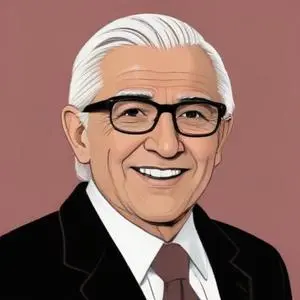
A Costa Rican leader who served as President and was awarded the Nobel Peace Prize for his efforts to broker peace in Central America, particularly in ending the Nicaraguan Civil War.
Óscar Arias is known for his tireless efforts to bring peace and stability to Central America, earning him the Nobel Peace Prize in 1987. As a former President of Costa Rica, Arias has been a driving force in promoting democracy and ending conflicts in the region.
Arias was born on September 13, 1940, in Heredia, Costa Rica, into an upper-class family. He completed his secondary education at Saint Francis College in San José and later went on to study medicine at Boston University in the United States. However, he soon returned to Costa Rica and pursued degrees in law and economics at the University of Costa Rica.
In 1967, Arias traveled to the United Kingdom, where he enrolled at the London School of Economics. He later earned a doctoral degree in political science from the University of Essex in 1974.
Arias joined the National Liberation Party (PLN), Costa Rica's main social democratic party, and ran successfully for president in 1986. During his first presidency, Arias implemented significant economic reforms, shifting Costa Rica's economy from traditional cash crops like coffee and bananas to a more diversified economy.
Arias' proposal for a negotiated solution to the Central American crisis earned him the Nobel Peace Prize in 1987. His plan, which involved the removal of foreign powers from the region, an end to aid for antigovernment guerrillas, and the implementation of democratic principles, paved the way for peace settlements in El Salvador and Nicaragua.
In addition to his Nobel Peace Prize, Arias has received several other esteemed awards, including the Albert Schweitzer Prize for Humanitarianism. He has also served as a trustee of Economists for Peace and Security and was elected to the board of directors of the International Criminal Courts Trust Fund for Victims in 2003.
Arias' commitment to peace and democracy has been unwavering throughout his life. In 2006, he was re-elected as President of Costa Rica, a testament to his enduring popularity and influence in the region. Throughout his career, Arias has been driven by a strong sense of social justice and a desire to promote peace and stability.
Arias' work has had a profound impact on modern society, inspiring generations of leaders and activists to work towards peace and democracy. His commitment to resolving conflicts through diplomacy and negotiation has been a beacon of hope for many, and his influence extends far beyond the borders of Costa Rica.
Óscar Arias' legacy is one of peace, democracy, and social justice. He continues to be an inspiration to people around the world, and his work serves as a testament to the power of diplomacy and negotiation in resolving conflicts. As a Nobel Peace Prize laureate, Arias remains a symbol of hope for a more peaceful and harmonious world.
71 Years Old
A Costa Rican leader who implemented eco-friendly policies and transformed the country's economy, earning international recognition for his environmental efforts.
67 Years Old
First female President of Costa Rica, serving from 2010 to 2014 and known for her efforts to reduce poverty and promote sustainable development.
