


In a historic televised address, Italian Prime Minister Giuseppe Conte announced the unprecedented decision to impose a nationwide lockdown to combat the rapidly spreading COVID-19 pandemic, marking the first country to take such drastic measures to curb the spread of the virus.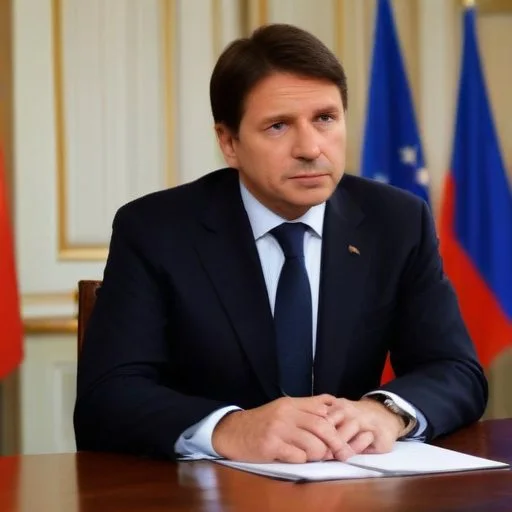
The decree, signed by Conte on March 9, 2020, brought Italy to a standstill, restricting travel, gatherings, and nonessential activities. The move was a desperate attempt to prevent the Italian healthcare system from collapsing under the weight of the rapidly increasing number of cases.
The COVID-19 pandemic had been spreading rapidly since its emergence in Wuhan, China in December 2019. As cases mounted and international travel continued unabated, the virus spread far and wide, reaching Italy in late January 2020. Within weeks, the country was grappling with an exponential increase in cases, leaving its healthcare system on the brink of collapse.
Guiseppe Conte, a lawyer and academic turned politician, had been Italy's Prime Minister since 2018. Faced with the unprecedented crisis, Conte took the bold and unpopular decision to impose the nationwide lockdown, a move that would have far-reaching consequences for the country and the world.
The lockdown had a profound impact on Italy and the world. The country's economy came to a grinding halt, with widespread job losses and business closures. However, the move helped flatten the curve, slowing the spread of the virus and giving Italy's healthcare system a much-needed breathing space.
The lockdown also had a profound impact on the global response to the pandemic. As the first country to impose such drastic measures, Italy set a precedent for other countries to follow, leading to a wave of lockdowns and restrictions around the world.
The lockdown had a profound impact on Italian culture and society. As the country came to a standstill, Italians were forced to adapt to a new reality, with virtual gatherings, online shopping, and remote work becoming the norm. The lockdown also brought out the best in Italians, with acts of kindness, charity, and community spirit becoming commonplace.
The lockdown was not without controversy. Many Italians felt that the measures were excessive, with some businesses and individuals questioning the necessity of such drastic action. However, as the pandemic raged on, public perception shifted, with many coming to see the lockdown as a necessary evil.
"We must take this decision, even if it's difficult, because we are not just fighting against the virus, we are fighting for our lives." - Giuseppe Conte, Italian Prime Minister
The Italian lockdown was a watershed moment in the global fight against COVID-19, drawing comparisons with other significant events, such as the 1918 Spanish Flu pandemic and the SARS outbreak in 2003. However, the speed and scale of the Italian response set it apart, making it a unique event in modern history.
I remember walking through the empty streets of Rome, feeling like I was in a ghost town. It was surreal, but it was also a reminder of the gravity of the situation. - Alessandro, Italian resident
The Italian lockdown set a precedent for future pandemics, demonstrating the importance of swift and decisive action in the face of a global health crisis. As the world continues to grapple with the pandemic, the Italian experience serves as a valuable lesson in crisis management and public health policy.
The lockdown had a profound impact on Italian culture, particularly in the realm of music and art. With public gatherings banned, musicians and artists had to find new ways to express themselves and connect with their audiences. Many turned to social media, using platforms like Instagram and YouTube to share their work and collaborate with others. This led to the emergence of a new wave of virtual concerts, online art exhibitions, and digital festivals.
One notable example is the "Flash Mob of Solidarity," where over 10,000 Italians took to their balconies to sing together in a show of national unity. This moment of collective defiance in the face of adversity was seen around the world, inspiring similar displays of solidarity in other countries.
The economic impact of the lockdown was severe, with Italy's GDP contracting by over 8% in the first quarter of 2020. The tourism industry was particularly hard hit, with tourist arrivals plummeting by over 70%.
However, the lockdown also had some unexpected economic benefits. With non-essential travel banned, many Italians turned to domestic tourism, exploring hidden gems in their own country. This led to a surge in local tourism, with many small businesses and rural communities benefiting from the influx of visitors.
The Italian lockdown has been the subject of much historical analysis, with many drawing parallels with other significant events in modern history. One notable comparison is with the 1943-1944 Italian Social Republic, a period of fascist rule during World War II.
Both events saw the Italian government impose strict controls on the population, restricting movement and gathering. However, while the 1943-1944 period was marked by repression and violence, the 2020 lockdown was characterized by a sense of national unity and collective purpose.

The Italian lockdown has been compared to other significant public health crises in history, including the 1918 Spanish Flu pandemic and the 2003 SARS outbreak.
One key difference between these events is the role of technology in shaping the response. In 2020, social media and online platforms played a crucial role in disseminating information and coordinating the response. In contrast, during the 1918 pandemic, news of the outbreak was largely spread through print media and word of mouth.
Guiseppe Conte's leadership during the lockdown has been the subject of much praise and criticism. One of his most significant decisions was to impose strict controls on the northern region of Lombardy, which was particularly hard hit by the virus.
This decision was seen as a bold move by many, demonstrating Conte's willingness to take decisive action in the face of uncertainty. However, others criticized the move as heavy-handed, arguing that it disproportionately affected the region's economy and residents.