


The Tel al-Zaatar massacre, a brutal and devastating event, is remembered as one of the bloodiest episodes of the Lebanese Civil War, claiming the lives of between 1,000 to 3,500 Palestinians. This unimaginable tragedy occurred in August 1976, when Christian militiamen stormed the Tel al-Zaatar refugee camp, leaving a trail of death and destruction in their wake.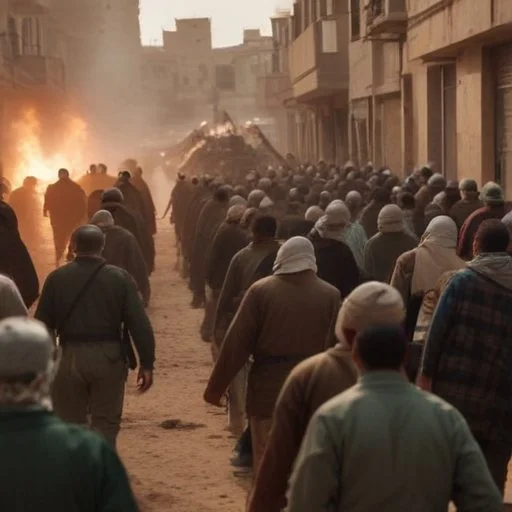
The Lebanese Civil War, which lasted from 1975 to 1990, was a complex and multifaceted conflict involving various religious and political factions. The war was fueled by deep-seated sectarian divisions, particularly between Christians and Muslims, which had been simmering for decades. The Palestinian presence in Lebanon, which had been growing since the 1948 Arab-Israeli War, further exacerbated these tensions.
The Tel al-Zaatar refugee camp, located in eastern Beirut, was established in 1948 to provide shelter to Palestinians fleeing the Arab-Israeli War. Over time, it became a thriving community, with its own markets, schools, and healthcare facilities. However, as the Lebanese Civil War intensified, the camp became a vulnerable target for Christian militiamen, who viewed the Palestinians as a threat to their dominance.
The Tel al-Zaatar massacre had far-reaching consequences, both locally and internationally.
The survivors of the Tel al-Zaatar massacre still bear the scars of that fateful day. One eyewitness, Um Ahmad, recounted the horror she witnessed:
"I saw my brother, his wife, and their three children killed in front of me. The militiamen were shouting, 'This is for the Christians!' as they slaughtered them."
The Tel al-Zaatar massacre shares eerie parallels with other atrocities committed during the Lebanese Civil War, such as the Sabra and Shatila massacres. These events serve as a stark reminder of the devastating consequences of unchecked sectarian violence and the imperative for reconciliation and justice.
The Tel al-Zaatar massacre serves as a somber reminder of the devastating consequences of conflict and the importance of protecting human life and dignity. Though the wounds of the past may never fully heal, remembering and learning from this tragic event can help pave the way for a more peaceful and harmonious future.
"The dead will not be forgotten. Their memory will live on, and their sacrifice will not be in vain." – A Palestinian refugee
The roots of the Tel al-Zaatar massacre can be traced back to the 1950s, when Lebanon's Christian Maronite community began to feel threatened by the growing presence of Palestinians in the country. This sense of unease was further exacerbated by the 1967 Arab-Israeli War, which led to a significant influx of Palestinian refugees into Lebanon.
In the years leading up to the massacre, tensions between Christian and Muslim factions in Lebanon continued to escalate, with each side accusing the other of attempting to dominate the country's political landscape. The Syrian-backed Christian militiamen who carried out the massacre saw the Palestinian presence as a threat to their own power and influence.
The massacre was also motivated by a desire for revenge against the Palestinians, who were seen as having supported the Lebanese Muslim left in their conflict against the Christian right. This complex web of alliances and rivalries ultimately led to the brutal attack on Tel al-Zaatar, which would have far-reaching consequences for the region.

Um Ahmad, a Palestinian refugee who survived the Tel al-Zaatar massacre, is just one of many individuals whose lives were forever changed by the tragedy. Her harrowing account of the events of August 1976 provides a personal and emotional glimpse into the horrors that unfolded.
As a witness to the massacre, Um Ahmad's testimony serves as a powerful reminder of the human cost of conflict and the importance of remembering the victims of such atrocities. Her bravery in sharing her story has helped to ensure that the Tel al-Zaatar massacre will never be forgotten.
The Tel al-Zaatar massacre had a profound impact on the cultural identity of Palestinians and Lebanese alike. The tragedy served as a painful reminder of the deep-seated divisions that existed within Lebanese society, and the devastating consequences that could result from such sectarian tensions.
In the aftermath of the massacre, many Palestinians in Lebanon began to reexamine their identity and their place within the region. The tragedy also led to a renewed sense of solidarity among Palestinians, who were determined to rebuild and move forward in the face of such unimaginable tragedy.

The Tel al-Zaatar massacre was not an isolated incident, but rather part of a larger geopolitical struggle for power and influence in the Middle East. The conflict in Lebanon was closely tied to the regional rivalry between Syria and Israel, with both countries seeking to extend their influence over the country.
The massacre was also influenced by the Cold War-era politics of the time, with the United States and Soviet Union providing support to different factions within Lebanon. This complex web of alliances and rivalries ultimately contributed to the devastating outcome of the Tel al-Zaatar massacre.
One of the most haunting relics of the Tel al-Zaatar massacre is the makeshift hospital that was targeted by the Christian militiamen. The hospital, which was established in the camp to provide medical care to Palestinians, was subjected to a brutal attack that left medical staff and patients alike dead or wounded.
Photographs of the hospital's ruins, which were taken in the aftermath of the massacre, provide a poignant glimpse into the horrors that unfolded. These haunting images serve as a powerful reminder of the devastating consequences of the Tel al-Zaatar massacre.