


The 14 July Revolution, also known as the 1958 Iraqi coup d'état, is a pivotal event in Iraq's history, marked by the overthrow of the monarchy and the rise of Abd al-Karim Qasim as the nation's new leader. This bloodless revolution, which took place on July 14, 1958, brought an end to the Hashemite dynasty's rule and paved the way for a new era of modernization and secularism in Iraq.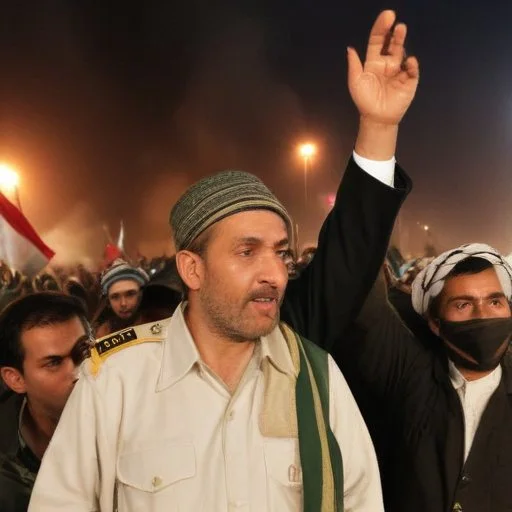
In the years leading up to the revolution, Iraq was plagued by political unrest and economic stagnation. The monarchy, led by King Faisal II, was seen as corrupt and out of touch with the needs of the common people. The ruling elite's close ties to British colonial powers and the lack of democratic reforms further fueled discontent among the population.
On the morning of July 14, 1958, a group of military officers, led by Qasim and ar-Ruba'i, stormed the royal palace in Baghdad, arresting and executing King Faisal II and his family. The army quickly took control of key government buildings and institutions, and Qasim declared the establishment of a new republic.
The 14 July Revolution had far-reaching consequences for Iraq and the Middle East as a whole. Some of the key outcomes include:
The revolution had a profound impact on Iraqi culture and society. It marked a shift towards modernization and secularism, and Qasim's government implemented a series of reforms aimed at improving education, healthcare, and women's rights.
The revolution was not without its controversies. Qasim's government was criticized for its authoritarian nature, and the execution of King Faisal II and his family was seen as a brutal act by many. However, for many Iraqis, the revolution represented a long-awaited chance for change and a break from the country's colonial past.
"We will create a new Iraq, an Iraq of freedom, justice, and equality." - Abd al-Karim Qasim, in a speech following the revolution.
...and the dream of a modern, secular Iraq was born. A dream that would shape the country's destiny for generations to come.
The 14 July Revolution was not an isolated event, but rather part of a broader trend of anti-colonialism and nationalist movements sweeping across the Middle East in the mid-20th century. The revolution was influenced by the ideas of Arab nationalism and socialism, which were gaining popularity in the region. Qasim's government, in particular, was inspired by the policies of Egyptian President Gamal Abdel Nasser, who had nationalized the Suez Canal in 1956.
The revolution also had implications for the global balance of power, as it marked a shift towards non-alignment and a break from Western colonial powers. Iraq's new government began to establish ties with the Soviet Union, which saw an opportunity to expand its influence in the region.

While Abd al-Karim Qasim is often credited as the mastermind behind the 14 July Revolution, Mohammed Najib ar-Ruba'i played a crucial role in the coup. A fellow military officer and ally of Qasim's, ar-Ruba'i was instrumental in rallying support among the armed forces and coordinating the takeover of key government buildings.
ar-Ruba'i's involvement in the revolution was not limited to the military sphere; he was also a key advisor to Qasim on matters of governance and policy. After the revolution, ar-Ruba'i became the President of Iraq, serving in that position until 1963.
The 14 July Revolution had a profound impact on Iraqi culture, as it marked a shift towards modernization and secularism. Qasim's government implemented a series of reforms aimed at promoting education, healthcare, and women's rights.
The revolution also led to a resurgence of interest in Iraqi folklore and cultural heritage. The government established institutions dedicated to preserving and promoting Iraq's rich cultural history, including the Iraqi Museum of Antiquities.

The 14 July Revolution took place against the backdrop of a rapidly changing geopolitical landscape. The Cold War was at its height, and the Middle East was a key battleground in the struggle between the United States and the Soviet Union.
The revolution was seen as a victory for Arab nationalism and a blow to Western colonial powers. The new Iraqi government's tilt towards the Soviet Union sent shockwaves across the region, as countries like Egypt, Syria, and Jordan began to reassess their relationships with the West.
The 14 July Revolution had significant economic implications for Iraq. Qasim's government nationalized key industries, including oil, and implemented land reforms aimed at redistributing wealth and reducing inequality.
The nationalization of oil, in particular, was a major coup for Iraq, as it allowed the government to regain control over its natural resources and negotiate better deals with foreign companies. The revenue generated from oil exports helped to fuel Iraq's rapid modernization and development in the 1960s.