


The Avezzano earthquake is notoriously known for being one of the deadliest natural disasters in Italian history, claiming the lives of between 29,978 and 32,610 people. On that fateful day, January 13, 1915, the 6.7 magnitude quake struck the Province of LAquila, Italy, leaving a trail of destruction and despair in its wake.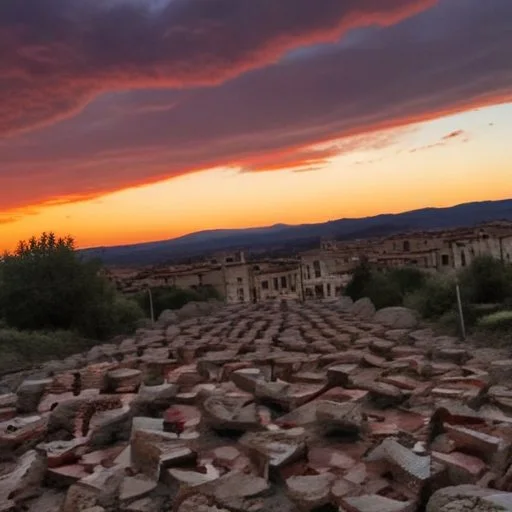
In the early 20th century, Italy was still reeling from the aftermath of World War I, and the country was in dire need of rebuilding and reconstruction. The Avezzano earthquake only added to the nation's woes, as it struck at a time when the country was least equipped to handle a disaster of such magnitude.
The earthquake struck at 7:52 am local time, with its epicenter located in the town of Avezzano, in the Province of LAquila. The quake's extreme intensity, measuring a staggering XI on the Mercalli scale, was a result of the complex tectonic activity in the region. The earthquake was a shallow one, with a depth of only about 10 km, which contributed to its devastating impact.
| Date | Event |
|---|---|
| January 13, 1915 | The Avezzano earthquake strikes at 7:52 am local time |
| January 14, 1915 | Relief efforts begin, with the Italian government mobilizing troops and aid to the affected regions |
| February 1915 | The Italian government establishes a commission to investigate the causes of the earthquake and develop strategies for rebuilding and reconstruction |
The Avezzano earthquake had a profound impact on Italy, leading to significant changes in building codes, disaster preparedness, and emergency response. The disaster also led to a shift in the country's focus, from reconstruction and rebuilding to also prioritizing disaster mitigation and prevention.
The Avezzano earthquake had a profound impact on Italian culture and society, leading to a increased focus on community, solidarity, and mutual aid. The disaster also led to a renewed sense of national pride and unity, as Italians came together to support those affected by the disaster.
The Avezzano earthquake inspired many individuals and organizations to come forward and provide aid and support to those affected by the disaster. The disaster also led to the establishment of several organizations and initiatives focused on disaster relief and prevention.
The Avezzano earthquake was not an isolated incident, but rather part of a larger seismic sequence that had been affecting the region for months. In the days leading up to the earthquake, several smaller tremors had been reported, causing widespread anxiety among the local population. However, the magnitude of the earthquake on January 13, 1915, caught everyone off guard, and the lack of preparedness only added to the devastating consequences.
In the aftermath of the earthquake, the Italian government established a commission to investigate the causes of the disaster. The commission's findings led to significant changes in building codes and disaster preparedness, but they also highlighted the need for a more comprehensive approach to managing Italy's complex tectonic activity.

Giuseppe Angelo Salina: The Unsung Hero
Giuseppe Angelo Salina, an Italian engineer and seismologist, played a crucial role in shaping Italy's response to the Avezzano earthquake. Born in 1866, Salina had dedicated his career to studying the region's seismic activity, and his expertise proved invaluable in the aftermath of the disaster.
Salina's work led to the development of a new building code for Italy, which prioritized earthquake-resistant construction and became a model for other seismically active regions. Despite his significant contributions, Salina remains a relatively unknown figure, overshadowed by more prominent leaders of the time.
The Avezzano earthquake had a profound impact on Italian culture, leading to a renewed sense of national pride and unity. In the aftermath of the disaster, artists, writers, and musicians came together to create works that reflected the nation's grief and resilience.
The earthquake also influenced the country's architectural landscape, as cities were rebuilt with a focus on functionality and seismic safety. This shift in priorities led to the development of new architectural styles, which blended traditional Italian aesthetics with modern building materials and techniques.

The Avezzano earthquake had a devastating impact on Italy's economy, with estimated losses totaling over 100 million lire. The disaster struck at a time when the country was already reeling from the aftermath of World War I, and the additional burden only added to the nation's financial woes.
The earthquake also led to a significant shift in the country's economic priorities, as the government was forced to redirect resources toward reconstruction and disaster relief. This shift had long-term implications for Italy's economic development, as the country began to prioritize infrastructure development and disaster preparedness.
The Avezzano earthquake presented a significant challenge to King Victor Emmanuel III and Prime Minister Antonio Salandra, who were forced to navigate the complexities of disaster response and reconstruction. The government's response was criticized for being slow and inadequate, leading to widespread discontent among the affected population.
Despite these challenges, the government's efforts ultimately led to significant reforms in disaster preparedness and response. The earthquake also led to a renewed focus on national unity, as Italians came together to support those affected by the disaster.