


The Great Hanshin earthquake, also known as the Kobe earthquake, is etched in history as one of the most devastating seismic events of the 20th century. On January 17, 1995, a 6.9 magnitude earthquake ripped through the southern Hyogo Prefecture in Japan, leaving a trail of destruction and chaos in its wake.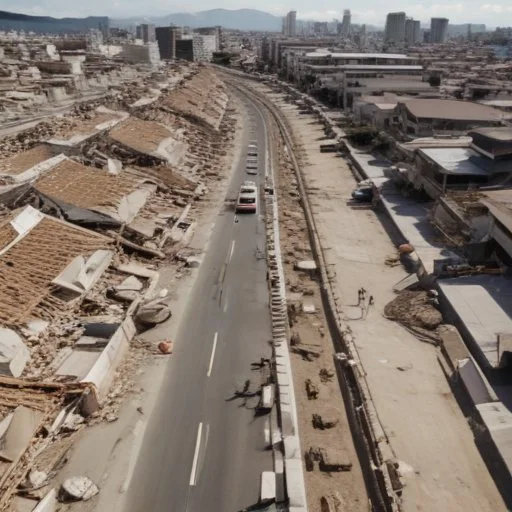
The earthquake struck at 5:46 am, catching the population off guard. The impact was catastrophic, with entire neighborhoods reduced to rubble and infrastructure crippled. The cities of Kobe, Osaka, and Nishinomiya were among the hardest hit, with buildings, roads, and bridges collapsing under the force of the tremors.
The initial response to the disaster was hampered by the scale of the destruction, with rescue teams struggling to reach trapped survivors. As the full extent of the devastation became clear, the Japanese government and international community rallied to provide aid, with rescue efforts underway within hours of the quake.
The Great Hanshin earthquake exacted a staggering toll on human life, with 6,434 people confirmed dead and over 251,000 left homeless. The earthquake also left thousands injured, many of whom suffered from severe trauma and PTSD in the aftermath of the disaster.
The earthquake exposed the vulnerability of Japan's infrastructure, with many buildings and structures failing to withstand the force of the quake. The economic impact was severe, with estimates suggesting that the disaster cost Japan over $100 billion in damages and lost productivity.
In the years that followed, Japan embarked on a massive rebuilding effort, with a focus on creating more resilient infrastructure and disaster-resistant construction. The government also implemented sweeping reforms to improve emergency preparedness and response, ensuring that the country was better equipped to cope with future disasters.
The Great Hanshin earthquake served as a wake-up call for Japan and the global community, highlighting the importance of disaster preparedness and mitigation. The disaster led to significant advances in seismology, emergency response, and urban planning, with Japan emerging as a leader in disaster risk reduction.
Today, the people of Japan remember the victims of the Great Hanshin earthquake with a mix of sadness and gratitude. The disaster may have left deep scars, but it also brought out the best in humanity, inspiring acts of courage, kindness, and resilience that will be remembered for generations to come.
The Great Hanshin earthquake may be a painful reminder of nature's fury, but it also serves as a testament to human resilience and the power of community. As we remember the victims and survivors of this tragedy, we are reminded of the importance of coming together to build a safer, more compassionate world for all.
The economic impact of the Great Hanshin earthquake was felt far beyond the immediate region. The disaster led to a significant decline in Japan's industrial production, with many factories and businesses forced to close temporarily or permanently. The earthquake also disrupted global supply chains, particularly in the automotive and electronics industries, which relied heavily on Japanese components. According to estimates, the earthquake resulted in a 2.5% decline in Japan's GDP in 1995, with the total economic loss equivalent to approximately 10% of the country's GDP.
In the years that followed, the Japanese government implemented measures to revitalize the economy, including investing in infrastructure development and providing support to affected industries. However, the disaster highlighted the need for greater economic diversification and resilience in the face of natural disasters.

The Great Hanshin earthquake had a profound cultural impact on Japan, leading to a reevaluation of the country's priorities and values. The disaster highlighted the importance of community and social bonds, as people came together to support each other in the aftermath of the tragedy. The earthquake also led to a renewed focus on disaster preparedness and mitigation, with many communities and organizations working together to develop more effective emergency response systems.
The disaster also had a significant impact on Japan's artistic and cultural expression, with many artists and writers drawing inspiration from the event. The earthquake has been the subject of numerous books, films, and works of art, which have helped to preserve the memory of the disaster and its victims.
The Great Hanshin earthquake has been the subject of numerous historiographical studies, with scholars examining the event from a range of perspectives. Some historians have focused on the disaster as a turning point in Japan's post-war history, highlighting the ways in which the earthquake exposed weaknesses in the country's infrastructure and emergency response systems.
Others have examined the disaster through the lens of social and cultural history, exploring the ways in which the earthquake affected different communities and groups. For example, some studies have highlighted the disproportionate impact of the disaster on low-income households and marginalized communities, which were often forced to rely on improvised shelters and makeshift tent cities in the aftermath of the earthquake.

The Great Hanshin earthquake led to significant advances in seismology and earthquake engineering, as scientists and engineers worked to develop more effective ways to predict and mitigate the impact of earthquakes. The disaster highlighted the importance of early warning systems, which can provide critical seconds or minutes of warning before an earthquake strikes.
In response to the disaster, Japan invested heavily in the development of new technologies, including advanced seismic sensors and emergency response systems. The country has since become a leader in earthquake risk reduction, with many of its innovations being adopted by other countries around the world.
The Great Hanshin earthquake occurred at a time of significant geopolitical shifts in East Asia, with the end of the Cold War and the rise of new economic powers in the region. The disaster highlighted the importance of international cooperation in responding to natural disasters, with many countries providing aid and assistance to Japan in the aftermath of the earthquake.
The disaster also had significant implications for Japan's relationships with its neighbors, particularly South Korea and China. The country's response to the disaster was seen as a test of its ability to provide leadership and coordination in times of crisis, and its efforts to rebuild and recover were closely watched by other countries in the region.