


The Tabas earthquake, a seismic event of unprecedented ferocity, struck the city of Tabas, Iran on September 16, 1978, claiming the lives of at least 15,000 people and leaving the city in ruins. This cataclysmic event, measuring 7.4 on the Richter scale, earned a maximum Mercalli intensity of IX (Violent), making it one of the deadliest and most destructive earthquakes of the 20th century.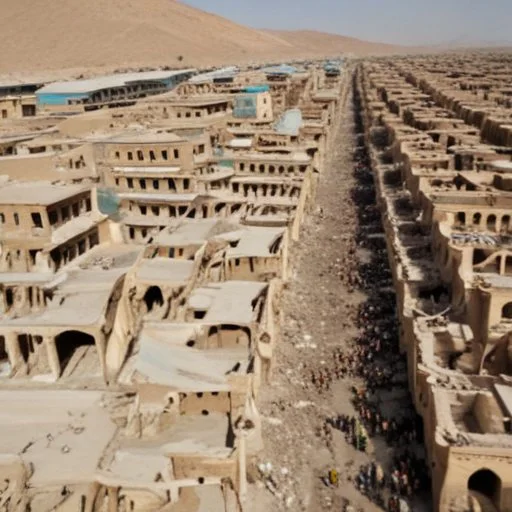
In the months leading up to the disaster, Iran was in a state of political turmoil. The Iranian Revolution, sparked by widespread discontent with the monarchy, was gaining momentum, and the government was struggling to maintain control. The city of Tabas, located in the eastern province of Yazd, was a small but strategically important center of commerce and industry. The region's unique geology, characterized by the intersection of several major fault lines, made it prone to seismic activity, but the devastating scale of the impending disaster was unforeseen.
At 12:24 PM local time, the earthquake struck, unleashing a destructive force that ravaged the city and its surroundings. The quake's epicenter, located approximately 10 kilometers northwest of Tabas, was shallow, measuring around 10 kilometers in depth, which exacerbated its destructive potential. The seismic waves, radiating outward from the epicenter, brought about widespread destruction, leveling entire city blocks, and reducing buildings to rubble.
In the aftermath of the disaster, rescue efforts were severely hampered by the region's remote location and lack of infrastructure. Medical and emergency services were overwhelmed, and aid was slow to arrive. The Iranian government, already reeling from the ongoing revolution, was criticized for its slow response to the disaster, leading to widespread frustration and anger among the survivors.
In the wake of the disaster, several key figures emerged to play crucial roles in the relief and rebuilding efforts. Dr. Abbas Safari, a prominent Iranian seismologist, was instrumental in coordinating the scientific response to the disaster, providing critical data and expertise to aid in the relief efforts. Additionally, General Hassan Pakravan, the Iranian Minister of Information and Tourism, played a key role in overseeing the government's response to the disaster, despite facing intense criticism for the slow pace of aid delivery.
The Tabas earthquake had a profound impact on Iranian society, highlighting the need for improved disaster preparedness and emergency response planning. In the years following the disaster, the Iranian government implemented a range of measures aimed at mitigating the effects of future seismic events, including the development of stricter building codes and the establishment of a national emergency response system.
The disaster also had a significant cultural impact, prompting a renewed focus on the importance of community and social cohesion in the face of adversity. The earthquake served as a catalyst for social change, inspiring a new wave of community-based initiatives and charitable organizations dedicated to disaster relief and preparedness.
The Tabas earthquake shares similarities with several other devastating seismic events in modern history, including the 1976 Tangshan earthquake in China and the 1985 Mexico City earthquake. Each of these disasters highlights the devastating potential of seismic activity, underscoring the need for ongoing research into earthquake science and disaster preparedness.
The Tabas earthquake served as a wake-up call for the international community, prompting a renewed focus on disaster preparedness and mitigation. The disaster highlighted the importance of developing and implementing effective emergency response strategies, as well as the need for ongoing research into the causes and consequences of seismic activity.
The Tabas earthquake marked a turning point in modern Iranian history, serving as a catalyst for social and cultural change. The following timeline highlights key milestones in the disaster and its aftermath:
Did you know that the Tabas earthquake was felt as far away as Baghdad, Iraq, over 1,000 kilometers from the epicenter?
Did you know that the disaster prompted a surge in scientific interest in earthquake science, leading to significant advances in the field of seismology?
The Tabas earthquake was a devastating event that left an indelible mark on modern Iranian history. The disaster served as a wake-up call, prompting a renewed focus on disaster preparedness and mitigation. As we reflect on this tragic event, we are reminded of the importance of community, social cohesion, and scientific research in the face of adversity.
The region of Tabas has a long history of seismic activity, with several significant earthquakes occurring in the centuries leading up to the 1978 disaster. One of the most notable events occurred in 1923, when a 6.4 magnitude earthquake struck the region, causing widespread destruction and loss of life. This earlier event served as a warning to the local population, highlighting the need for earthquake preparedness and disaster planning.
Despite this earlier warning, the 1978 earthquake still caught the region off guard, exposing weaknesses in the emergency response system and disaster preparedness measures. The tragedy served as a catalyst for change, prompting the Iranian government to re-evaluate its approach to disaster management and invest in new technologies and strategies to mitigate the effects of future seismic events.

Dr. Abbas Safari was a prominent Iranian seismologist who played a crucial role in the aftermath of the Tabas earthquake. As a leading expert in the field, Dr. Safari was instrumental in coordinating the scientific response to the disaster, providing critical data and expertise to aid in the relief efforts.
Through his work, Dr. Safari helped to raise awareness about the importance of earthquake science and disaster preparedness in Iran. His contributions to the field have had a lasting impact, informing the development of new policies and strategies for mitigating the effects of seismic activity in the region.
The Tabas earthquake had a profound impact on Iranian society, serving as a catalyst for social change and community development. In the aftermath of the disaster, the government and civil society organizations worked together to provide aid and support to affected communities.
The disaster also highlighted the importance of social cohesion and community resilience in the face of adversity. As a result, community-based initiatives and charitable organizations began to emerge, dedicated to disaster relief and preparedness.

The Tabas earthquake prompted a surge in scientific interest in earthquake science, leading to significant advances in the field of seismology. The disaster highlighted the need for better understanding of seismic activity, prompting researchers to develop new technologies and strategies for predicting and mitigating the effects of earthquakes.
One of the key areas of research to emerge from the disaster was the development of more accurate earthquake prediction models. By studying the seismic patterns leading up to the Tabas earthquake, scientists were able to identify new warning signs and develop more effective early warning systems.
The Tabas earthquake had a significant environmental impact, causing widespread damage to the region's infrastructure and ecosystems. The disaster led to the release of hazardous materials, including chemicals and fuels, which contaminated local water sources and soil.
In the aftermath of the disaster, the Iranian government implemented new measures to mitigate the environmental impact of future earthquakes, including the development of more stringent regulations for hazardous materials handling and storage.