


The 7.6 Mw Kashmir earthquake is notoriously remembered as one of the deadliest natural disasters in recent history, leaving a staggering 86,000 people dead, 69,000 injured, and a staggering 2.8 million homeless. This catastrophic event, which struck on October 8, 2005, was a grim reminder of the devastating power of nature.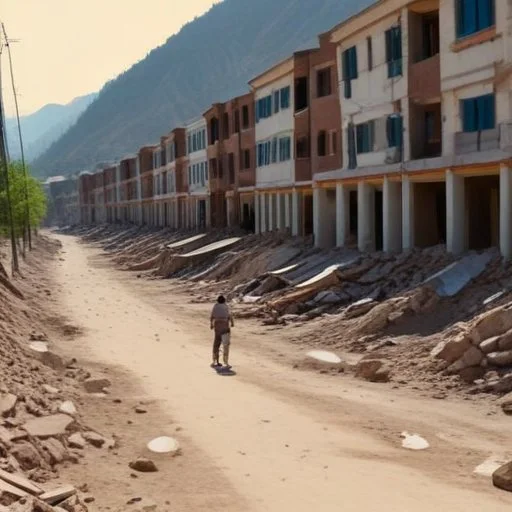
The Kashmir region, nestled in the Himalayan mountain range, has a history of seismic activity due to its location on the boundary between the Indian and Eurasian tectonic plates. The region has experienced several significant earthquakes in the past, but none as devastating as the 2005 quake.
The earthquake struck at 9:52 am local time, with its epicenter located in the Pakistani-controlled region of Kashmir. The powerful tremors, which lasted for approximately 70 seconds, were felt as far as Afghanistan, India, and Tajikistan. The quake triggered landslides, blocked rivers, and brought down entire buildings, leaving a trail of destruction and chaos in its wake.
The response to the disaster was immediate, with rescue teams from Pakistan, India, and international organizations scrambling to reach the affected areas. However, the harsh terrain and inclement weather conditions hindered rescue efforts, leaving many survivors stranded without aid for days.
The earthquake had a profound impact on the social and cultural fabric of the affected regions. The disaster brought together people from diverse backgrounds, with many volunteers and organizations working tirelessly to provide aid and support to those in need. The event also highlighted the importance of disaster preparedness and response, leading to a renewed focus on earthquake-resistant construction and emergency planning in the region.
Rahela Sidiqi, a survivor from the Pakistani city of Muzaffarabad, recalled the devastating moment when her family's home collapsed, trapping her under the rubble. "I was stuck for hours, surrounded by the cries of my family members. It was a miracle that I was rescued alive."
The 2005 Kashmir earthquake served as a wake-up call for the international community, highlighting the need for disaster preparedness and response. The event led to the development of more effective disaster management strategies, which have since been applied to respond to similar disasters around the world.
The relief efforts following the earthquake were recognized with several awards, including the Henry Dunant Medal, which was awarded to the Pakistani army for their outstanding contribution to the relief efforts.
The earthquake led to a significant increase in research on seismology and disaster management, with many experts highlighting the importance of earthquake-resistant construction and emergency planning in disaster-prone regions.
In conclusion, the 7.6 Mw Kashmir earthquake was a devastating disaster that left an indelible mark on the region and the world. The event served as a stark reminder of the importance of disaster preparedness and response, and its impact continues to be felt in the region to this day.
The Kashmir region has a long history of seismic activity, with the first recorded earthquake dating back to 1555. Since then, the region has experienced several significant earthquakes, including a 7.0-magnitude quake in 1885 and a 6.6-magnitude quake in 1974. However, the 2005 earthquake was the deadliest and most destructive in the region's history, leaving a lasting impact on the people and the landscape.
The earthquake was not only a natural disaster but also a human tragedy. It exposed the region's vulnerability to natural disasters and highlighted the need for disaster preparedness and response. The event led to a significant shift in the way people perceived earthquakes, from a natural phenomenon to a major threat to human life and livelihood.
The Historical Significance of the 2005 Kashmir Earthquake
Rahela Sidiqi, a survivor of the earthquake, lost her entire family in the disaster. Her story is a testament to the human spirit and resilience in the face of adversity. Despite being trapped under the rubble for hours, she managed to survive and eventually rebuilt her life.
Another notable figure is Lieutenant General Ahsan Azhar Hayat, who led the Pakistani army's relief efforts. His leadership and coordination played a crucial role in saving thousands of lives and providing aid to affected areas.
Personalities Who Defined the Response to the EarthquakeThe 2005 Kashmir earthquake had a profound impact on the cultural fabric of the affected regions. It brought people together, transcending cultural and religious boundaries, and created a sense of community and shared purpose.
The disaster also highlighted the importance of cultural heritage and the need to preserve historical sites and monuments. The earthquake damaged several ancient buildings and monuments, including the historic Muzaffarabad Fort, which was destroyed.
The Cultural Impact of the 2005 Kashmir Earthquake
The economic impact of the 2005 Kashmir earthquake was severe, with estimated losses totaling over $5 billion. The disaster affected several key sectors, including agriculture, tourism, and infrastructure, leading to widespread unemployment and poverty.
However, the disaster also led to an influx of international aid and investment, which helped to stimulate economic growth and development in the region. The Pakistani government established a Reconstruction Authority to oversee the rebuilding process, which created new opportunities for economic growth and development.
The Economic Fallout of the 2005 Kashmir EarthquakeThe 2005 Kashmir earthquake led to significant advancements in disaster response and management. The event highlighted the need for early warning systems, which can provide critical minutes or even seconds of warning before a disaster strikes.
The disaster also led to the development of new technologies, including satellite-based remote sensing and geographic information systems (GIS). These technologies have improved the accuracy and speed of disaster response efforts, enabling responders to quickly assess damage and target relief efforts.
The Technological Legacy of the 2005 Kashmir Earthquake