


On June 16, 1858, Abraham Lincoln stepped up to the podium at the Illinois Republican State Convention in Springfield, Illinois, and delivered a speech that would go down in history as one of the most iconic and pivotal moments in American politics. In his House Divided speech, Lincoln warned that the United States was on the brink of destruction, threatened by the spread of slavery and the erosion of the principles of liberty and equality.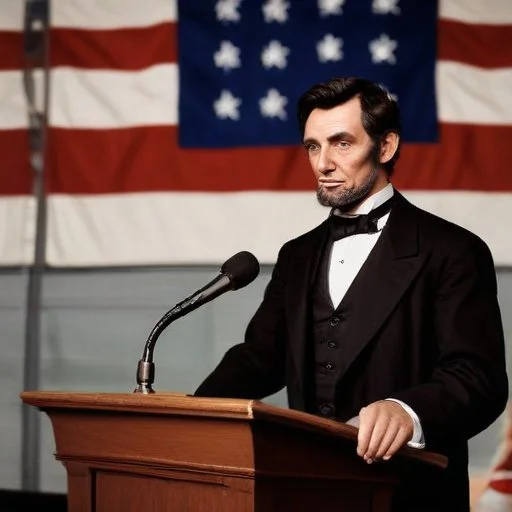
The mid-1800s were a tumultuous time in American history. The Kansas-Nebraska Act of 1854 had opened up new territories to slavery, and the Dred Scott decision of 1857 had declared that slaves were not citizens and had no right to sue in court. These events had sparked fierce debates about the morality and constitutionality of slavery, and Lincoln knew that the fate of the nation hung in the balance.
In his speech, Lincoln appealed to the conscience of the American people, urging them to take a stand against the spread of slavery and to reclaim the principles of liberty and equality that had founded the nation. He famously declared, "A house divided against itself cannot stand," and warned that if the nation continued to tolerate slavery, it would ultimately destroy itself.
The House Divided speech marked a turning point in Lincoln's career, establishing him as a powerful and eloquent opponent of slavery. It also galvanized the anti-slavery movement, inspiring countless Americans to take action against the injustice of slavery. The speech cemented Lincoln's reputation as a master orator and paved the way for his eventual nomination as the Republican candidate for president in 1860.
The House Divided speech had far-reaching consequences, including the galvanization of the anti-slavery movement and Lincoln's eventual election as president. It also marked a turning point in the national debate about slavery, paving the way for the Emancipation Proclamation in 1863 and the eventual abolition of slavery with the 13th Amendment to the Constitution in 1865.
In his memoirs, Lincoln recalled that he had written the House Divided speech in haste, driven by a sense of urgency and conviction. He later said that he had been inspired by the biblical saying, "A house divided against itself cannot stand," and that he had seen the speech as a call to action against the evils of slavery.
The House Divided speech remains an inspiration to this day, a testament to the power of oratory and the importance of standing up against injustice. It reminds us that even in the darkest of times, there is always hope for change and that the voices of ordinary people can make a difference in the course of history.
The House Divided speech is often compared to other iconic speeches in American history, such as Martin Luther King Jr.'s "I Have a Dream" speech and Franklin D. Roosevelt's "Four Freedoms" speech.
While all three speeches share a common theme of fighting for freedom and equality, they differ in tone and approach. Lincoln's speech was more solemn and warning, King's speech was more optimistic and inspiring, and Roosevelt's speech was more pragmatic and policy-focused.
Despite these differences, all three speeches share a common goal of promoting unity and fighting against injustice. They demonstrate the power of oratory to inspire and motivate people to take action and make a difference.

Stephen Douglas was a Democratic senator from Illinois and a rival of Abraham Lincoln's.
Douglas was a strong supporter of the Kansas-Nebraska Act, which allowed new territories to decide for themselves whether to allow slavery.
Lincoln strongly opposed the act and saw Douglas as an obstacle to his own anti-slavery goals. The rivalry between the two men prompted Lincoln to deliver the House Divided speech, in which he criticized Douglas's stance on slavery.
Despite their political differences, Douglas and Lincoln maintained a cordial relationship until their famous debates in 1858.
The House Divided speech was delivered in a time of great geopolitical turmoil.
The Kansas-Nebraska Act had opened up new territories to slavery, and the Dred Scott decision had declared that slaves were not citizens.
This had sparked intense debate and violence in the territories, with pro-slavery and anti-slavery factions clashing in what became known as "Bleeding Kansas."
The House Divided speech was Lincoln's attempt to bring attention to the crisis and to urge the American people to take action against the spread of slavery.
The House Divided speech was a call to action against the injustice of slavery, and it helped to galvanize the anti-slavery movement.
The speech tapped into the growing sentiment among Americans that slavery was morally wrong and that it needed to be abolished.
Lincoln's speech helped to shift public opinion and to create a sense of urgency around the issue of slavery.
It also inspired countless Americans to take action, from abolitionists to ordinary citizens, and helped to pave the way for the eventual abolition of slavery.
The House Divided speech was a masterclass in political oratory.
Lincoln's speech was carefully crafted to appeal to a range of audiences, from radical abolitionists to moderate Republicans.
He used rhetorical devices such as metaphors and allusions to make his message more compelling and memorable.
The speech was also strategically timed, coming just before the Illinois Republican State Convention.