


On May 1, 1707, a monumental moment in history took place as the Act of Union joined England and Scotland to form the Kingdom of Great Britain. This pivotal event marked the beginning of a unified government, ending centuries of rivalry and conflict between the two nations.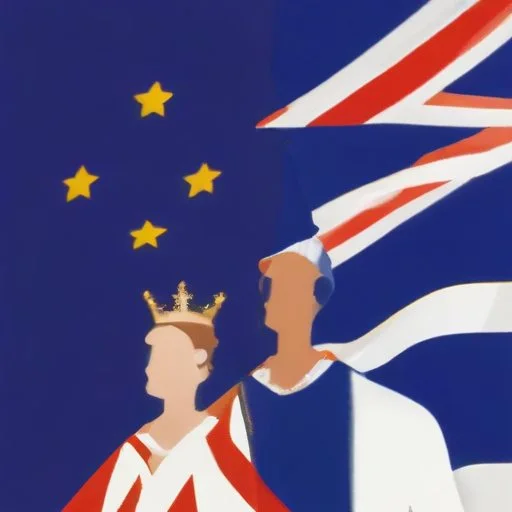
For centuries, the relationship between England and Scotland was marked by tension and competition. The two nations had separate parliaments, laws, and institutions, often finding themselves on opposite sides of the battlefield. However, as the 17th century drew to a close, the idea of a unified Britain began to take hold. Queen Anne, who ruled both England and Scotland, was a key figure in pushing for this union.
The Acts of Union were a series of agreements ratified by both the English and Scottish parliaments in 1707. These acts abolished the Scottish parliament and created a single, unified government for the Kingdom of Great Britain. The acts also established a new flag, the Union Jack, which combined the flags of both nations.
The Act of Union had far-reaching consequences for both England and Scotland. The creation of a single, unified government led to increased cooperation and collaboration between the two nations. The union also opened up new economic opportunities, as Scotland gained access to England's colonies and trade networks.
The Act of Union also had significant cultural and social implications. The union led to the spread of English culture and language throughout Scotland, while Scottish culture and traditions were also adopted in England. The union also led to increased migration between the two nations, as people moved freely between England and Scotland for the first time.
Not everyone was pleased with the Act of Union. Many Scots felt that their nation's independence was being lost, and that England was exerting too much control over their affairs. In England, some felt that the union would lead to an influx of Scottish immigrants, taking jobs and resources away from the English people.
"I am resolved to do everything in my power to bring about a union between our two nations, and to make us one people." - Queen Anne
One Scottish merchant, writing at the time, said: "I never thought I would see the day when our two nations would be united under one government. But I am glad it has happened, for it has brought us great prosperity and opportunity."
The Act of Union set a precedent for future unifications and alliances. It paved the way for the British Empire, which would go on to shape world history. The union also showed that rival nations could put aside their differences and work together for the greater good.
In conclusion, the Act of Union was a pivotal moment in history, marking the beginning of a new era of cooperation and growth for England and Scotland. Despite its controversies and challenges, the union has had a lasting impact on the world, shaping the course of history and inspiring future generations.
The road to the Act of Union was paved by centuries of complex and often contentious relationships between England and Scotland. One notable example is the 1603 Union of Crowns, where Queen Elizabeth I of England died without an heir, and the Scottish king, James VI, inherited the English throne. This union of crowns created a dynastic link between the two nations, but it did not address the fundamental issues of separate parliaments, laws, and institutions.
In the late 17th century, the English government began to exert pressure on Scotland to enter into a more formal union. The Scottish economy was struggling, and the English offered economic incentives to join forces. However, many Scots were wary of losing their independence and unique cultural identity.
The turning point came in 1706, when the Scottish parliament was presented with the Articles of Union, which outlined the terms of the proposed merger. After heated debates and negotiations, the Scottish parliament finally approved the union in January 1707, paving the way for the Act of Union to take effect on May 1, 1707.

Daniel Defoe: The Unlikely Unionist
Daniel Defoe, the famous English writer and spy, played a surprising role in advocating for the Act of Union. Defoe was sent to Scotland in 1706 to gather intelligence and persuade Scottish authorities to support the union. He wrote several pamphlets and articles, arguing that a unified Britain would bring prosperity and stability to both nations.
Defoe's involvement in the union negotiations highlights the complex and often clandestine nature of diplomatic efforts. His writings and secret meetings with Scottish leaders helped to build support for the union, ultimately contributing to its success.
The Cultural Significance of the Union Jack
The creation of the Union Jack, which combined the flags of England and Scotland, symbolized the fusion of two distinct cultural identities. The new flag became an enduring symbol of British identity, appearing on government buildings, ships, and even everyday objects like tea towels and clothing.
The Union Jack also had cultural implications beyond Britain's borders. As the British Empire expanded, the flag was adopted by colonies and territories around the world, spreading British culture and values.

The Economic Benefits of Union
The Act of Union brought significant economic benefits to both England and Scotland. The union created a large, unified market, increasing trade and investment opportunities between the two nations. Scotland gained access to England's colonies and trade networks, while England benefited from Scotland's natural resources and strategic position.
The economic consequences of the union were far-reaching, shaping the course of British economic development for centuries to come. The union facilitated the growth of industries like textiles, iron, and shipbuilding, laying the foundation for Britain's emergence as a major industrial power.
The Parliament of Great Britain: A New Era of Governance
The Act of Union abolished the Scottish parliament and created the Parliament of Great Britain, which was dominated by English representatives. The new parliament was designed to facilitate the integration of Scotland into the British state, with Scottish MPs holding a significant minority of seats.
The creation of the Parliament of Great Britain marked a significant shift in British governance, centralizing power and establishing a strong, unified government. This new system enabled more effective decision-making and coordination, paving the way for Britain's emergence as a dominant world power.