Adolf Hitler becomes Führer of Nazi Party
In a Munich beer hall, the stormy politics of post-war Germany swirled around Adolf Hitler, a charismatic orator and decorated war veteran. After a tumultuous party meeting, Hitler strong-armed his way to leadership of the National Socialist German Workers' Party, ousting Anton Drexler. With his newfound power, Hitler rebranded the party, introducing the swastika emblem and "Heil Hitler" salute. This marked the beginning of Hitler's totalitarian grip on Germany, foreshadowing a dark era of war, genocide, and global devastation.
Hitler's Rise to Power: The Fateful Night that Changed History
The Birth of a Totalitarian Era
On a fateful night in Munich, Germany,
Adolf Hitler seized control of the National Socialist German Workers Party (NSDAP), propelling himself onto the path of ultimate power and reshaping the course of world history. This pivotal event, which took place in a crowded beer hall, marked the beginning of Hitler's iron-fisted grip on Germany, foreshadowing a dark era of war, genocide, and global devastation.
A Turbulent Backdrop
The post-World War I era in Germany was a hotbed of political unrest, economic instability, and social discontent. The Treaty of Versailles had imposed harsh penalties on Germany, leading to widespread resentment and a sense of national humiliation. Amidst this tumultuous environment, extremist ideologies began to flourish, and the NSDAP emerged as a prominent force.
The Key Players
- Adolf Hitler: A charismatic orator, decorated war veteran, and rising star within the NSDAP. Hitler's persuasive rhetoric, backed by his personal magnetism, enabled him to sway party members and ultimately wrestle control from Anton Drexler.
- The founder and initial leader of the NSDAP, Drexler's more moderate stance made him vulnerable to Hitler's aggressive tactics and subsequent takeover.
A Night of High Drama
On that fateful evening, Hitler orchestrated a dramatic showdown, turning a routine party meeting into a show of force. With his loyal followers, the Sturmabteilung (SA), providing a intimidating presence, Hitler coerced Drexler into surrendering leadership, effectively ousting him from the party.
The Rebranding of the NSDAP
As the new leader, Hitler wasted no time rebranding the party to reflect his extremist ideology. He introduced the notorious swastika emblem, which would become synonymous with the Nazi regime, and popularized the Heil Hitler salute, a gesture that would be forever associated with terror and oppression.
A New Era Unfolds
With Hitler at the helm, the NSDAP began its rapid transformation into a powerful, ruthless machine. This marked the commencement of Hitler's reign of terror, which would ultimately engulf Europe and the world in the flames of war. The stage was set for a catastrophic era, as Hitler's megalomania and racist ideology began to wreak havoc on humanity.
Quotes and Memorable Sayings
- "The great masses of the people will more easily fall victims to a big lie than a small one." - Adolf Hitler
- "The leader of genius must have the ability to make different opponents appear as if they belonged to one category." - Adolf Hitler
Lessons from History
As we reflect on this pivotal moment, we are reminded of the dangers of unchecked power, the importance of civic engagement, and the need for eternal vigilance against extremist ideologies. The rise of Hitler serves as a stark warning, urging us to learn from the past and strive for a more just, equitable, and peaceful world.
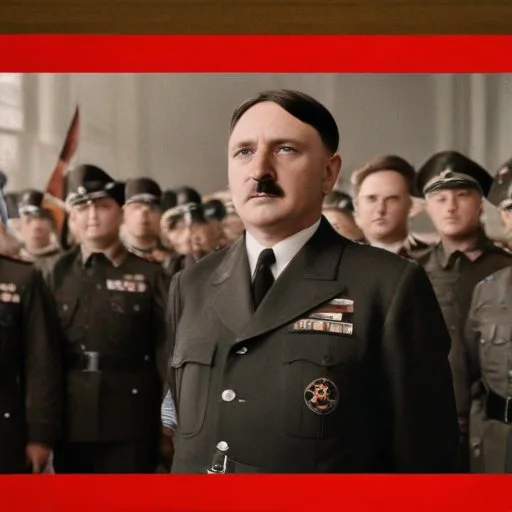
Character Overview
Anton Drexler: The Overthrown Leader
Anton Drexler, the founder and initial leader of the NSDAP, played a crucial role in Hitler's rise to power. A machinist by trade, Drexler was a passionate advocate for the working class and a strong critic of the Treaty of Versailles. He saw the Nazi Party as a means to unite the German people and restore national pride.
Despite his formidable oratory skills, Drexler's moderate stance and lack of charisma made him vulnerable to Hitler's aggressive tactics. As Hitler's influence grew within the party, Drexler found himself increasingly marginalized, ultimately leading to his ousting on that fateful night in Munich.

Geopolitical Overview
A Turbulent Europe: The Geopolitical Context
The post-World War I era in Europe was marked by political instability, economic turmoil, and social unrest. The Treaty of Versailles had imposed harsh penalties on Germany, leading to widespread resentment and a sense of national humiliation. This created a fertile ground for extremist ideologies to flourish.
In this tumultuous environment, the rise of fascist and nationalist movements across Europe was not unique to Germany. Italy, under Benito Mussolini, was already experiencing a similar resurgence of authoritarianism. The seeds of World War II were being sown, as the world powers began to realign and rearm.
Detailed Ideological Review
The Roots of Hitler's Ideology
Hitler's rise to power was built on a foundation of extreme nationalism, racism, and anti-Semitism. His ideology was shaped by the writings of Houston Stewart Chamberlain, a British-born German philosopher, and the anti-Semitic tracts of Eugen Dühring. Hitler's own book, Mein Kampf, would later become the Nazi Bible, outlining his vision for a racially pure Germany.
Hitler's belief in the superiority of the Aryan race and his scapegoating of Jews, communists, and other perceived enemies of the state would become the driving force behind the Nazi regime's atrocities.
Full Historiographical Review
Historical Perspectives on Hitler's Rise
Historians have long debated the factors that contributed to Hitler's rapid ascent to power. Some point to the economic devastation of the Great Depression, which created a sense of desperation and vulnerability among the German people. Others emphasize the failure of the Weimar Republic to provide effective governance and stability.
Recent scholarship has highlighted the role of charismatic leadership and the power of ideology in shaping Hitler's rise. Whatever the causes, it is clear that the events of that fateful night in Munich marked a turning point in world history.
Rich Economic Analysis
The Economic Consequences of Hitler's Rise
Hitler's rise to power had far-reaching economic consequences, both domestically and internationally. His promise to restore German economic greatness and provide jobs for the unemployed resonated with a desperate population.
As Hitler consolidated power, he implemented a series of policies aimed at stimulating economic growth, including massive infrastructure projects and rearmament. While these measures brought short-term benefits, they ultimately contributed to the destabilization of the global economy and the outbreak of World War II.


