


In the aftermath of World War II, the International Military Tribunal for the Far East convened in Tokyo to bring to justice those responsible for the atrocities committed by Japan during the war. On November 12, 1948, the tribunal sentenced seven top Japanese officials, including General Hideki Tojo, to death for their roles in the devastating conflict.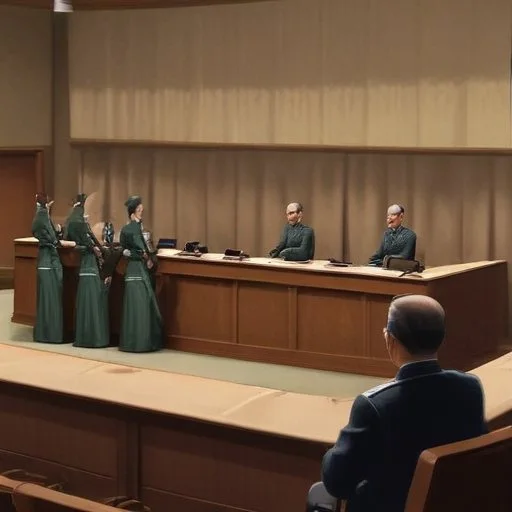
The International Military Tribunal for the Far East was established in January 1946, with the aim of prosecuting Japanese leaders for their involvement in the war. The tribunal was composed of judges from 11 Allied nations, including the United States, the United Kingdom, and the Soviet Union. The trial began in May 1946 and lasted for over two years, with 28 defendants facing charges of war crimes, crimes against humanity, and conspiracy.
The seven defendants sentenced to death were:
The verdict marked a significant milestone in the pursuit of justice for the victims of Japan's aggressive expansion during World War II. The tribunal's decision sent a strong message that those responsible for war crimes would be held accountable, regardless of their rank or position.
The International Military Tribunal for the Far East played a crucial role in shaping international law and setting a precedent for future war crimes tribunals. The trial also contributed to the development of Japan's post-war constitution, which enshrined the principles of pacifism and human rights.
"The judgment of this tribunal will be a beacon of hope for the future, a warning to those who would again embark on a course of aggression and a reassurance to those who strive for peace and justice."
— Sir William Webb, President of the International Military Tribunal for the Far EastThe sentencing of seven Japanese officials to death by the International Military Tribunal for the Far East was a landmark moment in the pursuit of justice for the victims of World War II. The verdict served as a powerful reminder of the importance of holding individuals accountable for their actions, and paved the way for the development of international law and the pursuit of human rights.
General Hideki Tojo, the former Prime Minister of Japan, was a complex figure with a penchant for militarism and nationalism. Born in 1884, Tojo graduated from the Imperial Japanese Army Academy and rose through the ranks to become the Chief of Staff of the Imperial Japanese Army. He was a strong believer in the concept of "Hakkō ichiu," or the "eight corners of the world under one roof," which emphasized the need for Japan to expand its territories and resources.
Tojo's leadership was marked by a series of aggressive military campaigns, including the invasion of China and the attack on Pearl Harbor. He was also known for his strict discipline and authoritarian rule, earning him the nickname "The Razor."
Despite his controversial legacy, Tojo remains a fascinating figure in Japanese history, with many still debating his motivations and intentions.

The International Military Tribunal for the Far East was not the only war crimes trial to take place in Asia after World War II. In addition to the main Tokyo trial, several smaller trials were held in various parts of Asia, including Hong Kong, Singapore, and the Philippines.
One of the most notable of these trials was the Khabarovsk War Crime Trials, held in the Soviet Union in 1949. The trial prosecuted 12 Japanese officials and scientists who had been involved in the development and use of biological weapons during the war.
The trial was significant not only because of the grave nature of the crimes, but also because it marked one of the first times that biological warfare had been prosecuted as a war crime.
The geopolitical context of the International Military Tribunal for the Far East was complex and multifaceted. The trial was held at a time of great turmoil and upheaval in Asia, with the Chinese Civil War raging on the mainland and the Cold War beginning to take shape.
The Soviet Union, in particular, played a significant role in the trial, with its judges and prosecutors taking a prominent role in the proceedings. The Soviets saw the trial as an opportunity to advance their own interests in Asia and to counter the influence of the United States.
Meanwhile, the United States was keen to promote its own vision of a post-war world order, with a strong emphasis on democracy, human rights, and the rule of law.

The Tribunal's archives contain a wealth of historical documents and artifacts, including the original indictment against the defendants, court transcripts, and exhibits presented as evidence during the trial.
One of the most significant documents is the Imperial Rescript on Education, issued by the Emperor Hirohito in 1937, which emphasized the importance of loyalty, sacrifice, and obedience to the state.
The Tribunal also preserved physical evidence, such as weapons and military equipment, which were used to demonstrate the extent of Japan's aggression and the atrocities committed during the war.
The International Military Tribunal for the Far East had significant political implications for Japan and the world at large. The trial marked a major shift in the way that war crimes were prosecuted and punished, and it set an important precedent for future war crimes tribunals.
The trial also had a profound impact on Japan's political landscape, leading to the adoption of a new constitution that enshrined the principles of pacifism and human rights.
In the years that followed, Japan would emerge as a major economic power, but the legacy of the Tribunal would continue to shape its relationship with the international community and its own sense of identity and purpose.