


On a fateful morning in 1978, a Boeing 747, christened Air India Flight 855, plummeted into the Arabian Sea off the coast of Bombay, India, claiming the lives of all 213 passengers and crew on board. This catastrophic event would go down in history as one of the deadliest aviation disasters of all time, a somber reminder of the devastating consequences of human error and technological failure.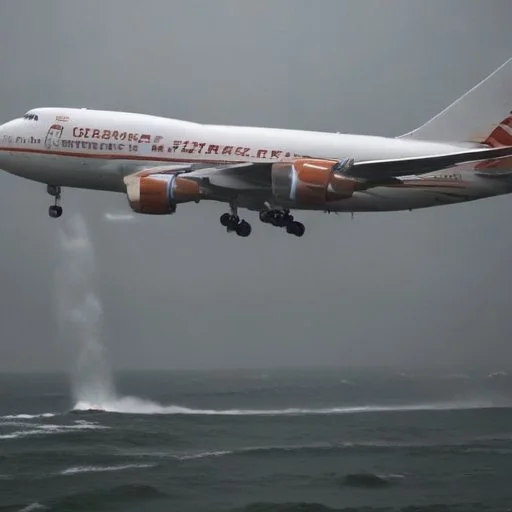
The doomed flight was commanded by Captain Singh, an experienced pilot with thousands of hours of flying time under his belt. However, a combination of instrument failure, spatial disorientation, and pilot error would ultimately seal the fate of Flight 855.
The Boeing 747, a behemoth of the skies, was equipped with state-of-the-art instruments and navigation systems. Yet, on that ill-fated morning, a faulty altimeter, which measures an aircraft's altitude, sent false readings to the pilots. This critical malfunction led to a series of catastrophic mistakes, including the failure to set the aircraft's heading and altitude correctly.
Spatial disorientation, a phenomenon where pilots lose their sense of orientation in-flight, is a well-documented hazard in aviation. In the case of Flight 855, the pilots' failure to recognize and correct their disorientation proved fatal. As the aircraft deviated from its intended course, the crew's confusion and panic set in, further exacerbating the crisis.
The investigation into the crash of Air India Flight 855 was one of the most extensive in aviation history, involving international teams of experts and exhaustive analysis of the wreckage. The findings would pinpoint a combination of human error and technical failure as the root causes of the disaster.
The tragedy of Air India Flight 855 led to a major overhaul of pilot training programs, emphasizing the importance of Crew Resource Management (CRM) and the need for robust safety protocols. The incident also spurred the development of more reliable and accurate navigation systems, saving countless lives in the years to come.
The crash of Air India Flight 855 serves as a poignant reminder of the importance of diligence, attention to detail, and crew coordination in the high-stakes world of aviation. As we honor the memories of those who perished, we are also reminded of the power of tragedy to inspire change and improvement, ultimately making our skies safer for generations to come.
In the words of Captain Eric "Winkle" Brown, a renowned aviator and crash investigator, "The greatest mistake in aviation is to assume that the unexpected will not happen." The story of Air India Flight 855 is a testament to the enduring lessons of humility, vigilance, and safety in the pursuit of flight.
The crash of Air India Flight 855 is often compared to another devastating aviation disaster, the 1977 Tenerife airport disaster, which occurred just a year prior. Both incidents involved a combination of human error and technical failure, resulting in catastrophic consequences. However, while the Tenerife disaster was attributed to a complex series of mistakes and miscommunications, the crash of Flight 855 was largely attributed to a single critical failure - the faulty altimeter.
Despite the differences in circumstances, both incidents led to a major overhaul of safety protocols and crew training programs. In the aftermath of the Tenerife disaster, the International Civil Aviation Organization (ICAO) implemented new standards for air traffic control and crew communication. Similarly, the crash of Air India Flight 855 led to a greater emphasis on Crew Resource Management (CRM) and the development of more reliable navigation systems.
Both incidents serve as a reminder of the importance of vigilance and attention to detail in the high-stakes world of aviation. By learning from these tragedies, the aviation industry has been able to make significant strides in improving safety and reducing the risk of catastrophic accidents.

Captain Singh, the commander of Air India Flight 855, was an experienced pilot with thousands of hours of flying time under his belt. However, on that fateful morning, he found himself at the center of a perfect storm of errors and malfunctions.
Despite his extensive experience, Captain Singh was not immune to the effects of spatial disorientation, a phenomenon that has been known to affect even the most seasoned pilots. His failure to recognize and correct his disorientation ultimately sealed the fate of Flight 855.
In the aftermath of the crash, Captain Singh's reputation was scrutinized by investigators and the public alike. While he was not absolved of responsibility, the inquiry ultimately revealed a complex interplay of factors that contributed to the tragedy, highlighting the importance of a systemic approach to safety in aviation.
The crash of Air India Flight 855 led to a major technological overhaul of the aviation industry, with a focus on improving the reliability and accuracy of navigation systems.
The development of more advanced altimeters, capable of providing pilots with accurate and reliable readings, was a direct response to the failure of the faulty altimeter on Flight 855. Additionally, the incident spurred the development of more sophisticated warning systems, designed to alert pilots to potential errors and malfunctions.
The impact of the crash was also felt in the area of Crew Resource Management (CRM), with a greater emphasis on training pilots to work together as a team and respond effectively to emergency situations.

In the early hours of January 1, 1978, Air India Flight 855 prepared for takeoff from Bombay's Santa Cruz Airport, bound for Dubai. The Boeing 747, a behemoth of the skies, was a symbol of modernity and progress, carrying 213 passengers and crew.
As the aircraft lifted off the runway, the passengers and crew were filled with a sense of excitement and anticipation. The New Year had dawned, and with it, a fresh start. But little did they know that their journey would end in tragedy, just a few miles off the coast of Bombay.
The crash of Air India Flight 855 was a traumatic event that shook the nation, casting a pall of grief over the Indian subcontinent. It would take years for the aviation industry to recover from the shock, but ultimately, it would emerge stronger and safer as a result.
The crash of Air India Flight 855 had a profound impact on Indian society, casting a shadow of grief over the nation.
The tragedy was deeply felt by the Indian diaspora, with many families and communities affected by the loss of loved ones. The incident also raised questions about the safety and reliability of air travel, leading to a surge in demand for greater transparency and accountability in the aviation industry.
In the aftermath of the crash, the Indian government responded by implementing new safety protocols and regulations, aimed at improving the safety of air travel. The incident also led to a greater emphasis on passenger safety and security, with airlines investing heavily in improving their safety records.