


The Airbus A380, the world's largest commercial jet, made its debut at a grand ceremony in Toulouse, France, marking a significant milestone in the history of aviation. This colossal aircraft, boasting a wingspan of nearly 261 feet, is capable of carrying up to 853 passengers, depending on the configuration, and is expected to revolutionize long-haul flights with its advanced technology and fuel efficiency.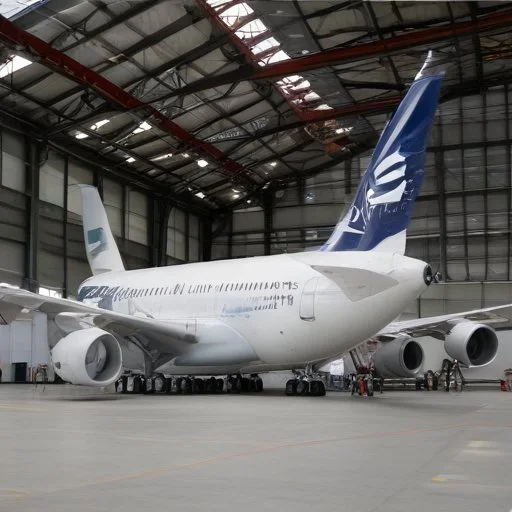
In the early 1990s, Airbus began conceptually exploring the idea of a superjumbo jet, driven by the growing demand for air travel and the need for more efficient aircraft. This vision was further fueled by the success of the Boeing 747, which had dominated the long-haul market for decades. After years of research and development, the Airbus A380 project was officially launched in 2000, with a commitment to create an aircraft that would not only be the largest in the world but also the most fuel-efficient.
On January 18, 2005, the Airbus A380 was officially unveiled at a grand ceremony in Toulouse, France, attended by dignitaries, industry leaders, and media representatives from around the world. The event marked a new era in commercial aviation, as the A380's massive size, advanced technology, and fuel efficiency were showcased to the world.
The development of the Airbus A380 involved a team of talented engineers, designers, and industry experts. Notable figures include:
The Airbus A380 project spanned over two decades, from conceptualization to its maiden flight. Here's a brief timeline of key events:
The Airbus A380's introduction has had a significant impact on the aviation industry, including:
The Airbus A380 has become an iconic symbol of modern air travel, with its massive size and advanced technology captivating the imagination of people around the world. The aircraft's impact extends beyond the aviation industry, influencing popular culture and inspiring new generations of engineers and innovators.
In conclusion, the Airbus A380's unveiling ceremony in Toulouse, France, marked a significant milestone in the history of commercial aviation, showcasing an aircraft that would revolutionize long-haul flights with its advanced technology, fuel efficiency, and massive size. The A380's impact will be felt for generations to come, shaping the future of air travel and inspiring new innovations in aviation.
The Airbus A380's massive size and advanced technology have drawn comparisons to other large commercial aircraft, such as the Boeing 747. While both aircraft are giants in the skies, they have distinct differences in design, capacity, and fuel efficiency. The A380 boasts a maximum takeoff weight of over 590,000 kg, whereas the 747-8 has a maximum takeoff weight of around 440,000 kg. Additionally, the A380's fuel-efficient engines allow it to burn up to 17% less fuel per passenger than the 747-8.
Another key difference lies in their design philosophies. The A380 was built with a modular design, allowing for easier maintenance and customization, whereas the 747-8 has a more traditional, integrated design. These differences in design and technology have significant implications for airlines, passengers, and the environment.
In terms of passenger experience, both aircraft offer luxurious amenities, such as lie-flat beds and gourmet meals. However, the A380's larger size allows for more spacious cabins, wider seats, and larger windows, providing an unparalleled level of comfort.
The Airbus A380 has become an iconic symbol of modern air travel, captivating the imagination of people around the world. Its massive size and advanced technology have inspired new generations of engineers, innovators, and aviation enthusiasts.
In popular culture, the A380 has made appearances in films, television shows, and video games, often symbolizing luxury, innovation, and progress. Its sleek design and imposing presence have also made it a favorite among aircraft enthusiasts and spotters.
Furthermore, the A380 has also had a profound impact on the tourism industry, enabling airlines to offer more routes, more frequent flights, and more affordable fares, making it easier for people to explore the world.
The Airbus A380 has had a significant impact on the global economy, generating billions of dollars in revenue for airlines, airports, and tourism industries. With its massive size and fuel efficiency, the A380 has reduced operating costs for airlines, allowing them to offer more competitive fares and increase their profit margins.
In addition, the A380 has created thousands of jobs, from manufacturing and engineering to ground handling and customer service. The aircraft's production has also generated significant revenue for local economies, particularly in Europe and Asia.
The A380 has also had a positive impact on global trade, enabling the rapid transportation of goods and services across the globe. With its massive cargo capacity, the A380 has facilitated the growth of e-commerce and international trade, connecting businesses and consumers worldwide.
The Airbus A380 represents a significant technological leap in commercial aviation, with its advanced materials, efficient engines, and cutting-edge avionics. The aircraft's massive size and complex systems require sophisticated technology to operate safely and efficiently.
The A380's advanced materials, such as carbon fiber and advanced aluminum alloys, have enabled the construction of larger, lighter, and more fuel-efficient aircraft. Its efficient engines, such as the Engine Alliance GP7200, have reduced fuel consumption and emissions, making the A380 one of the most environmentally friendly commercial aircraft in operation.
The A380's avionics systems, including its advanced flight control computers and navigation systems, have set new standards for safety and reliability in commercial aviation. These technological innovations have paved the way for future generations of aircraft, enabling further improvements in safety, efficiency, and comfort.
Noël Forgeard: A Visionary Leader
Noël Forgeard, the former CEO of Airbus, was instrumental in the development of the A380. His vision and leadership played a crucial role in overcoming the technical and financial challenges that threatened the project.
Forgeard's experience in the aerospace industry and his passion for innovation made him an ideal leader for the A380 program. Under his guidance, the Airbus team was able to push the boundaries of commercial aviation, creating an aircraft that would revolutionize long-haul flights.
Forgeard's legacy extends beyond the A380, as he played a key role in shaping the future of European aerospace industry. His leadership and vision have inspired generations of engineers, innovators, and industry leaders.