


On a chilly winter morning in 1998, Alfredo Ormando, a 39-year-old Italian writer and gay rights activist, ignited a fire that would etch a permanent mark on the fight against homophobia. In a heart-wrenching act of defiance, Ormando doused himself in gasoline and set himself ablaze in St. Peter's Square, the heart of the Vatican City, to protest the Catholic Church's long history of discrimination against the LGBTQ community.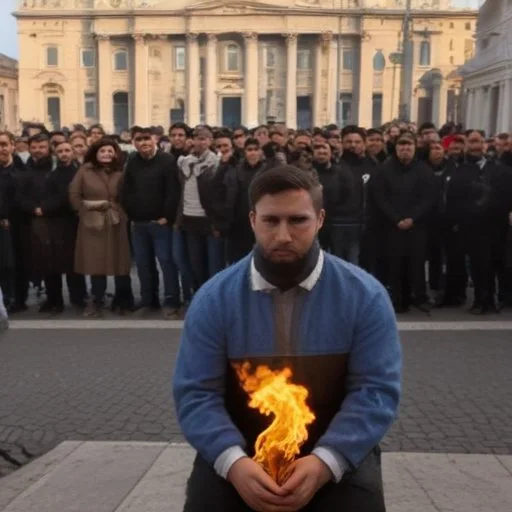
Ormando's tragic sacrifice was not an impulsive decision, but a culmination of years of frustration and anger towards the Church's homophobia. As an openly gay man, Ormando had faced discrimination and marginalization from the Church, which he felt was complicit in perpetuating hatred and violence against the LGBTQ community.
In the months leading up to his protest, Ormando wrote several letters to the Pope and the Vatican, urging them to reconsider their stance on homosexuality. However, his pleas fell on deaf ears, and it was this indifference that drove him to take drastic action.
The events of that fateful day unfolded with devastating speed:
Ormando's sacrifice sparked outrage and solidarity among LGBTQ advocates worldwide. His tragic death became a rallying cry for the LGBTQ community, highlighting the devastating impact of homophobia and discrimination.
The Vatican's response to Ormando's protest was lukewarm at best, with the Pope barely acknowledging the incident. However, the international outcry and public pressure forced the Church to re-examine its stance on homosexuality.
Ormando's protest and sacrifice have had a lasting impact on the global LGBTQ movement. His bravery has inspired countless individuals to come out and demand equality, and his legacy continues to fuel protests and activism against homophobia.
Ormando's story has also been immortalized in various forms of art, literature, and media, ensuring that his message of love and acceptance will never be forgotten.
Twenty-three years after his tragic sacrifice, Alfredo Ormando's memory continues to inspire and motivate. His courageous act has left an indelible mark on the fight against homophobia, and his legacy will forever be etched in the annals of LGBTQ history.
As we remember Ormando's bravery, we must also acknowledge the long road ahead. His sacrifice is a poignant reminder that the fight against homophobia is far from over, and that our collective voices must continue to demand equality and justice for all.
Alfredo Ormando was a multifaceted individual, whose personality was shaped by his experiences as a gay man in a predominantly Catholic country. As an openly gay writer, he was drawn to the world of literature, using his words to express the struggles and triumphs of the LGBTQ community. His passion for social justice and human rights drove him to become an activist, fighting against the discrimination and marginalization faced by the community.
Ormando's letters to the Pope and the Vatican, which were met with indifference, showcased his determination and courage in the face of adversity. His ultimate sacrifice was a testament to his unwavering commitment to the cause, inspiring countless individuals to take action against homophobia.
The cultural impact of Alfredo Ormando's sacrifice was felt far beyond the borders of Italy. His tragic death sparked a global conversation about homophobia and discrimination, mobilizing LGBTQ advocates and allies to take action. The event marked a turning point in the fight for LGBTQ rights, inspiring a new wave of activism and advocacy.
In the years following Ormando's sacrifice, LGBTQ-themed art, literature, and media experienced a surge in popularity, providing a platform for marginalized voices to be heard. The LGBTQ community began to reclaim its narrative, challenging the heteronormative status quo and demandingequality and acceptance.
The political landscape of Italy in the 1990s was marked by a deep-seated conservativism, which perpetuated discrimination against the LGBTQ community. The Catholic Church, a powerful institution in Italy, wielded significant influence over the country's moral and social agenda, often using its authority to reinforce homophobic attitudes.
Ormando's protest and subsequent death brought international attention to the Church's stance on homosexuality, forcing the Vatican to re-examine its position. While the Church's response was inadequate, the incident marked a crucial shift in the global conversation about LGBTQ rights, paving the way for future activism and advocacy.

The geopolitical context of the 1990s was characterized by a growing awareness of human rights and social justice. The fall of the Berlin Wall in 1989 had marked a significant shift in global politics, as the world began to move towards greater democratization and liberalization.
This backdrop of global change provided a fertile ground for Ormando's sacrifice to resonate with a wider audience. As the news of his protest and death spread, it sparked a wave of solidarity and outrage among LGBTQ advocates and allies worldwide, fuelling a global movement for LGBTQ rights and challenging the status quo of discrimination and marginalization.
Historians have interpreted Alfredo Ormando's sacrifice as a pivotal moment in the fight against homophobia, marking a shift from individual activism to collective action. Ormando's protest, as a form of self-immolation, was a powerful symbol of resistance, drawing parallels with other iconic figures in history, such as Jan Palach and Thich Quang Duc.
The event has also been contextualized within the broader narrative of LGBTQ history, highlighting the struggles and triumphs of a community that has long faced discrimination and marginalization. Ormando's story serves as a powerful reminder of the importance of activism and advocacy in effecting social change and promoting human rights.