


The aftermath of World War II marked a pivotal moment in history, as the Allied Control Council (ACC) came into being to govern a war-torn Germany. This quadripartite council, comprising the United States, Great Britain, France, and the Soviet Union, was tasked with the monumental responsibility of rebuilding a shattered nation.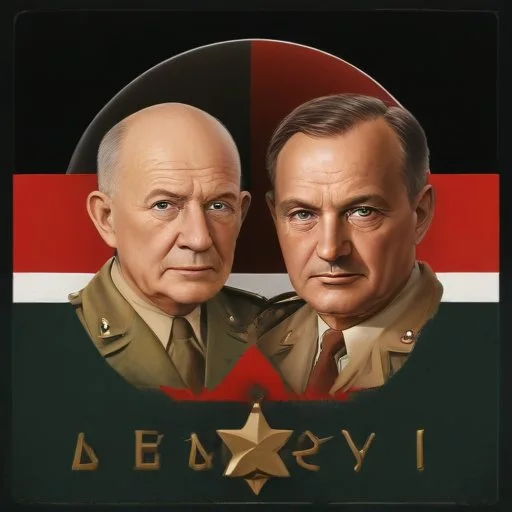
The ACC's formation was a direct response to the devastation and chaos that had engulfed Germany. As the war drew to a close, the Allied Powers recognized the need for a unified governing body to oversee the occupation and reconstruction of Germany. The ACC's creation was formalized through the Potsdam Agreement, signed on August 2, 1945, which outlined the council's primary objectives: demilitarization, denazification, and democratization.
The Allied Control Council's efforts led to the successful demilitarization and denazification of Germany, paving the way for the country's eventual democratization. The council's initiatives also fostered the growth of a new, more inclusive German society, marked by increased transparency, accountability, and respect for human rights.
The ACC's presence had a profound impact on German culture and society. The council's promotion of democracy, freedom of expression, and human rights helped shape a new, more liberal German identity. The ACC's influence also extended beyond Germany, as it set a precedent for international cooperation and collective governance in the post-war era.
The ACC faced numerous challenges, including conflicts between the four occupying powers, disagreements over policy, and criticism from the German public. Despite these obstacles, the council successfully navigated these complexities, ultimately earning the respect and appreciation of the German people.
The Allied Control Council's story serves as a powerful reminder of the importance of international cooperation and collective action in the face of adversity. As the world continues to grapple with the complexities of conflict and reconstruction, the ACC's legacy offers valuable lessons in tolerance, understanding, and the pursuit of peace and prosperity.
As we reflect on the ACC's remarkable journey, we are reminded of the power of collaboration and collective effort in shaping a better future for all. The council's story is a testament to the enduring spirit of cooperation and a beacon of hope for generations to come.
One of the lesser-known figures involved in the Allied Control Council was General Lucius Clay, the deputy military governor of the US zone in Germany. Clay played a crucial role in shaping the ACC's policies, particularly in regards to economic reconstruction. His expertise in logistics and administration helped to facilitate the distribution of resources and aid to the German people.
Clay's commitment to the ACC's mission was unwavering, and he worked tirelessly to ensure a smooth transition from war to peace. His dedication earned him the respect of his peers, including General Eisenhower, who praised Clay's leadership and vision.

The Allied Control Council's presence in Germany had a profound impact on the country's cultural landscape. The council's promotion of democracy and freedom of expression led to a flourishing of artistic and intellectual expression, as Germans began to explore new forms of music, literature, and art.
The ACC's influence also extended to the realm of education, as the council worked to reform the German education system and promote critical thinking and intellectual curiosity. This led to a shift away from traditional authoritarian models of education and towards a more inclusive, student-centered approach.
The Allied Control Council's governance structure was a remarkable experiment in collective leadership. The council's quadripartite composition, comprising representatives from the United States, Great Britain, France, and the Soviet Union, was a novel approach to international cooperation.
The ACC's decision-making process was characterized by a spirit of compromise and cooperation, as the four powers worked together to address the complex challenges of post-war Germany. This unprecedented level of international cooperation set a new standard for collective governance and provided a model for future international institutions.

The Allied Control Council's formation was closely tied to the emerging Cold War landscape. The Potsdam Agreement, which formalized the ACC's creation, was signed just months after the Yalta Conference, where the Allied Powers had begun to lay the groundwork for the post-war world order.
The ACC's activities were closely watched by the international community, as the council's successes and failures were seen as a bellwether for the future of international cooperation. The council's efforts to rebuild Germany were thus inextricably linked to the broader geopolitical context of the time.
Historians have long debated the significance of the Allied Control Council in shaping the course of modern German history. Some have argued that the ACC's reforms were too limited, and that the council's failure to more fundamentally transform German society paved the way for the country's eventual division.
Others have countered that the ACC's achievements were remarkable, given the enormous challenges it faced. By promoting democratization, decentralization, and human rights, the council helped to lay the groundwork for Germany's eventual integration into the European community.