


On December 31, 1862, President Abraham Lincoln took a historic step towards reshaping the American landscape by signing an act that admitted West Virginia to the Union as its 35th state. This bold move effectively divided Virginia in two, creating a profound impact on the country's geography, politics, and the trajectory of the American Civil War.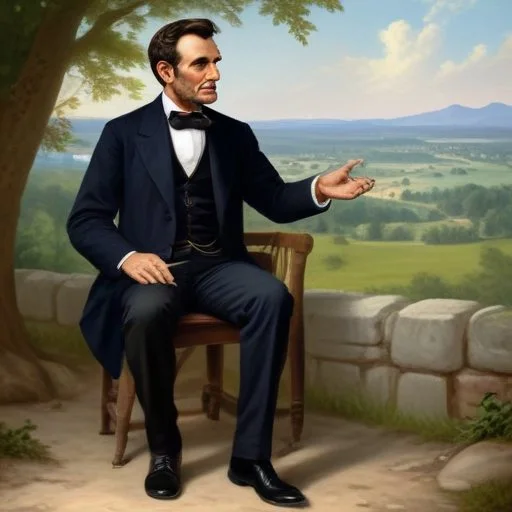
As the flames of the American Civil War raged on, the country was torn apart by conflicting ideologies and interests. The Union, led by President Lincoln, fought to preserve the unity of the states, while the Confederacy, comprised of 11 southern states, sought to establish itself as a separate nation. Amidst this chaos, West Virginia's admission to the Union was a crucial strategic move that weakened the Confederacy and bolstered the Union's chances of victory.
While Abraham Lincoln's leadership and vision played a critical role in West Virginia's admission to the Union, several key figures worked tirelessly behind the scenes to make this dream a reality. Notable among them were:
West Virginia's admission to the Union marked a significant turning point in American history. The creation of a new state not only weakened the Confederacy but also paved the way for a more unified nation. This momentous decision also sparked a wave of progress and development in the region, as West Virginia emerged as a beacon of hope and opportunity in the Appalachian Mountains.
The admission of West Virginia to the Union was not without controversy. Many Virginians opposed to secession saw the move as an illegal usurpation of their state's territory and authority. Others questioned the constitutionality of the move, arguing that the Union did not have the power to admit new states without the consent of the existing state. Despite these criticisms, Lincoln's vision for a united America prevailed, and West Virginia took its rightful place among the stars and stripes.
As the dust of the American Civil War settled, West Virginia's admission to the Union stood as a testament to Lincoln's unwavering commitment to the unity and progress of the nation. This pivotal moment in American history continues to inspire generations, reminding us that even in the darkest of times, visionary leadership and collective action can shape the course of our collective destiny.
Franz Anton Wigand, a German-American newspaper editor, played a pivotal role in championing the cause of West Virginia's statehood. Born in 1810, Wigand immigrated to the United States in 1832, settling in Wheeling, Virginia. As the editor of the Wheeling Intelligencer, Wigand used his platform to vocally oppose secession and advocate for the creation of a new state.
Wigand's tireless efforts did not go unnoticed. His editorials and writings helped galvanize public opinion in favor of West Virginia's statehood, earning him recognition as a key figure in the state's formation.

President Lincoln's decision to admit West Virginia to the Union was a calculated political move, strategically timed to bolster the Union's chances of victory in the American Civil War. By dividing Virginia, Lincoln weakened the Confederacy and gained a valuable ally in the Border States.
The timing of West Virginia's admission was crucial, as it coincided with the Union's push into the Border States. Lincoln's shrewd political maneuvering helped shift the balance of power in favor of the Union, paving the way for a more unified nation.
The admission of West Virginia to the Union had far-reaching geopolitical implications. The creation of a new state altered the balance of power in the region, giving the Union a strategic advantage in the Appalachian Mountains.
West Virginia's statehood also marked a significant shift in the country's internal borders, setting a precedent for future territorial adjustments. As the United States continued to expand and evolve, the admission of West Virginia would serve as a model for the formation of new states.

The admission of West Virginia to the Union had a profound impact on the region's economy. The new state's rich natural resources, including coal and timber, fueled industrial growth and development.
The creation of West Virginia also led to increased economic investment in the region, as the federal government invested in infrastructure and industry. As a result, West Virginia emerged as a hub of economic activity, driving growth and prosperity in the Appalachian region.
The Wheeling Convention, held in June 1861, was a pivotal moment in West Virginia's struggle for statehood. Delegates from the western counties of Virginia gathered to discuss separating from the rest of the state and forming a new government.
The Convention's declaration of independence, adopted on July 20, 1861, marked a turning point in the movement for West Virginia statehood. This historic document, drafted by Peter G. Van Winkle and others, paved the way for the formation of the Restored Government of Virginia and ultimately, West Virginia's admission to the Union.