


The Army of the Potomac, led by General Ulysses S. Grant, executed a pivotal retreat from the grueling Battle of the Wilderness, a tactical stalemate that had raged for days, only to redirect their forces southwards in a daring bid to outflank the Confederate Army of Northern Virginia and capture the crucial stronghold of Richmond. This audacious maneuver, marked by a series of brutal battles, would ultimately shape the course of the American Civil War.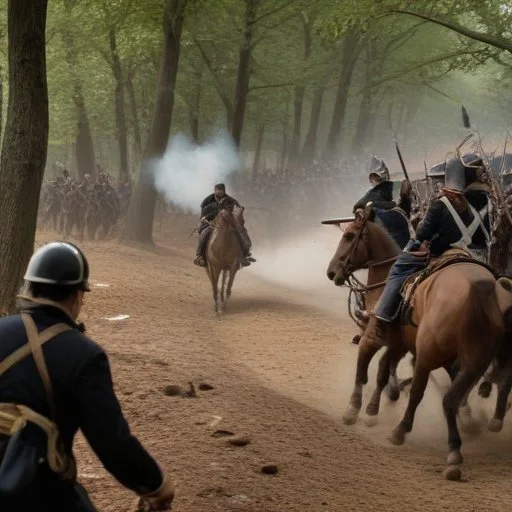
As the war entered its fourth year, the Union Army had yet to achieve a decisive victory over the Confederate forces. Grant, newly appointed as General-in-Chief, was determined to break the stalemate and bring a swift end to the conflict. The Battle of the Wilderness, fought from May 5 to 7, 1864, had proven inconclusive, with both armies suffering heavy casualties. Recognizing the futility of continued fighting in the Wilderness, Grant devised a bold plan to outmaneuver General Robert E. Lee's Army of Northern Virginia and strike at the heart of the Confederacy.
On May 7, 1864, Grant ordered his troops to disengage from the Battle of the Wilderness and begin a rapid march southwards, aiming to position themselves between Lee's army and the Confederate capital of Richmond. This sudden withdrawal caught the Confederates off guard, as they had anticipated a prolonged battle in the Wilderness. The Union Army's remarkable speed and organizational prowess allowed them to cover over 40 miles in two days, successfully executing a complex series of night marches and dawn assaults.
Grant's decision to abandon the Wilderness and pivot towards Richmond showcased his exceptional tactical acumen and logistical expertise. By abandoning the tired and worn-out terrain of the Wilderness, the Union Army avoided a prolonged and bloody stalemate, instead opting for a daring maneuver that would prove crucial in the war's outcome. Grant's ability to orchestrate the movement of over 100,000 troops, accompanied by a vast supply train and artillery, while maintaining the element of surprise, underscores his reputation as a master strategist.
The Army of the Potomac's strategic retreat and march southwards paved the way for a series of decisive battles that would ultimately culminate in the fall of Richmond and the surrender of Lee's army at Appomattox. Grant's bold move not only showcased his tactical genius but also reinvigorated the Union Army's morale, setting the stage for the war's eventual conclusion.
The Army of the Potomac's march southwards had far-reaching cultural and social implications, as it symbolized the Union Army's unwavering determination to bring an end to the brutal conflict. The bravery and sacrifice of the soldiers, coupled with Grant's strategic brilliance, inspired a nation and reinforced the notion that the Union would ultimately prevail.
Many soldiers recounted the grueling nature of the night marches, often walking for hours in driving rain and dense fog, with minimal rest and rations. One soldier, recalling the dawn assault on May 9, wrote, "The order was given to advance, and we went forward with a cheer, the rebels firing on us from their rifle pits. We lost many men, but we took the works and held them."
The Army of the Potomac's strategic maneuver and subsequent battles served as a turning point in the American Civil War, paving the way for the war's eventual conclusion and shaping the future of American politics and society. Grant's bold move would also influence military strategy for generations to come, serving as a testament to the power of innovative thinking and adaptability on the battlefield.
The often-overlooked General George G. Meade played a pivotal role in the Union Army's southward march. As the commander of the V Corps, Meade was instrumental in executing the series of night marches and dawn assaults that allowed the Army of the Potomac to outmaneuver the Confederate forces. His experience as a seasoned commander and engineer proved invaluable in navigating the treacherous terrain and coordinating the movement of over 100,000 troops.
Meade's leadership during this period showcased his exceptional organizational skills, as he ensured that the V Corps remained cohesive and effective despite the grueling conditions. His ability to think on his feet and make quick decisions under pressure was critical in maintaining the element of surprise, which proved crucial in the Union Army's ultimate success.

The Battle of the Wilderness, fought from May 5 to 7, 1864, was a brutal and inconclusive engagement that set the stage for Grant's bold maneuver. The battle was marked by intense fighting, with both armies suffering heavy casualties. Despite being outnumbered, the Confederate forces held their ground, and the Union Army was forced to withdraw and regroup.
The Wilderness itself was a dense, tangled forest that hindered movement and visibility, making it difficult for either army to gain a decisive advantage. The battle was a series of skirmishes and small-scale engagements, with both sides trading blows but failing to break the stalemate.
The Army of the Potomac's march southwards had a profound impact on the cultural landscape of the United States. The bravery and sacrifice of the soldiers, coupled with Grant's strategic genius, captivated the American public and reinforced the notion that the Union would ultimately prevail.
The march also showcased the immense logistical capabilities of the Union Army, which had developed a sophisticated system of supply chains, transportation, and communication. This impressive display of organizational prowess helped to bolster morale and reinforce the idea that the Union was a modern, efficient, and powerful entity.

Historians have long debated the significance of Grant's bold maneuver, with some arguing that it was a stroke of genius and others claiming that it was a desperate gamble. However, most agree that the move marked a turning point in the war, as it allowed the Union Army to regain the initiative and put the Confederate forces on the back foot.
Grant's decision to abandon the Wilderness and pivot towards Richmond has been seen as a masterclass in adaptability and flexibility. By recognizing the futility of continued fighting in the Wilderness, Grant demonstrated a willingness to think outside the box and challenge conventional military wisdom.
The war effort had a profound impact on the environment, as the massive armies and their supply chains placed immense pressure on the natural resources of the region. The Battle of the Wilderness itself was fought in a fragile ecosystem, and the intense fighting and subsequent march southwards had devastating effects on the local flora and fauna.
The environmental cost of the war was staggering, with widespread deforestation, soil erosion, and pollution of waterways. The impact of the war on the environment was a harbinger of the industrial-scale destruction that would become a hallmark of modern warfare.