


As the American Civil War raged on, the Confederacy found itself on the precipice of collapse. In a desperate bid to salvage the war effort, President Jefferson Davis appointed Robert E. Lee as general-in-chief of all Confederate armies, a move that would cement Lee's reputation as one of the greatest military minds in American history.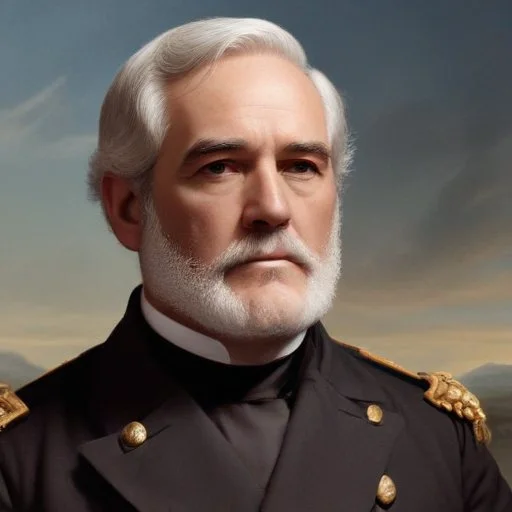
Prior to his appointment, Lee had already demonstrated his exceptional military prowess, securing a string of victories that would become the stuff of legend. The Battle of Chancellorsville, fought in May 1863, was a masterclass in tactical genius, as Lee's forces successfully divided and defeated the Union army despite being outnumbered. The Battle of Fredericksburg, fought in December 1862, was another resounding victory, as Lee's defensive strategies repelled the Union army's attacks, inflicting heavy casualties in the process.
As general-in-chief, Lee was tasked with overseeing all Confederate forces, a daunting responsibility that would require him to coordinate troop movements, allocate resources, and develop strategies to counter the increasingly dominant Union army. It was a role that Lee accepted with a mix of gravity and humility, recognizing the immense burden that rested on his shoulders.
The Confederacy was in disarray, its armies depleted, its economy in shambles, and its people weary of war. Lee's appointment was a last-ditch effort to stem the tide of Union victories, which had been gathering momentum since the Battle of Gettysburg in July 1863. The Union army, under the command of Ulysses S. Grant, had been pushing deep into Confederate territory, capturing key cities and strangling the Confederacy's ability to wage war.
Lee's appointment marked a new era of leadership in the Confederacy, one characterized by a sense of urgency and desperation. As the war effort hung in the balance, Lee knew that he had to act swiftly to rally his troops, reorganize his forces, and devise a strategy to counter the Union army's momentum. It was a task that would require every ounce of his military expertise, every shred of his dignity, and every fiber of his being.
In the end, Lee's efforts would be in vain. Despite his valiant attempts to stem the tide of Union victories, the Confederacy would ultimately succumb to the forces of history. The war would end in April 1865, with Lee's surrender at Appomattox, a moment that would be etched into the annals of American history. And yet, even in defeat, Lee's reputation as a brilliant military strategist and a symbol of Southern pride would endure, a testament to the enduring power of his leadership and vision.
"I would rather die a thousand deaths than surrender." - Robert E. Lee, 1865
The appointment of Robert E. Lee as general-in-chief of all Confederate armies shares parallels with the appointment of George Washington as commander-in-chief of the Continental Army during the American Revolution. Both leaders were tasked with overseeing a disparate group of forces, and both were faced with the daunting task of counteracting a more powerful enemy.
According to eyewitness accounts, Lee was visibly moved when he received news of his appointment as general-in-chief. Despite the gravity of the task ahead, he is said to have remarked, "I am but a humble soldier, doing my duty to my country."
Robert E. Lee's early life was marked by tragedy, with his father, Henry "Light-Horse Harry" Lee, abandoning the family when Robert was just 11 years old. Despite this, Lee's mother, Ann Hill Carter Lee, instilled in him a strong sense of discipline and duty, which would shape his later military career.
Lee's military education at West Point, where he graduated second in his class, further honed his leadership skills and strategic thinking. His subsequent service in the Mexican-American War and as a military engineer also provided valuable experience that would serve him well in the Civil War.

The Confederacy's decision to appoint Lee as general-in-chief was not without controversy. Some critics argued that Lee's victories in the Eastern Theater were offset by his lack of experience in the Western Theater, where the Union army was making significant gains.
Moreover, Lee's appointment marked a shift in the Confederacy's military strategy, away from the more aggressive tactics of his predecessor, Braxton Bragg. This change in approach would have significant implications for the war's outcome.
The appointment of Robert E. Lee as general-in-chief of the Confederate armies invites comparison with other notable military leaders throughout history. Like Napoleon Bonaparte, Lee was a master of battlefield tactics, able to adapt to changing circumstances and outmaneuver his opponents.
Similarly, Lee's ability to inspire loyalty and devotion in his troops is reminiscent of George Washington's leadership during the American Revolution. Both men possessed a unique ability to forge disparate groups into cohesive, effective fighting forces.

The economic toll of the American Civil War was devastating, with the Confederacy's economy in shambles by the time Lee assumed command. The Union's blockade of Southern ports had strangled the Confederacy's ability to trade, while the destruction of infrastructure and crops had decimated its agricultural sector.
Lee's appointment as general-in-chief was, in part, a desperate bid to stave off economic collapse, but it would ultimately prove too little, too late. The war effort had already drained the Confederacy's resources, and Lee's surrender at Appomattox would mark the final nail in the coffin of the Southern economy.
Among the most significant documents related to Robert E. Lee's appointment as general-in-chief is his letter of acceptance, penned on January 31, 1865. In it, Lee writes, "I have felt the weight of the responsibility, and the magnitude of the task, but I have no hesitation in accepting the position."
This letter, housed at the Library of Virginia, provides a unique window into Lee's thinking at the time, revealing a sense of duty and commitment that would define his leadership in the final months of the war.