


In the waning days of the American Civil War, a crucial stronghold falls to the Union, severing the Confederacy's lifeline to the outside world. This pivotal event is none other than the capture of Fort Fisher, the last remaining major seaport of the Rebel cause, situated on the banks of North Carolina's Cape Fear River.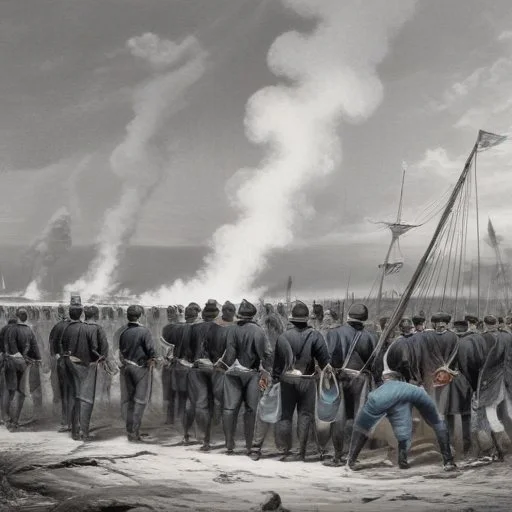
As the war raged on, the Confederacy's ability to import vital supplies and arms became increasingly crucial to its survival. Fort Fisher, with its strategic location and formidable defenses, emerged as a vital gateway for blockade runners and European shipments. The Union, determined to cripple the Rebel economy, set its sights on capturing this prized stronghold.
Admiral David Porter, the commander of the Union's North Atlantic Blockading Squadron, played a pivotal role in orchestrating the naval assault on Fort Fisher. Meanwhile, General Alfred Terry led the Union's ground troops in the amphibious assault. On the Confederate side, Colonel William Lamb valiantly defended the fort against the Union's onslaught.
The capture of Fort Fisher dealt a devastating blow to the Confederacy's ability to import vital supplies and arms. This strategic loss crippled the Rebel economy, paving the way for the eventual surrender of General Robert E. Lee at Appomattox Courthouse just months later.
The fall of Fort Fisher resonated beyond the battlefield, as it symbolized the crumbling of the Confederacy's hopes for independence. This pivotal event would be etched in the collective memory of the American people, serving as a poignant reminder of the devastating consequences of war.
In recognition of their bravery and strategic prowess, Admiral Porter and General Terry were hailed as heroes of the Union. Their names became synonymous with the fall of Fort Fisher, a testament to the ingenuity and determination of the Union forces.
In a poignant letter to his wife, Colonel Lamb wrote, "I am doing all I can to hold this fort, but I fear it is a hopeless task." His words poignantly capture the desperation and valor of the Confederate defenders in the face of overwhelming Union pressure.
The fall of Fort Fisher marked a turning point in the war, as it exposed the Confederacy's vulnerabilities and paved the way for the eventual surrender of General Lee. This pivotal event would shape the course of American history, serving as a powerful reminder of the devastating consequences of war.
The bravery and sacrifice of the soldiers on both sides of the conflict serve as a powerful testament to the human spirit. The fall of Fort Fisher stands as a poignant reminder of the devastating consequences of war, inspiring future generations to strive for peace and understanding.
The defenses of Fort Fisher were unlike any other Confederate stronghold during the American Civil War. While Fort Sumter, another key seaport, relied heavily on its imposing walls and artillery, Fort Fisher's defenses were more nuanced. Its strategic location on the Cape Fear River, coupled with its network of trenches and earthworks, made it a formidable opponent. In contrast, Fort Sumter's defenses were largely static, relying on its walls to withstand Union bombardments.
A comparison of the two forts highlights the adaptability and ingenuity of the Confederate engineers who designed Fort Fisher. By incorporating natural defenses and innovative tactics, they were able to hold off the Union for longer than expected.

Colonel William Lamb, the commander of Fort Fisher, was a seasoned Confederate officer with a reputation for bravery and tactical genius. Born in 1835 in Virginia, Lamb graduated from the United States Military Academy and served in the Mexican-American War. When the Civil War broke out, he enlisted in the Confederate Army and quickly rose through the ranks.
Lamb's determination to defend Fort Fisher was unwavering, even in the face of overwhelming Union pressure. His leadership inspired his troops to fight valiantly, and his strategic decisions were instrumental in delaying the Union's capture of the fort.
The fall of Fort Fisher had a profound impact on the environment of the Cape Fear River region. The Union's naval bombardment of the fort led to the destruction of surrounding wetlands and the displacement of local wildlife. The construction of the fort itself had already altered the natural ecosystems of the area, and the subsequent battle further exacerbated these changes.
In the aftermath of the battle, the Union's occupation of the fort led to the introduction of non-native species and the degradation of the river's water quality. The environmental consequences of the fall of Fort Fisher serve as a reminder of the often-overlooked cost of war on the natural world.
The siege of Fort Fisher was a brutal and relentless campaign that pushed both Union and Confederate forces to their limits. The Union's initial naval bombardment, led by Admiral Porter, began on December 24, 1864, and continued intermittently for weeks. Confederate forces, led by Colonel Lamb, responded with fierce resistance, using their artillery to devastating effect.
As the siege wore on, the Union's amphibious assault, led by General Terry, breached the fort's defenses, leading to a series of brutal hand-to-hand combat engagements. The fall of Fort Fisher on January 15, 1865, marked a turning point in the war, but the cost in human life and suffering was immense.
The fall of Fort Fisher had a profound impact on the cultural narrative of the American Civil War. The fort's capture symbolized the crumbling of the Confederacy's hopes for independence and the inevitability of Union victory. In the years that followed, Fort Fisher became a powerful symbol of the devastation and sacrifice of war.
The fort's legacy has been immortalized in literature, art, and music, serving as a poignant reminder of the human cost of conflict. Today, Fort Fisher stands as a testament to the enduring power of history to shape our understanding of ourselves and our place in the world.