


The Birth of a Nation: Jefferson Davis Elected Provisional President of the Confederacy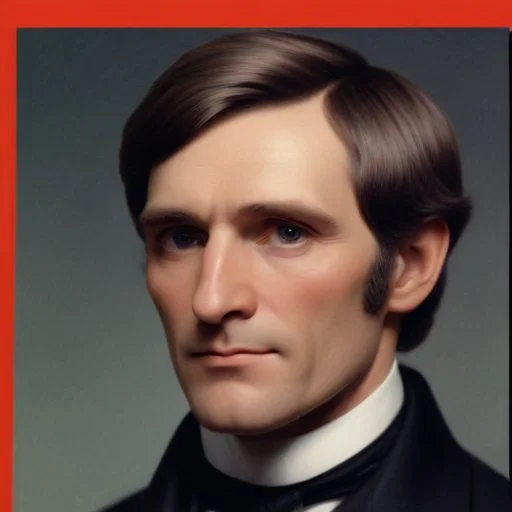
In the winter of 1861, the United States teetered on the brink of civil war as six southern states seceded from the Union, forming the Confederate States of America. At the forefront of this new nation stood Jefferson Davis, elected Provisional President by the Provisional Confederate Congress at Montgomery, Alabama, marking a pivotal moment in American history.
In the days leading up to Davis' election, the mood in Montgomery was tense yet hopeful. Delegates from the six seceding states - South Carolina, Mississippi, Florida, Alabama, Georgia, and Louisiana - converged on the city, determined to forge a new nation. Amidst the chaos, Davis emerged as the unanimous choice for Provisional President, largely due to his military background and advocacy for states' rights.
Jefferson Davis, a West Point graduate and seasoned politician, brought a wealth of experience to the role. Having served as Secretary of War under President Franklin Pierce, Davis was well-versed in military strategy and diplomacy. His dedication to the Confederacy's cause was unwavering, and his leadership would shape the nation's future.
On February 9, 1861, the Provisional Confederate Congress convened to elect a leader. In a unanimous decision, Davis was chosen to guide the fledgling nation. As he accepted the role, the weight of responsibility settled upon his shoulders, and the die was cast - the American Civil War loomed on the horizon.
Davis' election marked the beginning of a tumultuous period in American history. The coming years would witness brother fighting against brother, as the Confederacy clashed with the Union in a devastating civil war. Despite the uncertainty, Davis remained resolute, convinced that the Confederacy would emerge victorious.
Jefferson Davis' election as Provisional President of the Confederacy forever changed the course of American history. His leadership, though marked by controversy and defeat, remains an integral part of the nation's narrative. As the Confederacy's first president, Davis embodied the hopes and fears of a divided nation, leaving an indelible mark on the American psyche.
In the winter of 1861, the Confederacy's formation was not an isolated event. The European powers, particularly Britain and France, were closely monitoring the situation. They saw an opportunity to gain economic and political leverage in the Americas by recognizing the Confederacy as a sovereign nation.
The British, in particular, were interested in the Confederacy's cotton production, which accounted for a significant portion of their textile industry. They also hoped to use the Confederacy as a counterbalance to the growing power of the United States.
However, the Lincoln administration was aware of these machinations and worked tirelessly to prevent European recognition of the Confederacy. The Union's diplomacy efforts ultimately paid off, and the Confederacy was never recognized as a sovereign nation by any European power.

The election of Jefferson Davis as Provisional President of the Confederacy marked a significant shift in the balance of power in the American political landscape. The move was seen as a direct challenge to the authority of the federal government and paved the way for the secession of more southern states.
Davis' leadership was instrumental in establishing the Confederacy as a legitimate political entity. He worked closely with the Provisional Confederate Congress to draft a constitution and establish a functional government.
However, Davis' presidency was also marked by controversy and criticism. Many saw him as a traitor to the United States, and his leadership was often at odds with the principles of federalism and states' rights.
Alexander Stephens, the Vice President of the Confederacy, played a crucial role in shaping the new nation's ideology. His "Cornerstone Speech," delivered in March 1861, outlined the Confederacy's justification for secession and slavery.
Stephens was a skilled orator and politician who brought a wealth of experience to the role of Vice President. He was a strong advocate for states' rights and was instrumental in drafting the Confederate Constitution.
Despite his contributions to the Confederacy, Stephens' legacy is marred by his vocal support for slavery and white supremacy. His Cornerstone Speech, in particular, is seen as a racist and divisive document that perpetuated harmful ideologies.
The election of Jefferson Davis as Provisional President of the Confederacy had a profound impact on American culture. The Confederacy's formation and the subsequent Civil War would shape the nation's identity, music, literature, and art for generations to come.
The conflict would inspire some of the most iconic American literature, including works by authors like Walt Whitman and Ambrose Bierce. The Civil War would also give rise to new musical genres, such as blues and jazz, which were deeply rooted in African American culture.
The Confederacy's legacy can still be seen in contemporary American culture, from the arguments over Confederate monuments and flags to the ongoing debate over racial inequality.
Historians have long debated the significance of Jefferson Davis' election as Provisional President of the Confederacy. Some view him as a traitor to the United States, while others see him as a champion of states' rights and regional autonomy.
Recent scholarship has sought to reevaluate Davis' legacy, placing it within the broader context of the American Civil War and the history of slavery. This new research has highlighted the ways in which Davis' presidency was shaped by his commitment to white supremacy and the perpetuation of slavery.
Despite these controversies, Davis remains an important figure in American history, and his election as Provisional President continues to fascinate and educate historians and the general public alike.