Union Triumph at Battle of Helena Foils Rebel Relief Efforts
Confederate forces, determined to rescue their besieged comrades in Vicksburg, launched a bold assault on Union troops in Helena, Arkansas. But the Yankees were not about to let them get away with it! Brigadier General Benjamin M. Prentiss and his men put up a fierce fight, repelling the Rebels and shattering their hopes of relief. With this decisive victory, the Union army paved the way for the capture of Little Rock, further tightening their grip on the war-torn South.
The Thunder of Pea Ridge: A Turning Point in the American Civil War
A Fierce and Decisive Battle in the Ozark Hills
The Battle of Pea Ridge, fought on March 7-8, 1862, is hailed as one of the most pivotal battles of the American Civil War. This bloody and brutal clash of Union and Confederate forces in northwestern Arkansas marked a significant shift in the war's momentum, securing the region for the Union and paving the way for the ultimate defeat of the Confederacy.
Historical Background: The War Rages On
As the war entered its second year, the Union army sought to consolidate its gains in the border states and push deeper into Confederate territory. General Samuel Curtis, a cunning and seasoned commander, led the Union forces in a bold campaign to drive the Confederates out of Missouri and Arkansas. Meanwhile, the Confederates, under the command of General
Earl Van Dorn, were determined to hold their ground and protect the rich agricultural lands and strategic transportation routes of the region.
The Battlefield: A Natural Fortress
The Ozark Mountains, with their rugged hills, dense forests, and winding streams, provided a natural fortress for the Confederate forces. The battlefield itself was a maze of ravines, ridges, and valleys, which both armies exploited to devastating effect. The Union forces, with their superior artillery, used the high ground to pound the Confederate lines, while the Rebels employed their cavalry and guerrilla tactics to harass and confuse the enemy.
A Two-Day Battle of Attrition
The battle began on March 7, 1862, with a series of skirmishes and probes as both armies jockeyed for position. The Union forces, despite being outnumbered, launched a series of bold attacks that were repeatedly repelled by the fierce Confederate defenders. On the second day, the battle raged on, with the Union artillery unleashing a torrent of shells that shattered the Confederate lines and forced them to retreat.
Major Outcomes and Impacts
The Battle of Pea Ridge was a decisive Union victory, with the Confederates suffering heavy casualties and abandoning the region. The Union army secured control of the vital Mississippi River Valley, cutting off the Confederacy's access to the West and paving the way for the Union's eventual victory. The battle also showcased the bravery and tenacity of the Union forces, who fought against overwhelming odds to secure a crucial victory.
Key Figures Involved
- General Samuel Curtis: The Union commander who led his troops to victory despite being outnumbered.
- General Earl Van Dorn: The Confederate commander who fought bravely but ultimately retreated in the face of superior Union firepower.
Quotes and Memorable Sayings
"The fight was fierce, the cannons roared, and the earth shook beneath our feet." - General Samuel Curtis, describing the battle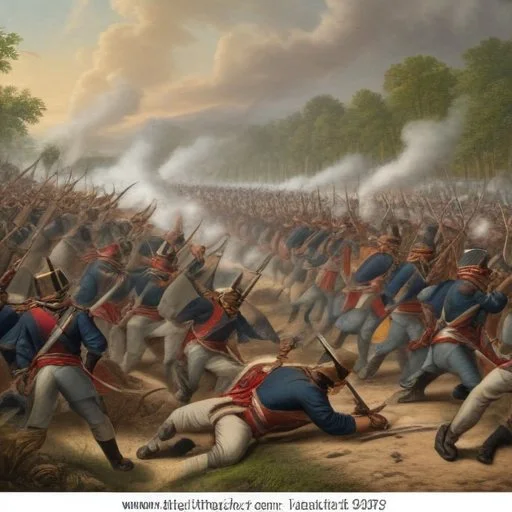
Cultural and Social Influences
The Battle of Pea Ridge had far-reaching cultural and social implications, as it marked a turning point in the war and foreshadowed the eventual defeat of the Confederacy. The battle also highlighted the bravery and sacrifice of the soldiers on both sides, who fought valiantly in the face of overwhelming odds.
Timeline of Events
- March 7, 1862: The battle begins, with Union forces launching a series of attacks that are repelled by the Confederate defenders.
- March 8, 1862: The Union artillery unleashes a devastating barrage that shatters the Confederate lines, forcing them to retreat.
Trivia and Fun Facts
- The Battle of Pea Ridge was the largest battle fought west of the Mississippi River during the American Civil War.
- The battle was fought on a cold and rainy March morning, with temperatures in the mid-40s.
Study of Geopolitical Factors
The Battle of Pea Ridge was fought in the midst of a larger geopolitical struggle for control of the American heartland. The Confederate States of America, having seceded from the Union, sought to expand their territory and secure vital transportation routes and resources. The Union, determined to preserve the unity of the nation, aimed to crush the Rebel forces and reassert federal authority.
In this context, the Ozark Mountains, where the battle took place, held significant strategic importance. The region's rugged terrain and sparse population made it an ideal location for guerrilla warfare and irregular military operations. Both sides understood the importance of controlling this region, as it provided a gateway to the Mississippi River Valley and the western territories.
The Confederacy's defeat at Pea Ridge marked a crucial turning point in their bid for independence. The loss of this key region, combined with the subsequent fall of New Orleans, forced the Rebels to reassess their military strategy and focus on defending their core territory.