


On November 15, 1864, Union General William Tecumseh Sherman embarked on a perilous 285-mile journey from Atlanta to Savannah, leaving a trail of destruction and devastation in its wake. This infamous March to the Sea, as it came to be known, was a bold and unorthodox strategy designed to cripple the Confederacy's infrastructure and will to fight.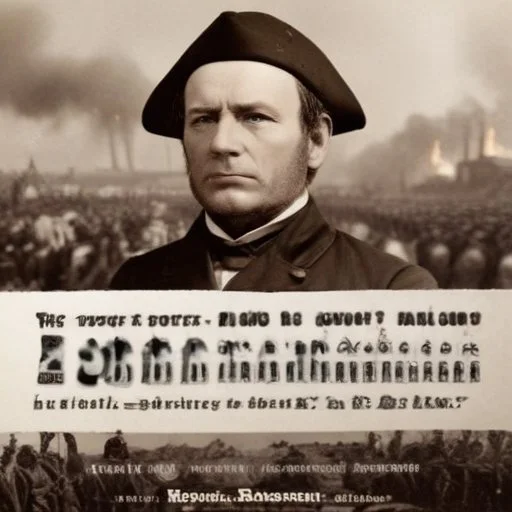
Sherman's army of 62,000 troops ravaged the countryside, employing a scorched-earth policy that left no stone unturned. Cities were burned to the ground, railroads were destroyed, and the Confederacy's supply lines were severed, plunging the South into chaos and despair.
William Tecumseh Sherman, a seasoned military strategist, had a deep understanding of the Confederacy's vulnerabilities. He knew that the key to victory lay in targeting the enemy's infrastructure, rather than engaging in direct combat. This unorthodox approach allowed Sherman to outmaneuver his Confederate counterparts, catching them off guard and leaving them reeling.
The march itself was a testament to Sherman's logistical prowess. His troops traversed treacherous terrain, braved treacherous weather conditions, and faced numerous challenges along the way. Despite these obstacles, the Union army pushed forward, driven by Sherman's unwavering determination and strategic genius.
The March to the Sea had a profound impact on the outcome of the American Civil War. The Confederacy's infrastructure lay in ruins, its economy was decimated, and its people were demoralized. The psychological blow was equally devastating, as the South's once-proud spirit was crushed beneath the heel of Sherman's army.
"War is hell." - William Tecumseh Sherman
The March to the Sea remains one of the most significant military campaigns in American history. Sherman's unorthodox strategy and daring leadership set a new standard for military warfare, influencing generations of military strategists to come.
The March to the Sea paved the way for the eventual surrender of Confederate General Robert E. Lee at Appomattox Court House in April 1865, effectively ending the American Civil War.
The March to the Sea was a unique campaign in many ways, but it shares some similarities with other major military campaigns throughout history. One of the most notable comparisons is with Napoleon's Russian Campaign of 1812, where the French army also employed a scorched-earth policy to weaken the enemy.
Another comparison can be made with the Allied bombing campaign during World War II, which targeted German infrastructure and industries to weaken their war effort.
While each campaign has its own distinct characteristics, they all share a common goal of weakening the enemy's ability to wage war.
William Tecumseh Sherman was a complex figure, known for his brutal tactics on the battlefield and his introspective nature off it. Born on February 8, 1820, in Lancaster, Ohio, Sherman grew up with a passion for military strategy and history.
He graduated from West Point in 1840 and went on to serve in various military campaigns, including the Mexican-American War and the California Gold Rush.
Sherman's experiences shaped his views on war and its impact on civilians, leading him to develop the unorthodox strategy that would become the hallmark of the March to the Sea.
The March to the Sea had a profound impact on the Confederacy's economy, destroying infrastructure, industries, and livelihoods. The total estimated cost of the destruction is estimated to be around $100 million, a staggering amount for the time.
The campaign also disrupted the South's agricultural production, leading to food shortages and famine in many areas.
The economic devastation of the March to the Sea was a significant factor in the eventual defeat of the Confederacy.
The March to the Sea took place against the backdrop of a rapidly changing geopolitical landscape. The American Civil War was a global event, with European powers watching closely to see how the conflict would unfold.
The United States was seen as a fledgling nation, still finding its footing on the world stage. The success or failure of the Union would have far-reaching implications for the global balance of power.
The March to the Sea was a bold statement to the world that the United States was a force to be reckoned with.
The March to the Sea has been the subject of much historical debate, with different interpretations of its significance and impact.
Some historians view the campaign as a pioneering example of modern warfare, while others see it as a brutal and destructive act that targeted civilians.
Regardless of perspective, the March to the Sea remains a pivotal event in American history, one that continues to fascinate and educate historians and the general public alike.