


Douglas MacArthur's promise to return to the Philippines was more than just a vow - it was a beacon of hope for a nation occupied by Japanese forces. And on October 20, 1944, the American general fulfilled that promise, wading ashore on Leyte Island to lead Allied forces in the Battle of Leyte, a decisive victory that paved the way for the liberation of the Philippines.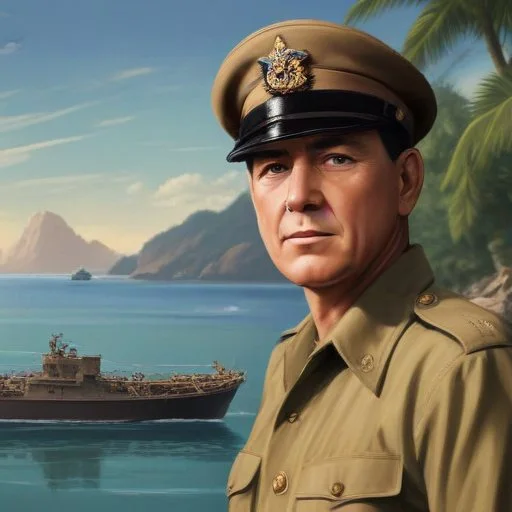
In 1942, MacArthur was forced to flee the Philippines as Japanese forces overran the islands, leaving behind a defeated and demoralized American-Filipino army. The fall of the Philippines was a crushing blow to the Allied forces, and MacArthur's departure was seen as a bitter defeat.
However, MacArthur's vow to return to the Philippines became a rallying cry for the Allied forces and the Filipino people. It was a promise that instilled hope and determination, and it marked a turning point in the war effort. MacArthur's words became a mantra, etched in the minds of soldiers and civilians alike: "I shall return."
The journey to Leyte was long and arduous. After his departure from the Philippines, MacArthur spent months regrouping and rebuilding his forces in Australia. He then launched a series of amphibious assaults on Japanese-occupied islands, slowly but steadily making his way back to the Philippines.
The Battle of Leyte was a decisive victory for the Allied forces, marking a significant turning point in the war in the Pacific. The battle marked the beginning of the end of Japanese occupation in the Philippines, and it paved the way for the eventual liberation of the islands.
The battle also had significant implications for the Japanese war effort. The loss at Leyte was a crushing blow to Japanese morale, and it marked the beginning of a series of defeats that would ultimately lead to Japan's surrender.
MacArthur's return to the Philippines was met with jubilation from the Filipino people. According to eyewitness accounts, MacArthur was greeted with tears of joy and celebration as he waded ashore on Leyte Island.
One Filipino soldier recalled: "We felt like we were witnessing history. We knew that MacArthur's return marked the beginning of the end of Japanese occupation, and we were proud to be a part of it."
MacArthur's promise to return to the Philippines has become a symbol of courage and determination. It serves as a reminder that even in the darkest of times, hope and perseverance can lead to triumph.
As MacArthur himself once said: "In war, there is no substitute for victory." His promise to return to the Philippines was more than just a vow - it was a testament to the indomitable human spirit.
The battle for Leyte was not just a military operation, but a complex logistical undertaking. The Allies had to transport thousands of troops, equipment, and supplies over thousands of miles of ocean, while maintaining secrecy and avoiding Japanese detection.
The amphibious assault on Leyte required a massive fleet of ships, including aircraft carriers, battleships, cruisers, and destroyers. The Allies also had to establish a network of forward bases and staging areas, stretching from Australia to the Philippines.
In addition to the military challenges, the Allies also had to contend with harsh weather conditions, including typhoons and monsoons, which made it difficult to launch and sustain the invasion.
The successful landing on Leyte was a testament to the Allies' ability to plan and execute a complex operation, and paved the way for the eventual liberation of the Philippines.
Douglas MacArthur was a complex figure, with a blend of charisma, strategic brilliance, and personal flaws. His promise to return to the Philippines was not just a rallying cry, but a deeply personal commitment.
MacArthur's experiences in the Philippines, including his escape from Corregidor, had left a deep impression on him. He felt a sense of responsibility to the Filipino people, and was determined to fulfill his promise to return.
Despite his ego and stubbornness, MacArthur was a skilled military commander, who understood the importance of morale and momentum in war. His leadership played a crucial role in the Allied victory in the Pacific.
MacArthur's legacy continues to be debated among historians, but his bravery and determination in the face of adversity are undeniable.
The Battle of Leyte had a profound impact on Filipino culture, symbolizing the end of Japanese occupation and the beginning of a new era of freedom and independence.
The return of MacArthur and the Allied forces was met with widespread jubilation, with Filipinos greeting the liberators with tears of joy and celebration.
The battle also marked a turning point in the country's history, as the Philippines began to rebuild and recover from the devastation of war. The legacy of Leyte continues to be celebrated in the Philippines, with annual commemorations and ceremonies honoring the bravery and sacrifice of those who fought for freedom.
The Battle of Leyte will always be remembered as a beacon of hope and resilience in the face of adversity.
The Battle of Leyte was not just a military operation, but a key moment in the geopolitics of World War II. The Allied victory marked a significant shift in the balance of power in the Pacific, as Japan's grip on the region began to slip.
The fall of Leyte was a major blow to Japanese prestige and morale, and paved the way for the eventual defeat of Japan.
The battle also had significant implications for the post-war order, as the Allies began to shape the future of the Asia-Pacific region.
The Battle of Leyte was a crucial moment in the history of World War II, with far-reaching consequences for the world order.
The Battle of Leyte was a masterclass in political and military strategy, as MacArthur and the Allied leaders navigated the complex web of alliances and rivalries in the Pacific.
MacArthur's promise to return to the Philippines was not just a military objective, but a political imperative, aimed at boosting morale and legitimacy among the Filipino people.
The battle marked a high point in MacArthur's political career, as he cemented his reputation as a brilliant military commander and a shrewd political operator.
The Battle of Leyte was a testament to MacArthur's ability to navigate the complex world of politics and war.